

Table of Contents
What is an Isolator Switch? The Ultimate Guide to Electrical Safety and Isolation
In any robust electrical installation, safety is the non-negotiable foundation. One of the most critical yet often misunderstood components in this hierarchy is the isolator switch (also known as a main switch or disconnector).
At LEEYEE Electrics, with over 15 years of manufacturing experience, the focus is not only on supplying compliant products but also on helping professionals understand why each electrical component exists and how it should be used correctly.
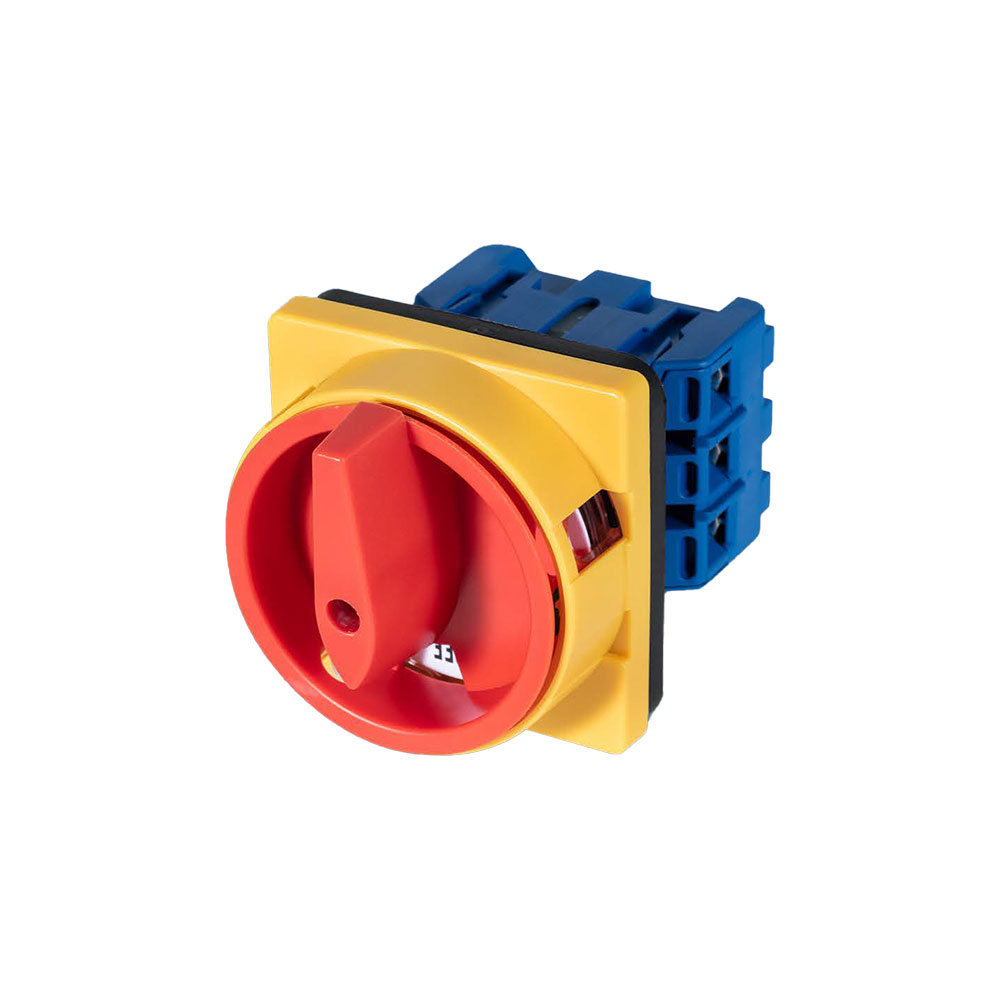
1000V AC
This guide explains what an isolator switch is, why it is essential for electrical safety, and how it differs from other protective devices such as Miniature Circuit Breakers (MCBs).
Quick Answer: What Is an Isolator Switch?
An isolator switch is a mechanical switching device that, when placed in the OFF position, creates a defined physical separation of the contacts in an electrical circuit. Some designs provide a visible contact gap, while others provide a clearly indicated and lockable OFF position.
Its primary purpose is to ensure that a circuit is completely de-energized during maintenance or repair, preventing accidental energization and reducing the risk of electric shock.
Professional note:
Unlike circuit breakers, a standard isolator or disconnector is intended to open or close only under no-load or negligible-current conditions. For normal load switching, use a device classified and rated as a switch disconnector or load break switch.
Isolator, Switch Disconnector, or Circuit Breaker?
| Device | Primary Purpose | Normal Load Switching | Fault Protection |
|---|---|---|---|
| Isolator / Disconnector | Safe electrical isolation | No, except for negligible current conditions. For normal load switching, use a switch disconnector or load-break switch | No |
| Switch Disconnector | Load switching plus isolation | Yes, within its rated utilization category | No |
| Circuit Breaker | Overload and short-circuit protection | Yes within its ratings; suitability for frequent switching depends on the product specification | Yes |
Why Do You Need an Isolator Switch?
The need for an isolator switch is driven by safety, regulatory compliance, and operational control.
1. Personnel Safety During Maintenance
An isolator switch allows technicians to manually disconnect power and lock the switch in the OFF position.
Many isolators, including the LEEYEE LYAS series, feature padlockable handles, preventing accidental re-energization while work is in progress.
2. Compliance with International Standards
IEC 60947-3 defines requirements and performance categories for switches, disconnectors, switch disconnectors, and fuse-combination units. Whether and where an isolation device is required depends on the applicable installation and equipment standards in each market.
Applications include:
- HVAC systems
- Solar PV inverters
- Industrial machinery
- Fixed electrical equipment
In many regions, isolation is not optional—it is a regulatory requirement.
3. Local Power Disconnection
A correctly selected isolator switch provides a clear, manual means to disconnect power to a specific circuit or machine without shutting down the entire facility.
A standard off-load isolator should not automatically be treated as an emergency stop or fault-breaking device. Where disconnection under normal load is required, use a switch disconnector or load break switch with the correct voltage, current, and utilization category. Fault current must be cleared by an appropriate circuit breaker or fuse.
How Does an Isolator Switch Work?
The operating principle of an isolator switch is simple but highly reliable.
When the handle is switched to OFF:
- The internal contacts physically separate
- A sufficient air gap is created
- Electrical continuity is completely interrupted
This contact separation creates the required isolation function. Depending on the device design, the user may see a visible contact gap or rely on a clearly indicated, mechanically linked OFF position.
Safety note: The OFF position alone does not replace a safe-isolation procedure. Before work begins, secure the device against reconnection and verify the absence of voltage using the applicable workplace and installation procedures.
Types of Isolator Switches and Their Applications
Different environments require different types of isolator switches. Common categories include:
1. AC Isolator Switches
Used in residential, commercial, and light industrial AC power systems.
Typical applications:
- Air conditioning units
- Water heaters
- Main distribution boards
Key selection point:
For outdoor or exposed installations, choose an enclosed model with an appropriate IP rating, such as IP65 or IP66 where required.
2. DC Isolator Switches (Solar PV)
Designed specifically for high-voltage DC circuits generated by photovoltaic systems.
Typical applications:
- Solar PV arrays
- DC input isolation for inverters
Key feature:
DC switch disconnectors designed for load switching use suitable contact arrangements and arc-control measures to interrupt DC current within their declared voltage and current ratings. A basic DC disconnector should not be assumed to have load-breaking capability unless the manufacturer explicitly declares it.
3. Fused Isolator Switches
Combine a mechanical isolator with fuse protection.
Advantages:
- Provides isolation
- Adds overcurrent protection via replaceable fuses
Often used where both functions are required in a compact solution.
Technical Comparison: Isolator Switch vs. MCB
The difference between isolator switches and MCBs is a common source of confusion. The table below clarifies their distinct roles.
| Feature | Isolator Switch (Disconnector) | Miniature Circuit Breaker (MCB) |
|---|---|---|
| Primary Function | Safety isolation for maintenance | Overcurrent & short-circuit protection |
| Operation | Manual only | Automatic tripping + manual |
| Protection Mechanism | None (mechanical break only) | Thermal and magnetic trip |
| Load Handling | Typically no-load or low-load | Designed for full-load breaking |
| Visible Break | Depends on design; a reliable indication of the isolated position is required | Usually no visible contact gap |
| LEEYEE Example | LYAS Series | LYM Series |
How to Choose the Right Isolator Switch
Before selecting an isolator switch, first determine whether the device is required only for maintenance isolation or must also switch normal load current.
| Application | Typical Device | What to Verify |
|---|---|---|
| Maintenance after the load has already been switched off | Isolator / disconnector | Isolation function, poles, voltage, lockable OFF position |
| HVAC, motors, machinery, or other normal load switching | Switch disconnector / load break switch | Utilization category, rated current, making and breaking capacity |
| Solar PV DC isolation | DC switch disconnector | Maximum DC voltage, current, pole configuration, DC breaking rating |
| Isolation plus fuse protection | Fused isolator / fused switch disconnector | Fuse type and characteristics, rated current, and overcurrent coordination |
Important: Product names are often used differently across markets. Do not select a device only because it is labelled “isolator switch.” Check its standard designation, rated operational current, utilization category, AC or DC rating, number of poles, and load-breaking capability.
Key Technical Parameters to Consider
When selecting an isolator switch, the following specifications should always be verified:
- Rated Current (In): Maximum continuous current (e.g. 20A, 32A, 63A, 100A)
- Utilization Category:
Example: AC-23A indicates suitability for switching inductive loads and motors - Number of Poles:
1P, 2P, 3P, or 4P depending on single-phase or three-phase systems - IP Rating:
High ratings (such as IP66) are essential for outdoor and industrial environments
Frequently Asked Questions (FAQ)
Can I use an isolator switch as a main power switch?
Only when the device is specifically rated and approved as a main switch, switch disconnector, or equivalent device for the intended system. Verify the rated voltage, current, number of poles, utilization category, applicable installation standard, and whether normal load switching is required.
Why is an isolator switch handle padlockable?
A padlockable handle supports Lockout–Tagout (LOTO) procedures, ensuring the circuit cannot be re-energized while maintenance work is being performed.
Does an isolator switch protect against short circuits?
No. An isolator switch does not provide overload or short-circuit protection. The circuit must have appropriately rated and coordinated overcurrent protection, such as an upstream circuit breaker or fuse.
Are isolator switches suitable for outdoor use?
Yes. When properly rated, such as IP66 models, isolator switches are suitable for outdoor applications including HVAC units and solar PV systems.
Conclusion: Choose the Right Isolation for Electrical Safety
An isolator switch is not a protective device—it is a safety device. Its role is to ensure that electrical systems can be worked on safely and in compliance with international standards.
By selecting properly rated isolator switches and using them together with circuit protection devices, electrical systems become safer, more reliable, and easier to maintain.