
Sind Sie unsicher, wie Sie ein RS485 SPD für ein PLC-Steuerungspanel verkabeln oder auswählen sollen?
RS485 Kommunikationsleitungen sind in PLC-Systemen, Modbus RTU-Netzwerken, Fernüberwachungsanlagen, Zählern, Sensoren, Pumpstationen und industriellen Automatisierungsprojekten häufig anzutreffen. Diese Linien sind oft lang, exponiert oder in der Nähe von Stromkabeln verlegt. Das macht sie anfällig für durch Blitze verursachte Überspannungen, Schalttransienten und Erdpotentialdifferenzen.
Dieser Leitfaden erklärt, wie man ein RS485 Überspannungsschutzgerät für industrielle Steuerungspaneele auswählt und verkabelt. Er konzentriert sich auf praktische Verkabelung, A/B-Leitungsverbindung, Erdung des Schildes, PE-Bindung, Installationsposition und häufige Fehler vor der Bestellung.
Inhaltsübersicht
Schnelle Antwort: Wie man ein RS485 SPD verkabelt und auswählt
- Installieren Sie das RS485 SPD in Reihe mit der Kommunikationslinie, normalerweise am Kabelanschlusspunkt des Steuerungspanels.
- Schließen Sie das Feldseite RS485-Kabel an die LINE- oder IN-Seite des SPDs an.
- Schließen Sie die geschützte Seite des SPDs an die PLC, RTU, den Zähler, das Gateway oder das Überwachungsgerät an.
- Halten Sie A zu A und B zu B. Kehren Sie die Polarität nicht um, es sei denn, die Kennzeichnung des Geräts erfordert es.
- Binden Sie den PE-Anschluss des SPD mit dem kürzesten praktikablen Erdungskabel an die lokale PE-Leiste an.
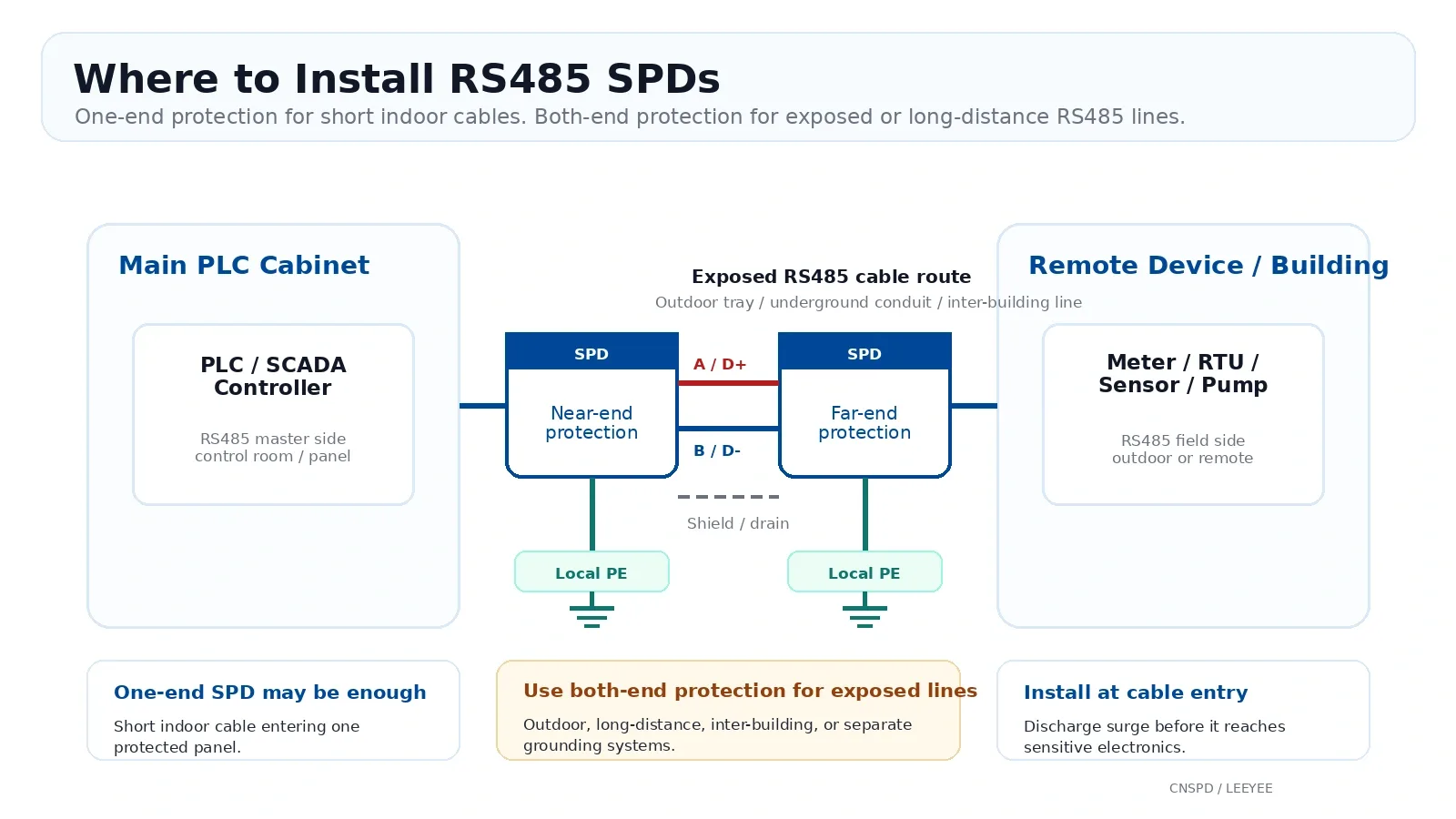
- Für Außen-, Langstrecken-, zwischengebäude- oder separate Erdungssysteme installieren Sie RS485 SPDs an beiden Enden des Kabels.
- Wählen Sie ein Signal-Leitungs-SPD, das für RS485 ausgelegt ist. Ersetzen Sie es nicht durch ein AC-Strom-SPD.
- Warum RS485-Leitungen Überspannungsschutz benötigen.
- Wo man RS485 SPDs installiert.
- Verdrahtungsmethode für RS485 SPD.
- Regeln für Abschirmung und Erdung.
- Wie man ein RS485 SPD auswählt.
- Häufige industrielle Anwendungen.
- Häufige Verdrahtungs- und Auswahlfehler.
- Checkliste vor der Bestellung.
- Empfohlenes LY10 Signal SPD.
- FAQ
Warum RS485-Leitungen einen Überspannungsschutz benötigen
RS485 ist eine differenzielle Kommunikationsschnittstelle. Sie hat eine bessere Störfestigkeit als viele einseitige Signalleitungen. Aber das bedeutet nicht, dass sie immun gegen Überspannung ist.
An realen Industrieanlagen können RS485-Kabel über lange Strecken, Außenschalen, separate Gebäude, Pumpstationen, Solarüberwachungsboxen oder Fabrikbereiche mit Motoren und Frequenzumrichtern verlaufen. Bei Blitzereignissen oder Schaltvorgängen kann Überspannung in das Kabel induziert werden.
Wenn diese Überspannung den RS485-Port eines PLC, RTU, Zählers, Inverter-Gateways oder Sensorcontrollers erreicht, kann dies den Kommunikationschip beschädigen oder zu instabilen Datenübertragungen führen. Ein korrekt ausgewähltes RS485 SPD hilft, Überspannungsenergie in die Erde abzuleiten, bevor sie den Geräteschnittstelle erreicht.
Wo sollte ein RS485 SPD installiert werden?
Der beste Installationspunkt ist normalerweise dort, wo das RS485-Kabel in das elektrische Gehäuse eintritt. Dies ermöglicht es dem SPD, den Überspannungsstrom abzuleiten, bevor das Kabel tiefer in das Panel weitergeführt wird.
| RS485-System | Empfohlene SPD-Position | Bedeutung für Käufer |
|---|---|---|
| PLC-Gehäuse mit internem RS485-Kabel | Am Kabelzugangspunkt des Steuergehäuses | Schützen Sie die PLC oder das Kommunikationsmodul, bevor die Leitung empfindliche Elektronik erreicht. |
| Außen-RS485-Leitung zu einem entfernten Zähler oder Sensor | Sowohl an der Seite der Steuerung als auch an der Seite des Feldgeräts | An beiden Enden können induzierte Überspannungen oder Erdpotentialdifferenzen auftreten. |
| RS485-Kabel zwischen zwei Gebäuden | An beiden Eingängen der Gebäude | Getrennte Erdungssysteme erhöhen das Risiko von Überspannungen und Bodenpotential. |
| Remote-Pumpstation oder Wasserbehandlungssystem | Am PLC-Panel und im Schrank für entfernte Geräte | Lange Kabelstrecken und Freiluftexposition machen den Schutz an beiden Enden geeigneter. |
| Solarüberwachung oder Wechselrichterkommunikationsleitung | An der Überwachungsbox, im Wechselrichterschrank oder im Gateway-Panel | Kommunikationsleitungen verlaufen oft nahe an DC-Saiten, AC-Kabeln und freiliegenden Strukturen. |
RS485 SPD Verkabelungsmethode
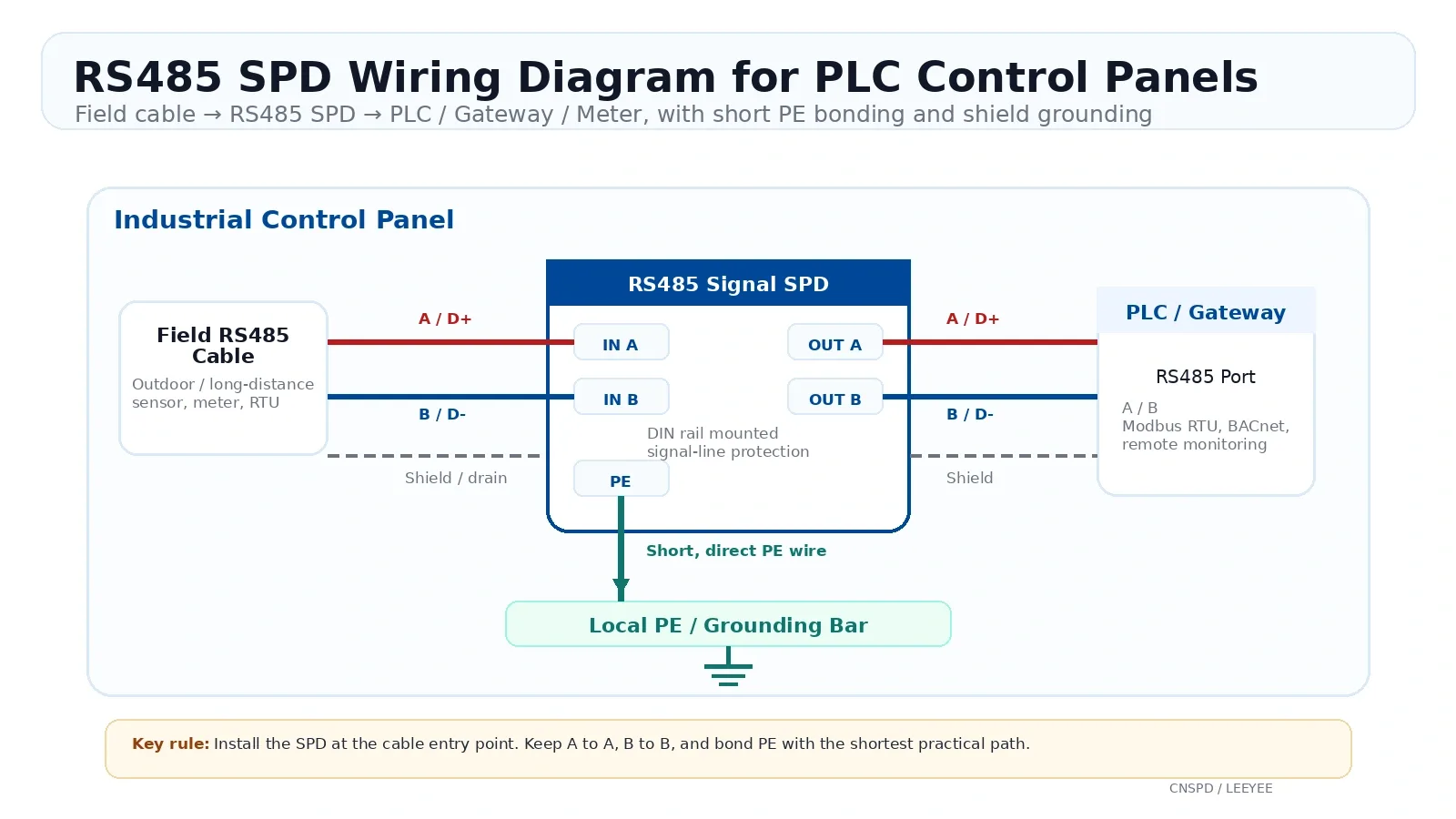
Ein RS485 SPD wird normalerweise in Reihe mit der Kommunikationsleitung verdrahtet. Das Feldkabel gelangt zuerst in den SPD, dann geht der geschützte Ausgang zum PLC, RTU, Zähler oder Kommunikationsmodul.
Grundlegende Verdrahtungslogik
| SPD-Terminal | Verbinden mit | Hinweise |
|---|---|---|
| LEITUNG / IN A | RS485 A vom Feldkabel | Verbinden Sie hier die eingehende, freiliegende Kabelseite. |
| LEITUNG / IN B | RS485 B vom Feldkabel | Behalten Sie die gleiche Polarität im gesamten System bei. |
| OUT / AUSRÜSTUNG A | RS485 A der SPS, RTU, Gateway, Zähler oder Steuerung | Dies ist die Seite der geschützten Ausrüstung. |
| OUT / AUSRÜSTUNG B | RS485 B der SPS, RTU, Gateway, Zähler oder Steuerung | Halten Sie das Kabel von SPD zur Ausrüstung so kurz wie möglich. |
| PE / Erde | Lokale PE-Erdungsleiste oder Gehäusebindeleiste | Diese Verbindung muss kurz und direkt sein. Sie ist entscheidend für die Überspannungsableitung. |
| Abschirmung / Abflussdraht | Abschirmungs-Erdungspunkt gemäß dem Erdungsdesign des Panels | In der Regel an einem Punkt geerdet, oft an der Seite des Steuerpanels, es sei denn, das Erdungsdesign des Projekts verlangt etwas anderes. |
Schritt-für-Schritt Verkabelung
- Identifizieren Sie das eingehende RS485-Kabel von der Feldseite.
- Bestätigen Sie, ob das System 2-Draht-Halbdublex oder 4-Draht-Voll-Dublex ist.
- Verbinden Sie A und B mit den entsprechenden IN- oder LEITUNGS-Anschlüssen des SPD.
- Schließen Sie die OUT- oder AUSRÜSTUNG-Anschlüsse an die SPS, RTU, den Zähler, das Gateway oder den Geräteanschluss an.
- Verbinden Sie den PE-Anschluss mit der lokalen PE-Schiene mithilfe eines kurzen, geraden Erdleiters.
- Führen Sie das geschützte RS485-Kabel, wo möglich, von Hochspannungskabeln weg.
- Überprüfen Sie nach der Installation den Kommunikationsstatus, bevor Sie das gesamte System mit Strom versorgen.
Schutz- und Erdungsregeln für die Installation von RS485 SPDs
Die Erdung ist der Teil, der entscheidet, ob der RS485 SPD korrekt arbeiten kann. Der SPD benötigt einen niederohmigen Weg, um Überspannungsströme abzuleiten.
PE-Erdung für den SPD
Der PE-Anschluss des SPD sollte mit der lokalen Erdungsschiene oder der Gehäuseverbindungsleiste verbunden werden. Halten Sie diesen Draht so kurz und direkt wie möglich. Wickeln Sie ihn nicht auf, führen Sie ihn nicht um das Panel herum oder verlängernd zusammen mit dem RS485-Signalpaar.
Schirmerdung für das RS485-Kabel
Bei vielen RS485-Systemen wird der Kabelschirm an einem Punkt geerdet, oft an der Hauptsteuerungstafel oder der Überwachungssteuerung. Dies hilft, Erdschleifenströme zu reduzieren.
Die Erdungspraxis kann jedoch je nach Projekt variieren. An Standorten mit hoher EMV oder Blitzeinschlägen sollte die Abschirmstrategie dem vollständigen Systemerdungsdesign folgen. Der wichtige Punkt ist, die Abschirmung nicht versehentlich zu entkoppeln und keine unkontrollierten Erdungsschleifen zu erzeugen.
Wie man ein RS485 SPD auswählt
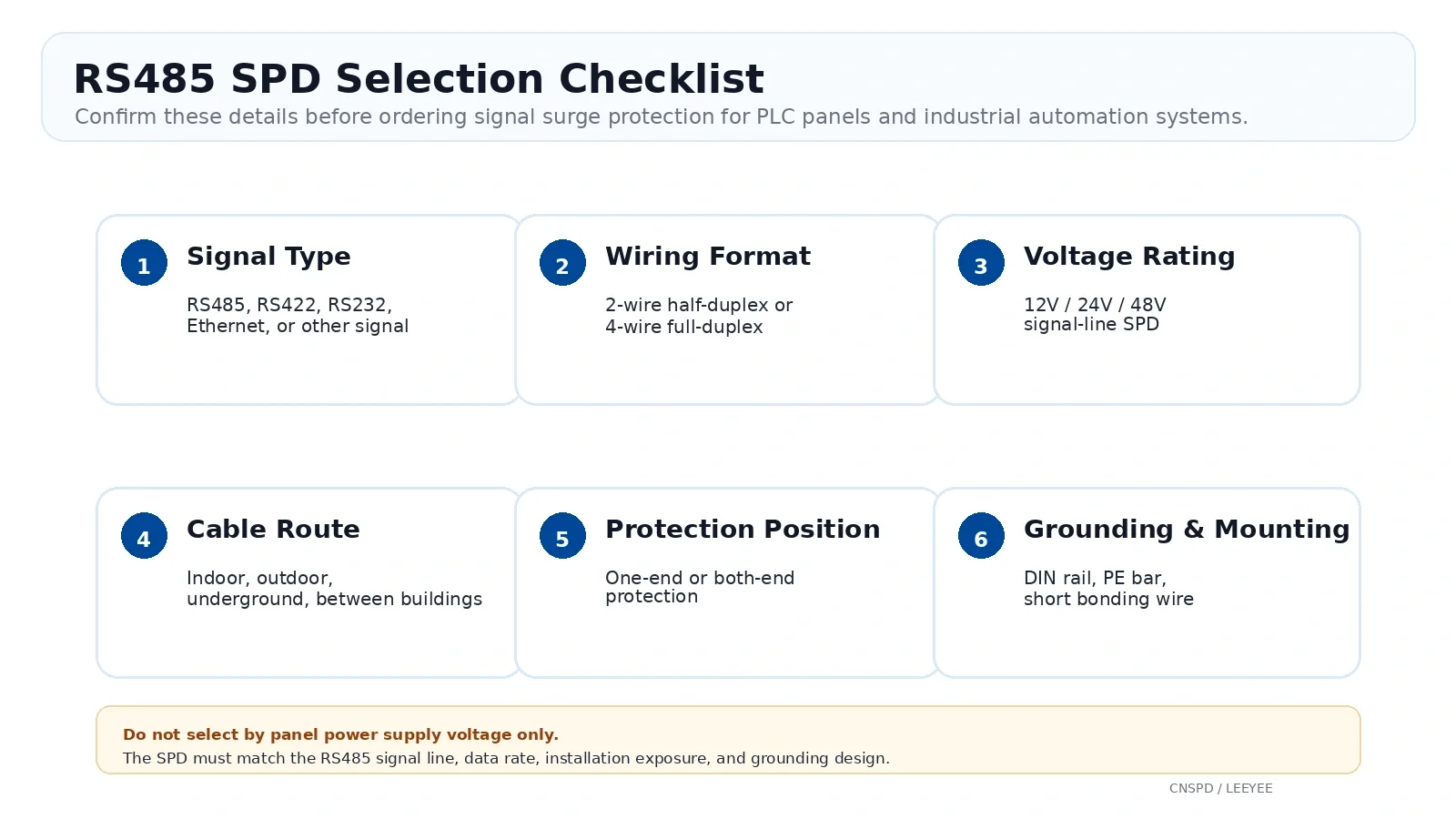
Die Auswahl des RS485 SPD sollte von der Kommunikationsschnittstelle und nicht von der Betriebsspannung des gesamten Panels ausgehen. Ein Signal-Line SPD muss zur RS485-Leitung, der Signal-Topologie, der Betriebsspannung, der Datenrate und der Installationsumgebung passen.
1. Bestätigen Sie, dass es sich um RS485-Signal-Leitungen handelt.
Verwenden Sie keinen AC-Power SPD auf einer RS485-Kommunikationsleitung. Power SPDs und Signal SPDs sind für unterschiedliche Schaltungen, Spannungsniveaus, Wellenformen und Schutzverhalten ausgelegt.
2. Bestätigen Sie, ob es sich um 2-Draht- oder 4-Draht-RS485 handelt.
| RS485-Topologie | Allgemeine Verwendung | Bedeutung der SPD-Auswahl |
|---|---|---|
| 2-Draht-Halbxduplex | Modbus RTU, PLC-Kommunikation, Zähler, viele industrielle Sensoren | Verwenden Sie einen SPD, der ein verdrilltes Paar, A und B, schützt. |
| 4-Draht-Voll-Duplex | Einige ältere oder spezielle industrielle Kommunikationssysteme | Verwenden Sie ein Gerät oder eine Kombination, die sowohl die Übertragungs- als auch die Empfangspaare schützt. |
3. Bestätigen Sie die Spannungsbewertung der Signalleitung
RS485-Systeme können unterschiedliche Schutzbewertungen für Signalleitungen verwenden, wie 12V, 24V oder 48V Versionen. Die Spannungsbewertung des SPD sollte hoch genug für die normale Kommunikation, aber niedrig genug sein, um gefährliche transient Spannungen abzufangen, bevor sie den Geräteanschluss erreichen.
Wenn die gewählte Spannung zu niedrig ist, kann der SPD die normale Kommunikation beeinträchtigen oder schneller altern. Wenn die gewählte Spannung zu hoch ist, kann das geschützte Gerät während einer Überspannung eine höhere Restspannung sehen.
4. Überprüfen Sie die Datenrate und die Einfügedämpfung
Die RS485-Kommunikation kann für Modbus RTU, BACnet MS/TP, Zähler, industrielle Sensoren, Fernüberwachung und Automatisierungsnetzwerke verwendet werden. Der SPD sollte die erforderliche Übertragungsrate unterstützen und darf keine übermäßige Kapazität oder Einfügeminderung in die Leitung einbringen.
5. Überprüfen Sie die Entladefähigkeit und den Standard
Für industrielle Steuerungsstationen sollte der SPD entsprechend dem erwarteten Expositionsniveau ausgewählt werden. Außen- und Langstreckenkabel erfordern in der Regel eine stärkere Überspannungsfestigkeit als kurze Innenverdrahtungen.
Für Überspannungsschutz für Signalleitungen ist IEC 61643-21 die relevante SPD-Standardreihe, die überprüft werden sollte. Dies ist anders als IEC 61643-11, das für Niederspannungsstromleitungen gilt.
6. Überprüfen Sie Montage und Wartung
Für Steuerungsstationen wird normalerweise die DIN-Schienenmontage bevorzugt. Sie ermöglicht eine einfachere Installation, eine sauberere Verkabelung und einen schnelleren Austausch während der Wartung.
Anwendungen von RS485 SPDs in industriellen Steuerungspaneelen
RS485 SPDs sind am wertvollsten, wenn die Kommunikationsleitung den geschützten Schrank verlässt, über eine lange Strecke verläuft oder mit Geräten in einer anderen elektrischen Umgebung verbunden ist.
Häufige Fehler bei der Verkabelung und Auswahl von RS485 SPDs
| Fehler | Mögliche Folge | Bessere Praxis |
|---|---|---|
| Verwendung eines AC-Strom-SPD an RS485-Leitungen | Falsches Klebehverhalten, Kommunikationsausfall oder kein echter Signalschutz | Verwenden Sie ein Signalschutzgerät, das für die RS485-Kommunikation ausgelegt ist. |
| A- und B-Leitungen umkehren | Keine Kommunikation oder instabile Daten | Überprüfen Sie die Anschlussbezeichnungen an beiden Geräten und halten Sie die Polarität konstant. |
| PE-Anschluss unverbunden lassen | SPD kann Überspannungsenergie nicht effektiv ableiten | Verbinden Sie PE mit der lokalen Erdungsleiste mit einem kurzen, direkten Kabel. |
| Installation nur eines SPD an einem langen Außenkabel | Das ungeschützte Ende kann trotzdem beschädigt werden | Verwenden Sie einen Schutz an beiden Enden für exponierte, langstrecken- oder zwischengebäudliche Kabel. |
| Die falsche Spannungsbewertung auswählen | Kommunikationsstörungen oder schwache Schutzmaßnahmen | Bestätigen Sie die RS485-Schnittstelle und die erforderliche SPD-Spannung für die Signalleitung vor der Bestellung. |
| Die Datenübertragungsrate und den Einfügeverlust ignorieren | Signalverzerrung oder instabile Kommunikation | Wählen Sie eine SPD, die für die erforderliche Kommunikationsgeschwindigkeit und das Protokoll geeignet ist. |
| RS485-Kabel neben Hochleistungsleitungen verlegen | Mehr Lärm, höheres Risiko für induzierte Überspannungen | Halten Sie die Kommunikationsverkabelung wo möglich von der Stromverkabelung getrennt. |
Bestätigen Sie diese Details, bevor Sie ein RS485 SPD bestellen
Für OEM-Steuerfeldprojekte, Distributorenbestellungen oder Ersatzkäufe senden Sie diese Details an den Anbieter, bevor Sie ein Modell auswählen.
- Ist die Kommunikationsleitung RS485, RS422, RS232, Ethernet oder ein anderer Signalausgang?
- Ist das RS485-Netzwerk 2-Draht-Half-Duplex oder 4-Draht-Full-Duplex?
- Was ist die erforderliche Spannungsabdeckung für die Signalleitung, wie 12V, 24V oder 48V?
- Welches Protokoll wird verwendet, wie Modbus RTU, BACnet MS/TP oder ein anderes industrielles Protokoll?
- Wie lang ist das Kabel?
- Ist das Kabel Innen-, Außen-, Untergrund-, auf einer Trägerschiene oder zwischen Gebäuden verlegt?
- Wird die SPD an einem Ende oder an beiden Enden installiert?
- Ist eine DIN-Schienenmontage erforderlich?
- Gibt es eine lokale PE-Erdungsleiste im Schaltschrank?
- Benötigen Sie Unterstützung für OEM-Etiketten, Privatetiketten, Verpackungen oder Bulk-Lieferungen?
Empfohlener LY10 Signal SPD für RS485 Steuerungspaneele
Für RS485, Telemetrie, Fernsteuerung, PLC, Sensoren und industrielle Kommunikationsleitungen bietet LEEYEE LY10-Daten-Signal-Überspannungsschutzgeräte an. Für PLC-Steuerungspanele und Schrankinstallationen ist die DIN-Schienen-Version besser geeignet, da sie eine saubere Verkabelung, die Standardmontage im Schaltschrank und einfachere Wartung unterstützt.
Die LY10-Serie ist in 12V, 24V und 48V Signal-Leitungs-Versionen erhältlich. Die Auswahl sollte auf der RS485-Schnittspannungs, dem Verkabelungsformat, der Datenrate, der Kabelführung und dem Erdungszustand basieren. Wählen Sie den Signal-SPD nicht nur anhand der Versorgungsspannung des Steuerpannels aus.
| Spezifikation | LY10 12V | LY10 24V | LY10 48V |
|---|---|---|---|
| Nennbetriebsspannung | 12V | 24V | 48V |
| Maximale Dauerbetriebsspannung | 15V | 30V | 60V |
| Nennlaststrom | 500mA | ||
| Durchflusswiderstandsfähigkeit | 10kV / 5kA | ||
| Fangspannung x-x, 1.2/50 | 60V | 80V | 160V |
| Übertragungsrate | 10Mbps | ||
| Einfügungsdämpfung | ≤0,2dB | ||
| Einrichtung | DIN-Schiene / Plug-In-Typ | ||
| Verbindungstyp | Anschlussklemme oder Schraube IN/OUT, je nach Version | ||
| Schutzgrad | IP20 | ||
Brauchen Sie Hilfe bei der Auswahl des richtigen RS485-SPD-Modells?
Senden Sie uns Ihre Verkabelung des PLC-Panels, den Kommunikationstyp, die Kabelführung und die erforderliche Signal-Leitungs-Spannung. Unser Team kann Ihnen helfen, einen geeigneten LY10-Signal-SPD für OEM-Panels, Distributoren und industrielle Automatisierungsprojekte zu empfehlen.
Häufig gestellte Fragen: Verkabelung und Auswahl von RS485 SPDs
Braucht RS485 Überspannungsschutz?
Ja, in vielen industriellen Systemen tut es das. RS485 ist widerstandsfähiger gegen Störungen als viele Signalleitungen, jedoch können lange Kabel, Außenleitungen, separate Erdungssysteme, Motoren, VFDs und Blitzschläge dennoch RS485-Ports beschädigen.
Wo soll ich ein RS485 SPD installieren?
Installieren Sie es am Kabel-Eintrittspunkt des Schaltschrankes oder des Gerätegehäuses. Für Außenleitungen, Fernkabel, intergebäudliche Kommunikation oder separate Erdungssysteme installieren Sie RS485 SPDs an beiden Enden des Kabels.
Wie schließe ich einen RS485-Überspannungsschutz an?
Schließen Sie das eingehende Feldkabel an die LINE- oder IN-Seite des SPD an. Schließen Sie die OUT- oder EQUIP-Seite an die PLC, RTU, Zähler, Gateway oder den Controller an. Halten Sie A an A und B an B, und verbinden Sie dann den PE-Anschluss mit der örtlichen Erdungsschiene über einen kurzen und direkten Draht.
Sollte der RS485-Kabelschirm geerdet werden?
In vielen RS485-Systemen ist der Schirm an einem Punkt geerdet, normalerweise auf der Seite des Hauptsteuerpultes, um das Risiko von Erdschleifen zu reduzieren. Allerdings sollte die Schirmerdung dem gesamten Erdungs- und EMV-Design des Standorts folgen, insbesondere in blitzanfälligen oder hochgeräuschintensiven industriellen Standorten.
Kann ich einen AC-Netzspannungs-SPD auf einer RS485-Signalleitung verwenden?
Nein. AC-Strom-SPDs sind für Stromkreise ausgelegt, nicht für Niederspannungs-Kommunikationssignale. Eine RS485-Leitung benötigt ein Signal-Leitung-SPD mit geeigneter Spannungsbewertung, Kapazität, Übertragungsleistung und Schutzverhalten.
Wird ein RS485 SPD die Kommunikation beeinflussen?
Ein korrekt ausgewähltes RS485 SPD sollte die normale Kommunikation nicht beeinflussen. Probleme können auftreten, wenn die Spannungsbewertung des SPDs, das Verkabelungsformat, die Kapazität, die Datenübertragungsrate oder die Erdungsmethode falsch sind.
Brauche ich einen RS485 SPD oder zwei?
Für ein kurzes Innenkabel, das nur in ein Steuerpult eintreten, kann ein SPD am Eingangspunkt des Panels ausreichend sein. Für Außenanwendungen, Fernverbindung, intergebäudliche oder separate Erdungsanwendungen wird in der Regel der Schutz an beiden Enden empfohlen.
Ist RS485 dasselbe wie Modbus RTU?
Nein. RS485 ist eine physische Kommunikationsschnittstelle. Modbus RTU ist ein gängiges Kommunikationsprotokoll, das oft über RS485-Verkabelung läuft. Bei der Auswahl eines SPDs bestätigen Sie den RS485-Verkabelungstyp, die Signaleingangsspannung, die Kabelroute und den Erdungszustand.
Ersetzt ein RS485 SPD die Abschlusswiderstände?
Nein. Ein RS485 SPD schützt gegen Überspannung. Abschlusswiderstände helfen, die Signalintegrität aufrechtzuerhalten und Reflexionen auf der Kommunikationsleitung zu reduzieren. Sie lösen unterschiedliche Probleme und sollten nicht einander ersetzen.
Welche Informationen sollte ich vor dem Kauf eines RS485 SPD senden?
Senden Sie den Kommunikationstyp, die erforderliche Signalleitungsspannung, die Verdrahtung, ob es sich um eine 2-Draht- oder 4-Draht-Verkabelung handelt, das Protokoll, die Kabellänge, die Innen- oder Außentrasse, die Installationsposition, den Erdungszustand und ob eine OEM-Beschriftung erforderlich ist.