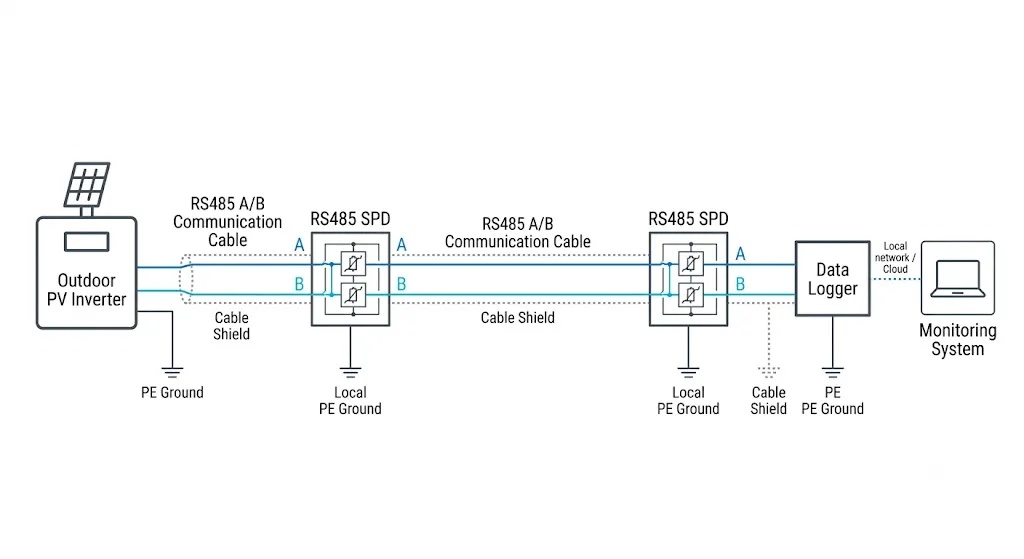
Um cabo de comunicação RS485 de um inversor FV pode conectar um inversor externo a um registrador de dados, gabinete de monitoramento ou sala de controle. Quando esse cabo está exposto a risco de sobretensão, a principal questão de engenharia não é simplesmente se deve usar um SPD de sinal. É onde o SPD RS485 deve ser instalado: no inversor, no registrador de dados ou em ambas as extremidades do cabo.
Esta página se concentra apenas nessa decisão de posição de instalação. Ela não pretende substituir instruções de fiação específicas do modelo nem um projeto completo de proteção para monitoramento solar.
Instale o SPD RS485 o mais próximo possível da interface do equipamento ou do ponto de entrada do cabo que precisa de proteção. Uma conexão curta contida em um único gabinete pode exigir apenas um ponto de proteção avaliado. Um cabo externo longo entre um inversor FV e um equipamento de monitoramento remoto deve ser avaliado para proteção com SPD em ambas as extremidades, especialmente quando o cabo cruza limites de edifícios, zonas expostas ou diferentes áreas de aterramento.
| Rota de Comunicação | Direção da Posição de Instalação |
|---|---|
| Fiação curta dentro de um único invólucro | Avalie um ponto de proteção próximo à interface exposta ou sensível. |
| O cabo sai do invólucro do inversor externo | Avalie um SPD próximo à interface RS485 do inversor. |
| O cabo entra em um registrador de dados ou gabinete de monitoramento | Avalie um SPD no ponto de entrada do equipamento receptor. |
| Longo percurso externo entre equipamentos separados | Avalie a proteção em ambas as extremidades em vez de presumir que um SPD cobre todo o percurso. |
Este guia responde:
- O SPD deve ser instalado ao lado do inversor fotovoltaico?
- Outro SPD deve ser instalado ao lado do registrador de dados?
- Quando ambas as extremidades do cabo RS485 devem ser protegidas?
Tensão de sinal, corrente nominal de descarga, parâmetros de transmissão, disposição dos terminais e a fiação exata permanecem itens de confirmação específicos do modelo.
Índice
Comece com as Duas Interfaces do Equipamento
Um cabo RS485 tem duas extremidades. Uma extremidade normalmente se conecta à porta de comunicação do inversor fotovoltaico. A outra pode se conectar a um registrador de dados, gateway, gabinete de monitoramento ou sistema de supervisão.
Cada extremidade contém eletrônica de comunicação sensível. A análise correta da proteção, portanto, começa pela identificação de ambas as interfaces e pelo traçado do percurso completo do cabo entre elas.
- Identifique o equipamento transmissor e o receptor. Registre o inversor, o registrador de dados e quaisquer dispositivos de comunicação intermediários.
- Localize onde o cabo sai e entra nos invólucros. Os pontos de entrada do equipamento são locais importantes de proteção.
- Verifique se o percurso é interno, externo ou entre edifícios. A exposição altera a decisão sobre a posição de instalação.
- Compare as condições de aterramento em ambas as extremidades. Áreas de aterramento separadas exigem análise específica do projeto.
Significado do comprador: Não solicite uma recomendação de SPD para RS485 usando apenas o modelo do inversor. O fornecedor também precisa das extremidades do cabo, do percurso e da configuração de aterramento.
Quando Instalar o SPD no Lado do Inversor FV
Avalie um SPD próximo ao inversor fotovoltaico quando o cabo RS485 externo se conectar diretamente à porta de comunicação do inversor. O SPD deve ser posicionado perto da interface protegida ou da entrada do invólucro, conforme as instruções do fabricante do inversor e os requisitos de fiação do SPD selecionado.
A proteção no lado do inversor torna-se mais relevante quando:
- O inversor é instalado ao ar livre.
- O cabo RS485 sai do invólucro do inversor e segue por um trajeto exposto.
- A porta de comunicação é uma parte crítica ou dispendiosa da eletrônica do inversor.
- O cabo se conecta a equipamentos localizados fora da área equipotencial imediata do inversor.
Limite de engenharia: “Próximo ao inversor” não significa qualquer ponto conveniente ao longo do cabo. O comprimento dos condutores, a conexão PE e o arranjo da instalação afetam o caminho de proteção. Siga as instruções do dispositivo selecionado e o projeto de aterramento do empreendimento.
Quando Instalar o SPD no Lado do Registrador de Dados
A extremidade de recepção também precisa ser avaliada. Um registrador de dados ou gabinete de monitoramento pode ser danificado por uma sobretensão que chegue pelo cabo de comunicação de campo, mesmo quando um SPD já tiver sido instalado no lado do inversor.
Avalie a proteção no lado do registrador quando:
- O cabo RS485 entra numa sala de controlo, num armário de monitorização ou num edifício separado.
- O registador serve vários inversores externos.
- O percurso do cabo é longo ou exposto antes de chegar ao registador.
- O equipamento de monitorização tem a sua própria disposição de aterramento ou equipotencialização.
A posição prática normalmente fica próxima da interface de receção ou do ponto de entrada do cabo, e não num ponto médio arbitrário que deixe o condutor do lado do equipamento desprotegido.
Quando as Duas Extremidades Devem Ser Avaliadas
A proteção em ambas as extremidades deve ser avaliada quando o cabo liga equipamentos separados e permanece exposto entre as duas interfaces. Um SPD não deve ser automaticamente tratado como proteção para todos os dispositivos ligados ao longo de um percurso externo longo.
| Cenário de Projeto FV | Decisão de Posicionamento |
|---|---|
| Inversor e registador no mesmo armário | Analise um ponto de interface exposto; dois SPDs podem não acrescentar benefício útil se a ligação permanecer interna e curta. |
| Inversor exterior ligado a um armário protegido próximo | Avalie a interface do inversor e o ponto de entrada do armário de acordo com o percurso real. |
| Vários inversores exteriores ligados a um registador de dados remoto | Avalie o posicionamento do SPD nas interfaces do equipamento exterior e no ponto de entrada do cabo de campo do lado do registador. |
| O cabo RS485 entra noutro edifício | Avalie a proteção em ambos os pontos de entrada de equipamentos do lado do edifício e confirme a equipotencialização. |
| O inversor e o registador usam áreas de aterramento diferentes | A proteção em ambas as extremidades pode ser apropriada, mas o tratamento da blindagem e do PE requer confirmação de engenharia. |
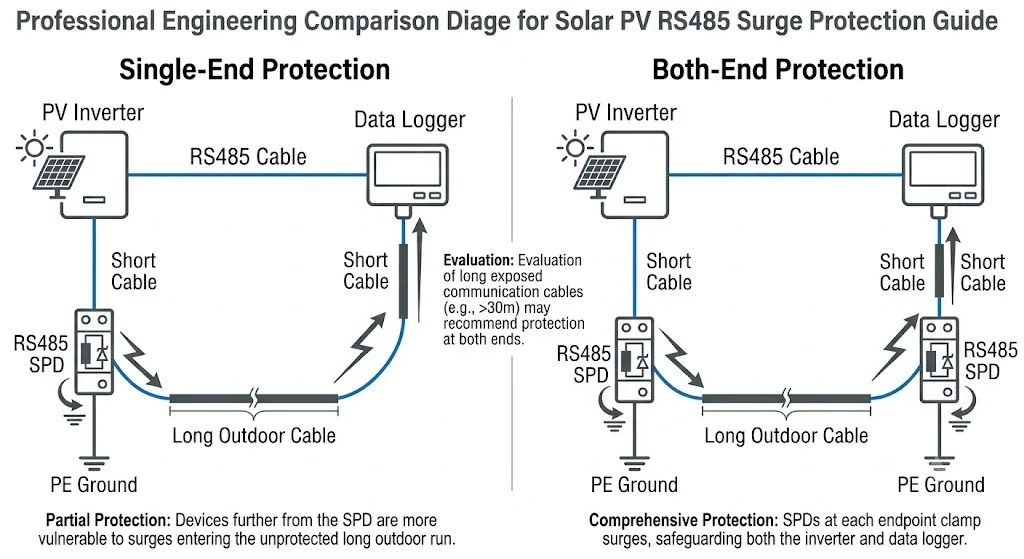
Proteção em uma Extremidade Versus Proteção em Ambas as Extremidades
| Fator de Decisão | Abordagem de extremidade única | Abordagem de ambas as extremidades |
|---|---|---|
| Contenção de cabos | Mais adequado para uma conexão curta e controlada com uma interface claramente exposta. | Mais relevante quando o cabo fica exposto entre equipamentos separados. |
| Equipamento protegido | Aborda principalmente a interface ao lado do DPS instalado. | Avalia a interface sensível em cada extremidade do cabo. |
| Transição de edifício | Pode deixar o ponto de entrada do equipamento oposto sem proteção local. | Permite que a proteção seja coordenada em ambas as entradas de equipamento ou edifício. |
| Revisão de aterramento | Ainda requer um caminho PE válido de baixa impedância. | Requer revisão cuidadosa das condições de ligação, blindagem e aterramento em ambas as extremidades. |
A proteção em ambas as extremidades não é uma regra universal para todos os cabos RS485. É uma decisão de projeto baseada na exposição, separação de equipamentos, pontos de entrada e condições de aterramento. As normas da IEC sobre proteção contra raios e DPS de sinal fornecem a estrutura técnica mais ampla, mas a posição final deve ser coordenada com a documentação de instalação do inversor, do registrador e do DPS.[1][2][3]
Use Este Fluxo de Trabalho de Posicionamento da Instalação
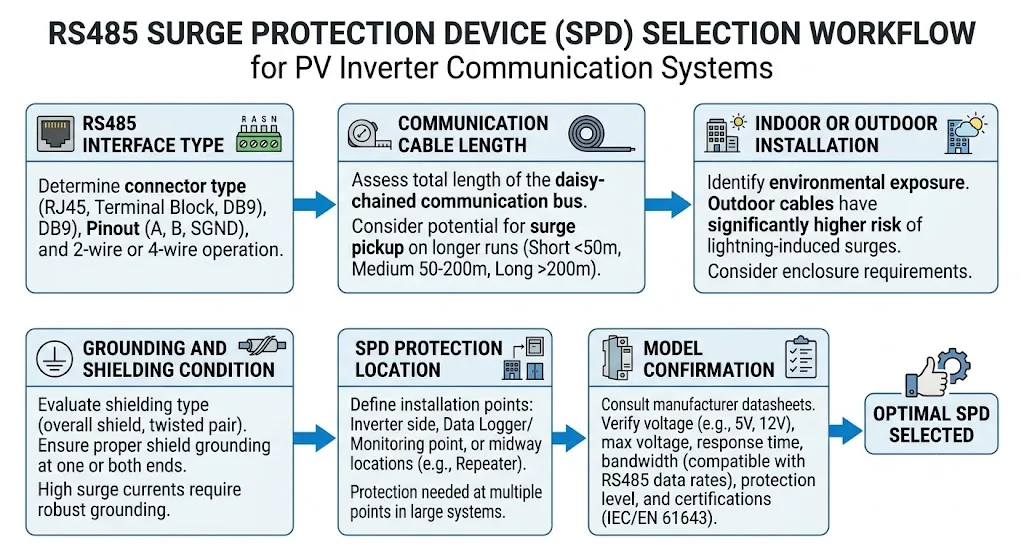
- A ligação RS485 está totalmente contida dentro de um único invólucro? Se sim, identifique se alguma interface fica exposta antes de adicionar vários pontos de proteção.
- O cabo sai do invólucro do inversor? Em caso afirmativo, avalie a proteção próxima à interface de comunicação do inversor.
- O cabo entra em outro gabinete ou edifício? Se sim, avalie a proteção nesse ponto de entrada receptor.
- A rota é longa, externa ou exposta? Se sim, avalie as duas extremidades em vez de depender automaticamente de um único SPD.
- As duas extremidades estão em áreas de aterramento diferentes? Se sim, exija confirmação do projeto quanto à equipotencialização, ao tratamento da blindagem e à conexão PE.
Erros de Posicionamento que Deixam o Equipamento Exposto
- Instalar um único SPD no registrador de dados e deixar uma porta do inversor externa diretamente conectada ao cabo de campo.
- Instalar um único SPD ao lado do inversor e presumir que o gabinete de monitoramento remoto está automaticamente protegido.
- Colocar o SPD longe da interface do equipamento porque esse local é mais fácil de acessar.
- Proteger apenas os circuitos de alimentação CA e CC, ignorando o caminho de entrada RS485 separado.
- Instalar dois SPDs sem confirmar a PE, a equipotencialização e o tratamento da blindagem em ambas as extremidades.
- Escolher a posição de instalação apenas pelo comprimento do cabo, sem verificar os limites do edifício e do aterramento.
Informações Necessárias para Confirmar a Posição do SPD
- Modelo do inversor fotovoltaico e número de portas de comunicação do inversor
- Equipamento receptor: registrador de dados, gateway, gabinete de monitoramento ou interface SCADA
- Rota completa do cabo RS485 e comprimento aproximado
- Se o cabo é interno, externo, enterrado, aéreo ou roteado entre edifícios
- O ponto de entrada no gabinete ou edifício em cada extremidade
- Disposição de aterramento e equipotencialização
- Método de conexão da blindagem do cabo exigido pelos fabricantes do equipamento
- DPS de sinal existentes e suas posições de instalação
- Número necessário de canais RS485 protegidos
Estes detalhes determinam se o projeto necessita de proteção no lado do inversor, no lado do registrador ou proteção coordenada em ambas as extremidades. A tensão exata do sinal, o desempenho da transmissão e os terminais de fiação devem ser verificados durante a confirmação do modelo.
Envie a rota do cabo do inversor para o registrador, as localizações dos equipamentos e a disposição do aterramento. A LEEYEE pode ajudar a avaliar se a proteção deve ser colocada em uma ou em ambas as extremidades antes da finalização do modelo do DPS.
Perguntas mais frequentes
Um DPS RS485 deve ser instalado ao lado do inversor fotovoltaico?
Avalie a instalação no lado do inversor quando um cabo RS485 externo for conectado diretamente à porta de comunicação do inversor. O DPS deve estar próximo à interface protegida ou à entrada do cabo, conforme as instruções de instalação do equipamento e do DPS.
Um único DPS no registrador de dados é suficiente?
Pode ser suficiente para um percurso curto e controlado com um ponto de entrada claramente exposto. Não deve ser considerado automaticamente suficiente para um cabo externo longo conectado a um inversor remoto.
Cabos RS485 longos de inversores fotovoltaicos precisam de um DPS em ambas as extremidades?
Cabos externos longos devem ser avaliados quanto à proteção em ambas as extremidades, pois existem componentes eletrônicos de comunicação sensíveis em cada ponto final. A decisão final depende da exposição, dos limites da edificação, do aterramento e das instruções do equipamento.
Onde o DPS deve ser posicionado quando o cabo RS485 entra em uma sala de controle?
Avalie um ponto de proteção próximo à entrada do cabo de campo ou à interface do equipamento receptor. A interface do lado do inversor externo também deve ser revisada, em vez de presumir que o DPS da sala de controle protege todo o percurso.
O DPS pode ser instalado no meio do cabo RS485?
Uma instalação no ponto médio não fornece necessariamente proteção local para nenhuma das interfaces do equipamento. A instalação é normalmente avaliada próxima ao equipamento sensível ou ao ponto de entrada do cabo, com o posicionamento final seguindo o projeto e as instruções do produto.
Referências
- Série IEC 62305, Proteção contra descargas atmosféricas. Confirme a edição exigida pelo projeto e pelas regulamentações locais.
- IEC 61643-21, Dispositivos de proteção contra surtos de baixa tensão conectados a redes de telecomunicações e sinalização — Requisitos de desempenho e métodos de ensaio. Confirme a edição aplicável e o escopo de certificação do produto.
- IEC 60364-4-44, Instalações elétricas de baixa tensão — Proteção para segurança — Proteção contra perturbações de tensão e perturbações eletromagnéticas.
- Instruções de instalação e documentação de interface de comunicação emitidas pelos fabricantes selecionados de inversores fotovoltaicos, registradores de dados e dispositivos de proteção contra surtos (SPD) de sinal.
A LEEYEE é uma fornecedora especializada em proteção contra surtos e baixa tensão. A CNSPD é a plataforma da LEEYEE focada em proteção contra surtos para compradores técnicos globais.