Protection contre les surtensions multi-canaux pour systèmes vidéo CCTV BNC
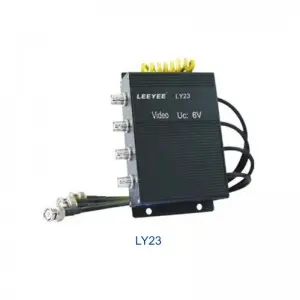
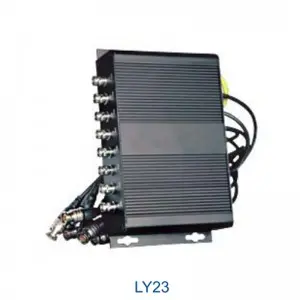
Le LY23 est un protecteur de surtension vidéo BNC de 4 ports ou 8 ports conçu pour la protection centralisée de multiples canaux CCTV analogiques. Installé entre les caméras de champ et le DVR, la matrice, le moniteur ou l'équipement de contrôle vidéo, il aide à limiter les surtensions transitoires entrant par les câbles vidéo coaxiaux tout en maintenant une transmission de signal fiable.
Options de protection centralisée de 4 ports et 8 ports
Conçu pour la vidéo CVBS analogique sur câbles coaxiaux BNC
Transmission allant jusqu'à 10Mbps avec une perte d'insertion ≤0,2 dB
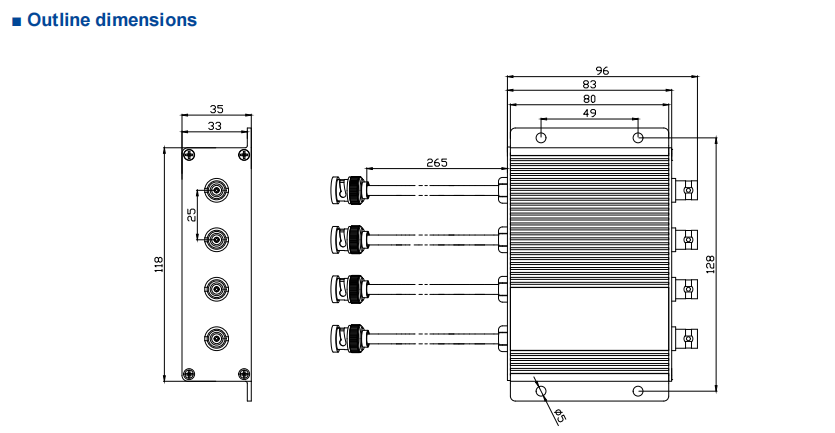
Conception compacte sur rail DIN pour armoires de surveillance
Applications appropriées
Le LY23 est adapté aux systèmes vidéo analogiques centralisés nécessitant une protection contre les surtensions pour plusieurs canaux coaxiaux BNC simultanément.
Systèmes CCTV multi-caméras
Protège plusieurs canaux vidéo de caméras analogiques au sein d'un seul appareil centralisé compact.
Armoires de contrôle DVR
Aide à protéger plusieurs entrées vidéo DVR contre les surtensions transmises par de longues courses de câbles coaxiaux.
Systèmes de matrice vidéo
Adapté pour des commutateurs de matrice vidéo centralisés, des consoles de surveillance et des systèmes de contrôle d'affichage.
Surveillance industrielle
Protège les réseaux vidéo multi-canaux dans les usines, les entrepôts, les sites de transport et les systèmes périmétriques.
FAQ
Questions fréquentes sur la sélection et l'installation du protecteur de surtension vidéo BNC LY23 de 4 ports et 8 ports.
À quoi sert le limiteur de surtension BNC multi-port LY23 ?
Il fournit une protection centrale contre les surtensions pour quatre ou huit canaux vidéo CCTV analogiques connectés par des câbles coaxiaux BNC.
Quelle est la différence entre les versions à 4 ports et à 8 ports ?
La version à 4 ports protège quatre canaux vidéo BNC indépendants, tandis que la version à 8 ports protège huit canaux dans un seul boîtier. Sélectionnez la version en fonction du nombre de connexions de caméras ou d'enregistreurs.
Quelles signaux vidéo le LY23 prend-il en charge ?
Les informations actuelles sur le produit l'identifient pour des signaux vidéo CVBS analogiques transmis par des câbles coaxiaux BNC.
Cela affectera-t-il la qualité de transmission vidéo ?
La perte d'insertion indiquée n'est pas supérieure à 0,2 dB et le taux de transmission maximum est de 10 Mbps. La compatibilité doit encore être vérifiée par rapport au format vidéo réel, à l'impédance du câble, à la longueur du câble et à l'équipement connecté.
Où le SPD multipoint doit-il être installé ?
Il est généralement installé dans une armoire de surveillance ou de contrôle près du DVR, de la matrice vidéo, du récepteur, du moniteur ou d'un autre équipement vidéo centralisé.
Que doit-on confirmer avant de commander ?
Confirmez le nombre de canaux vidéo, l'agencement des connecteurs BNC, le format vidéo, la tension de fonctionnement, l'impédance des câbles, l'espace d'installation, la méthode de mise à la terre, la distance de transmission et le niveau de résistance aux surtensions requis.