
Tipo 1+2 SPD: Cosa Significa e Quando Utilizzarlo
Un SPD di Tipo 1+2 combina il compito di corrente da fulmine di Classe I e la protezione da sovratensione a livello di distribuzione di Classe II in un unico dispositivo. È comunemente utilizzato all'origine di un'installazione dove sono richiesti i compiti di protezione di Tipo 1 e Tipo 2.
Cos'è un SPD di Tipo 1+2?
A SPD Tipo 1+2 è un dispositivo protettivo contro le sovratensioni combinato progettato per soddisfare sia i compiti di test di Tipo 1 che di Tipo 2. Viene utilizzato quando un'installazione può essere esposta a corrente parziale da fulmine e ha anche bisogno di limitazione della tensione di sovratensione a livello di distribuzione.
Nella terminologia in stile IEC, il compito di Tipo 1 è associato ai test di Classe I e alla forma d'onda della corrente di impulso di 10/350 μs. Il compito di Tipo 2 è associato ai test di Classe II e alla forma d'onda della corrente di scarica di 8/20 μs.
Un SPD di Tipo 1+2 non significa “migliore di ogni SPD di Tipo 2” in ogni progetto. Significa che il prodotto è stato progettato e testato per due diversi compiti di protezione da sovratensione.
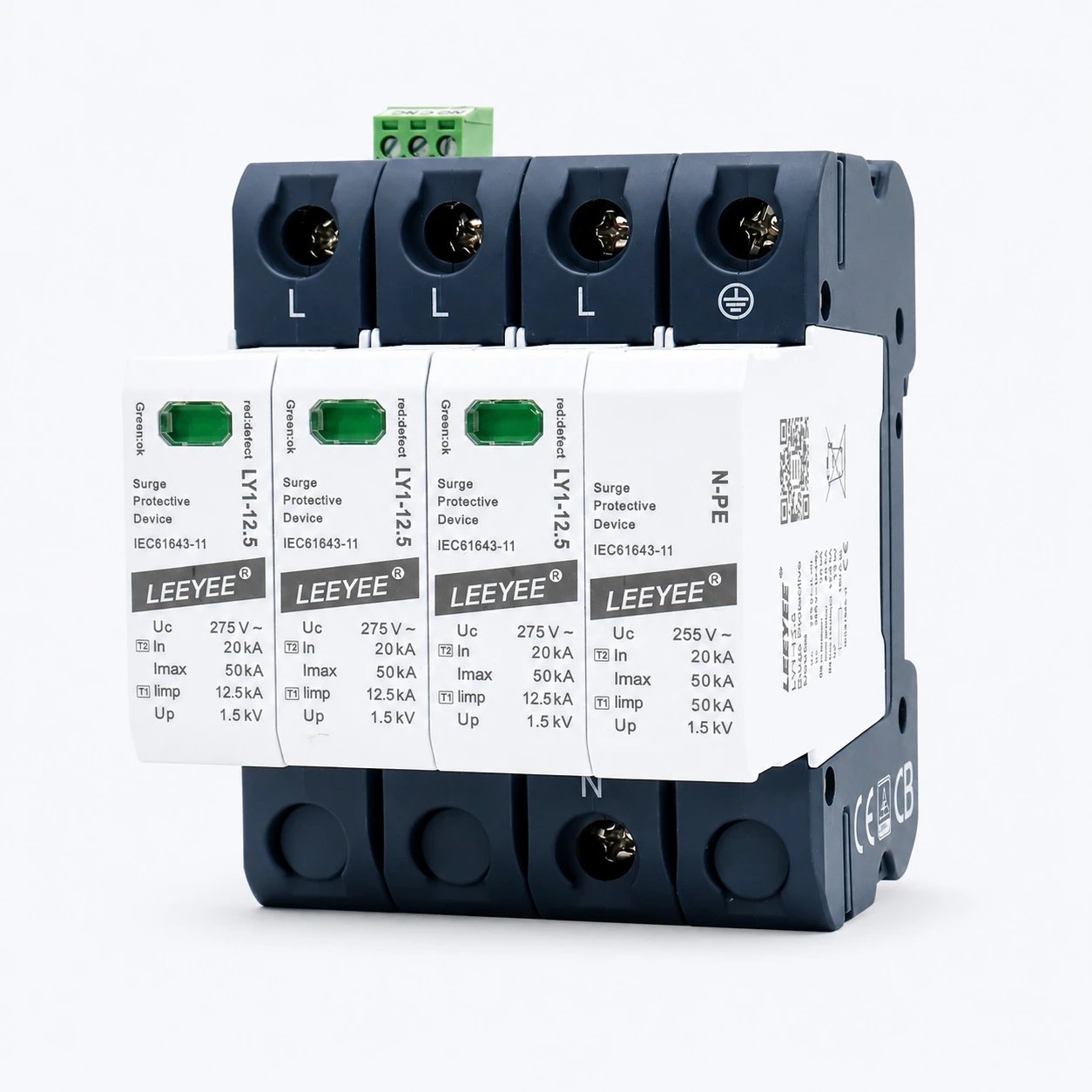
Come funziona un SPD di Tipo 1+2
Un SPD di Tipo 1+2 è progettato per rispondere sia a correnti impulsive ad alta energia che a picchi di distribuzione a bassa energia.
L'onda di sovratensione entra nel sistema
Un impulso legato a un fulmine o un picco di commutazione appare sul sistema elettrico e aumenta la tensione oltre il livello normale di funzionamento.
L'SPD conduce la corrente di sovratensione
Gli elementi di protezione interni diventano conduttivi e deviano la corrente di sovratensione verso il sistema di messa a terra o di collegamento.
La tensione è limitata
L'SPD riduce la tensione transitoria che raggiunge l'attrezzatura a valle secondo il suo livello di protezione dalla tensione e le condizioni di installazione.
SPD di Tipo 1+2 vs SPD separati di Tipo 1 + Tipo 2
Un SPD combinato di Tipo 1+2 e un sistema separato di Tipo 1 più Tipo 2 possono entrambi essere validi. La scelta migliore dipende dallo spazio di installazione, dal design del progetto, dalle esigenze di coordinamento e dalla soluzione testata del produttore.
| Elemento di confronto | SPD Tipo 1+2 | Tipo 1 + Tipo 2 separati |
|---|---|---|
| Concetto di base | Due doveri di test in un dispositivo combinato | Due stadi SPD separati installati e coordinati |
| Spazio del pannello | Di solito più compatto | Di solito richiede più spazio |
| Coordinamento | Il coordinamento interno dipende dalla progettazione e dal collaudo del prodotto | Il coordinamento esterno deve essere verificato tra i dispositivi |
| Semplicità di installazione | Spesso più semplice in una posizione principale della scheda | Può consentire una separazione delle fasi più flessibile |
| Uso tipico | Scheda principale in ingresso con compiti sia di Tipo 1 che di Tipo 2 | Installazioni più grandi con zone di protezione separate o distanze dei pannelli |
| Rischio di selezione | Deve verificare sia le valutazioni Iimp che quelle di Tipo 2 | Deve verificare distanza, coordinamento e livello di protezione tra le fasi |
Quando hai bisogno di un SPD di Tipo 1+2?
Gli SPD di Tipo 1+2 sono comunemente presi in considerazione quando è necessaria sia la protezione contro le correnti di fulmine di Tipo 1 sia la protezione distribuita di Tipo 2 nello stesso punto.
Quando un SPD di Tipo 2 è sufficiente?
Non ogni installazione ha bisogno di un SPD di Tipo 1+2. Un SPD di Tipo 2 potrebbe essere sufficiente dove non è richiesta la funzione di corrente di fulmine di Tipo 1 e l'installazione ha principalmente bisogno di protezione da sovratensioni a livello di distribuzione.
Un SPD di Tipo 2 può essere preso in considerazione quando:
- Il progetto non richiede una funzione di Tipo 1/Classe I;
- Non si prevede alcuna corrente parziale di fulmine all'origine dell'installazione;
- L'edificio non ha una protezione contro i fulmini esterna che richiede la selezione di un SPD di Tipo 1;
- Lo standard applicabile, il design o la valutazione del rischio richiede solo la protezione di Tipo 2;
- Lo SPD è installato in un quadro di distribuzione secondario o in un pannello di equipaggiamento.
Come selezionare uno SPD di Tipo 1+2
Selezionare uno SPD di Tipo 1+2 controllando l'insieme completo delle valutazioni, non solo il valore kA stampato sul prodotto.
| Elemento di selezione | Direzione iniziale |
|---|---|
| Tipo di sistema | Confermare AC, PV DC, telecomunicazioni, segnale o applicazione speciale. |
| Tensione nominale | Scegliere Uc o Ucpv in base alla reale tensione operativa e alla disposizione del sistema. |
| Posizione di installazione | Confermare se è installato all'origine, nel quadro principale o in un'altra zona di transizione di protezione. |
| Sistema di messa a terra | Confermare TN-S, TN-C, TT, IT o la pertinente disposizione di messa a terra PV DC. |
| Iimp | Controllare la valutazione della corrente di impulso per il dovere di Tipo 1/Classe I. |
| In e Imax | Controllare le valutazioni della corrente di scarica per il dovere di Tipo 2/Classe II. |
| Su | Controllare se il livello di protezione della tensione è adatto per l'equipaggiamento a valle. |
| Valutazione del cortocircuito | Verificare la corrente di cortocircuito prospettica e la protezione di backup richiesta. |
| Pali e modalità di protezione | Confermare la configurazione del polo 1P, 2P, 3P, 4P, N-PE o PV. |
Note di installazione e coordinamento
Mantieni i cavi corti
Conduttori di collegamento lunghi aumentano la tensione residua. Mantieni i percorsi di collegamento SPD il più corti e rettilinei possibile.
Controlla la protezione di backup
Verifica il coordinamento del fusibile o dell'interruttore richiesto secondo il datasheet SPD e le condizioni di cortocircuito del progetto.
Coordinate a valle
Un SPD di Tipo 1+2 al quadro principale potrebbe non eliminare la necessità di protezione di Tipo 2 o Tipo 3 a valle vicino a equipaggiamenti sensibili.
SPD AC Tipo 1+2 vs SPD DC da PV Tipo 1+2
Gli SPD AC e DC da PV non sono intercambiabili. Una classificazione Tipo 1+2 deve comunque essere abbinata all'applicazione e al sistema di tensione corretto.
| Elemento di confronto | AC Tipo 1+2 SPD | SPD DC da PV Tipo 1+2 |
|---|---|---|
| Applicazione | Sistema di distribuzione AC a bassa tensione | Circuiti DC fotovoltaici e lato DC dell'inverter |
| Tensione nominale | Uc selezionato per la tensione del sistema AC | Ucpv selezionato per la tensione della stringa o del campo PV |
| Comportamento dell'arco | La corrente AC attraversa naturalmente lo zero | La corrente DC richiede un design di disconnessione specifico per PV |
| Uso comune | Quadri di ingresso principali e pannelli di distribuzione AC | Scatole di combinazione PV, ingresso DC dell'inverter e pannelli di protezione PV |
| Avviso di selezione | Corrispondere il sistema di messa a terra e la modalità di protezione | Non utilizzare SPD AC ordinari su circuiti DC PV |
Errori comuni di selezione SPD di tipo 1+2
Scelta basata solo su kA
Un alto numero di corrente non basta. Controllare forma d'onda, tipo di valutazione, Uc, Up, modalità di protezione e condizioni di corto circuito.
Ignorare Iimp
Se è richiesta una funzione di tipo 1, la valutazione Iimp e il test di durata 10/350 μs devono essere verificati, non solo Imax.
Utilizzare SPD AC su DC PV
I circuiti DC PV richiedono caratteristiche di tensione e disconnessione specifiche per il PV. I prodotti AC non devono essere sostituiti.
Dimenticare i pannelli a valle
Una SPD di tipo 1+2 nella scheda principale potrebbe ancora necessitare di SPD coordinati a valle quando i carichi sono lontani.
Errata assunzione di messa a terra
La modalità di protezione e la configurazione dei poli devono corrispondere alla reale disposizione di messa a terra TN, TT, IT o PV.
Nessun controllo di protezione di backup
Lo SPD e il dispositivo protettivo a monte devono essere compatibili con la corrente di corto circuito prospettica.
Supporto SPD di tipo 1+2 da LEEYEE
LEEYEE è un fornitore specializzato in protezione da sovratensioni e protezione a bassa tensione, fidato per applicazioni solari PV, distribuzione di energia, telecomunicazioni, industriali e OEM.
Selezione del modello
Supporto per la selezione di SPD di tipo AC o PV DC 1+2 in base alla tensione di sistema, configurazione del polo, modalità di protezione e ambiente di progetto.
Fornitura OEM e di progetto
Supporto per etichette OEM, documentazione di progetto, imballaggio e forniture all'ingrosso per distributori, appaltatori e costruttori di attrezzature.
Documenti di applicazione
Supporto con schede informative, immagini del prodotto, riferimenti di installazione e comunicazioni di selezione di base per acquirenti B2B.
FAQ sui SPD di tipo 1+2
Cosa significa SPD di Tipo 1+2?
Il SPD di tipo 1+2 significa un dispositivo di protezione contro le sovratensioni testato sia per i doveri di tipo 1/Classe I che di tipo 2/Classe II. Può gestire l'impulso di corrente da fulmine e la protezione contro le sovratensioni a livello di distribuzione in un unico dispositivo.
Il SPD di Tipo 1+2 è lo stesso del SPD di Tipo 1?
No. Un SPD di tipo 1 è testato per il servizio di tipo 1, mentre un SPD di tipo 1+2 è testato per entrambi i servizi di tipo 1 e tipo 2. Le valutazioni effettive del prodotto devono comunque essere verificate.
È la SPD di Tipo 1+2 migliore della SPD di Tipo 2?
Non sempre. Il Tipo 1+2 è adatto quando è richiesto un dovere di Tipo 1. Se l'installazione ha solo bisogno di protezione da sovratensioni a livello di distribuzione, un SPD di Tipo 2 correttamente selezionato potrebbe essere sufficiente.
Dove viene installato un SPD di Tipo 1+2?
È comunemente installato all'origine dell'installazione o nel quadro di distribuzione principale, a seconda del design del sistema e del concetto di protezione.
Un SPD di Tipo 1+2 elimina la necessità di SPDs a valle?
Non sempre. Cavi lunghi, quadri di distribuzione a valle e apparecchiature sensibili potrebbero comunque richiedere una protezione coordinata di Tipo 2 o Tipo 3.
È possibile utilizzare un SPD di Tipo 1+2 AC su circuiti DC PV?
No. I circuiti DC fotovoltaici richiedono SPD specifici per fotovoltaico con caratteristiche adeguate di tensione DC e disconnessione.
Quali informazioni sono necessarie per selezionare un SPD di Tipo 1+2?
Fornire applicazione AC o DC, tensione nominale, sistema di messa a terra, posizione di installazione, poli, Iimp richiesti, In o Imax, Up, condizioni di corto circuito e quantità di progetto.
Hai bisogno di aiuto per selezionare un SPD di tipo 1+2?
Invia la tua applicazione AC o PV DC, la tensione del sistema, l'arrangiamento di messa a terra, la posizione di installazione, i poli, le specifiche richieste e la quantità del progetto. LEEYEE ti aiuterà a identificare un'opzione di protezione da sovratensioni di tipo 1+2 adeguata.