
Gli impianti oil and gas richiedono strategie di protezione contro le sovratensioni che si adattino all'intera architettura elettrica e di strumentazione. Lunghi cavi all'aperto, dispositivi remoti di campo, sistemi di controllo e reti di comunicazione possono creare molteplici percorsi di ingresso delle sovratensioni.
Questa guida aiuta appaltatori EPC, costruttori di quadri elettrici, ingegneri di strumentazione e team di approvvigionamento industriale a valutare la protezione contro le sovratensioni per applicazioni oil and gas, inclusi impianti di produzione upstream, sistemi di pipeline midstream e impianti di processo downstream.
Risposta rapida: dove è necessaria la protezione contro le sovratensioni nei sistemi oil and gas?
| Area di applicazione | Attrezzatura tipica | Considerazione sulla protezione |
|---|---|---|
| Distribuzione dell'energia e quadri locali | Quadri principali, quadri MCC, quadri di controllo locali | Valutare l'SPD AC in base alla tensione di sistema, allo schema di messa a terra e ai requisiti di installazione. |
| Sistemi di controllo e automazione | Quadri PLC, DCS, SCADA, RTU | Considerare sia la protezione dell'alimentazione in ingresso sia quella delle interfacce collegate. |
| Strumentazione di campo | Trasmettitori di pressione, temperatura, portata e livello | Valutare i requisiti di protezione per segnali 4–20 mA, RTD, impulsi e altri tipi di segnale. |
| Reti di comunicazione | Collegamenti RS485, Modbus, Ethernet | Confermare il tipo di interfaccia, il percorso dei cavi, le condizioni di schermatura e messa a terra. |
La soluzione corretta di protezione contro le sovratensioni dipende dalla reale progettazione del progetto. La selezione dell’SPD deve essere confermata in base ai requisiti delle apparecchiature, al luogo di installazione e ai documenti di progetto applicabili.
Indice dei contenuti
Rischi di sovratensione nelle operazioni upstream, midstream e downstream del settore oil and gas
I sistemi oil and gas sono distribuiti su vaste aree industriali e l’esposizione alle sovratensioni non è identica in ogni fase del funzionamento. Strumentazione esterna, stazioni remote e sistemi di controllo centralizzati creano priorità di protezione diverse.
| Fase operativa | Attrezzatura tipica | Considerazione del rischio di sovratensione |
|---|---|---|
| Produzione upstream | Siti di pozzo, strumenti remoti, sistemi RTU | Cavi di campo e strumentazione all’aperto esposti a transitori dovuti a fulmini e a manovre di commutazione. |
| Trasporto midstream | Stazioni di pipeline, stazioni di compressione, sistemi di monitoraggio | Lunghi percorsi di cavi di alimentazione, controllo e comunicazione tra ubicazioni separate. |
| Trattamento downstream | DCS di raffineria, quadri di controllo, reti di strumentazione | Protezione di interfacce sensibili di automazione e misura all’interno di complessi sistemi industriali. |
L’approccio alla protezione dovrebbe seguire i reali percorsi di alimentazione e segnale, invece di considerare un singolo quadro o un singolo dispositivo di campo come un punto isolato.
Percorsi comuni di ingresso delle sovratensioni negli impianti oil and gas
L’energia delle sovratensioni può entrare attraverso le linee di alimentazione in ingresso, i cavi della strumentazione all’aperto, le linee di comunicazione o le differenze di potenziale tra aree di messa a terra separate. Per questo motivo, la protezione contro le sovratensioni nel settore oil and gas dovrebbe essere considerata una questione a livello di sistema e non la semplice scelta di un singolo dispositivo.
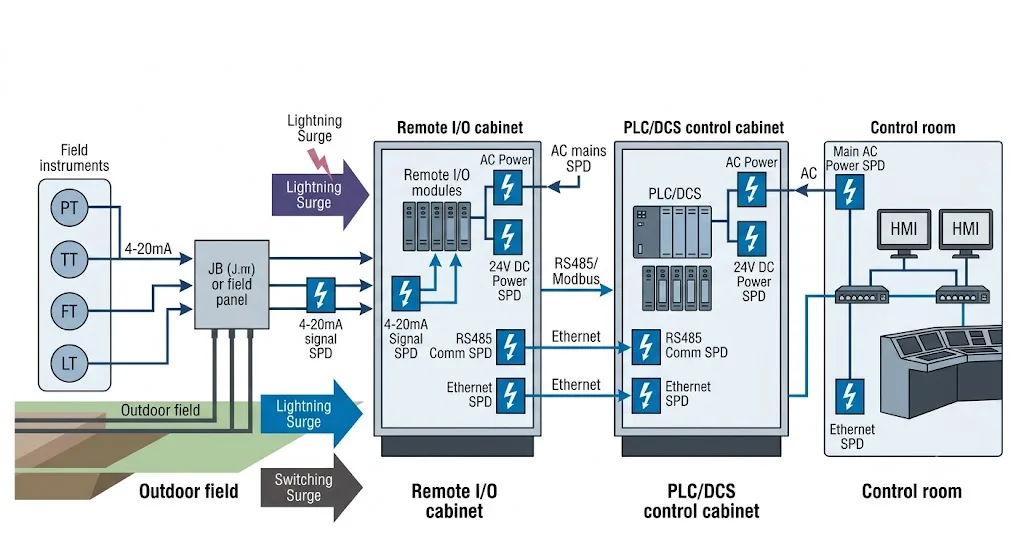
Architettura di protezione contro le sovratensioni per petrolio e gas che mostra i punti di protezione comuni dagli strumenti di campo e dalle interfacce remote ai sistemi PLC e DCS.
Una revisione ingegneristica completa normalmente considera:
- Percorsi di alimentazione AC in ingresso.
- Circuiti di alimentazione di controllo a 24 V DC.
- Circuiti di segnale degli strumenti di campo.
- Interfacce di comunicazione tra le aree di campo e di controllo.
- Messa a terra, schermatura e collegamento equipotenziale.
Protezione da sovratensioni per PLC, DCS e quadri di controllo
I sistemi PLC e DCS sono centrali nell'automazione di petrolio e gas. I transienti che entrano tramite l'alimentazione o il cablaggio di campo collegato possono disturbare l'elettronica di controllo sensibile, i moduli di comunicazione e le interfacce di misura.
Per un quadro di controllo, l'acquirente dovrebbe valutare l'architettura completa del cabinet invece di selezionare un SPD solo in base alla tensione nominale.
| Sistema | Punto di verifica della protezione | Cosa confermare |
|---|---|---|
| Quadro PLC / DCS | Alimentazione in ingresso e interfacce esterne | Tensione del sistema, disposizione di messa a terra, layout del quadro e tipi di interfaccia. |
| Quadro I/O remoto | Punti di ingresso dei cavi di campo esterni | Tipo di segnale, instradamento dei cavi, tensione di alimentazione e interfaccia di comunicazione. |
| Quadro strumenti | Circuiti di misura e controllo | Caratteristiche del loop, configurazione del cablaggio e requisiti delle apparecchiature collegate. |
Protezione degli strumenti di campo oil and gas e dei loop 4–20 mA
I trasmettitori di pressione, i trasmettitori di temperatura, i misuratori di portata e gli strumenti di livello sono spesso installati all'aperto e collegati al sistema di controllo tramite lunghi cavi di campo.
Il corretto dispositivo di protezione del segnale deve corrispondere alla reale interfaccia elettrica. Un loop da 4–20 mA, un circuito RTD, un ingresso a impulsi e una linea RS485 non hanno le stesse caratteristiche operative, quindi non devono essere considerati applicazioni intercambiabili.
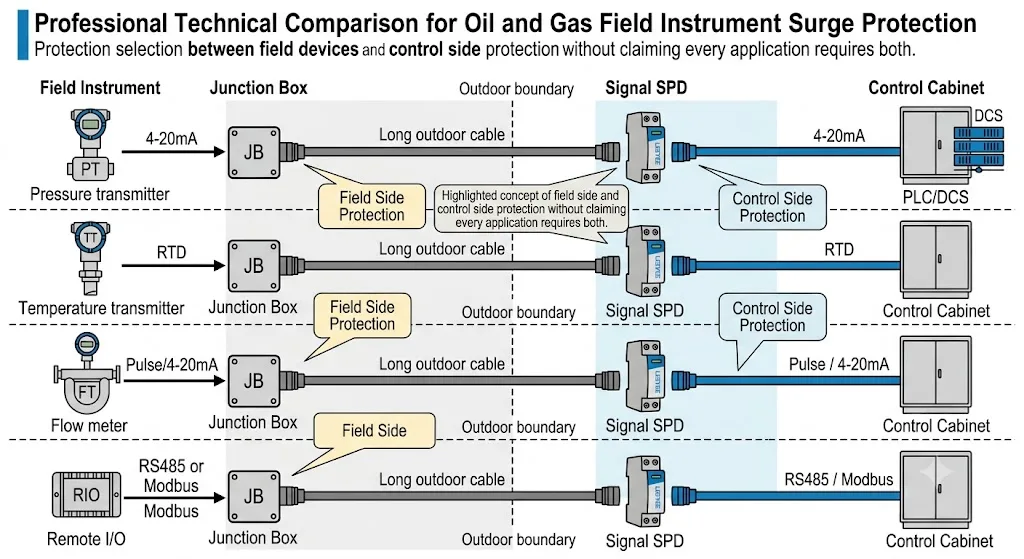
Confronto delle considerazioni sulla protezione contro le sovratensioni per i comuni strumenti di campo e le interfacce di controllo nell'industria oil & gas.
Per percorsi lunghi dei cavi di campo, gli ingegneri possono valutare la protezione a entrambe le estremità del circuito. Ciò non significa che ogni installazione richieda automaticamente due SPD. La decisione dipende dal percorso del cavo, dal progetto di messa a terra, dalla posizione dell'apparecchiatura e dalla valutazione del rischio del progetto.
Protezione delle interfacce RS485, Modbus e di comunicazione
Gli impianti oil & gas fanno sempre più affidamento sulla comunicazione digitale per il monitoraggio remoto, il controllo e la diagnostica. I collegamenti RS485, Modbus ed Ethernet possono offrire un ulteriore percorso alle perturbazioni transitorie quando i cavi corrono tra aree di apparecchiature separate.
Prima di selezionare una protezione contro le sovratensioni per le comunicazioni, confermare:
- Il protocollo di comunicazione e l'interfaccia elettrica.
- Il segnale nominale o la tensione di esercizio.
- Il numero di conduttori e la configurazione del cablaggio.
- Il percorso del cavo e l'ambiente di installazione.
- Il metodo di schermatura e messa a terra.
- Eventuali requisiti del produttore del sistema per l'interfaccia.
Messa a terra, schermatura e collegamento equipotenziale contano quanto lo SPD
Le prestazioni dell'SPD dipendono sia dal dispositivo sia dall'installazione. La lunghezza del collegamento, il percorso del conduttore di terra di protezione e la configurazione di equipotenzializzazione influenzano la tensione residua che raggiunge l'apparecchiatura protetta.
Nei sistemi di strumentazione industriale, la schermatura e la messa a terra influenzano anche l'integrità del segnale. Questi dettagli devono quindi essere esaminati insieme alla configurazione della protezione contro le sovratensioni, invece di essere trattati come argomenti separati.
La protezione dovrebbe essere installata sia sul lato campo sia sul lato sala controllo?
Non esiste una risposta universale. La protezione a doppia estremità può essere presa in considerazione quando cavi lunghi collegano apparecchiature in luoghi separati, soprattutto quando sono rilevanti l'esposizione ai fulmini o le differenze di potenziale di terra.
Tuttavia, la decisione finale deve basarsi sulla progettazione completa del sistema. L'ingegnere di progetto deve confermare la lunghezza del cavo, l'equipotenzializzazione, la messa a terra, le caratteristiche dell'interfaccia e i requisiti di installazione delle apparecchiature collegate.
Requisiti per le Aree Pericolose e la Protezione contro le Esplosioni
Gli impianti oil and gas possono includere aree pericolose in cui si applicano specifici requisiti di protezione contro le esplosioni. La certificazione standard dell'SPD non significa automaticamente che il dispositivo sia approvato per l'installazione diretta in un'area pericolosa.
Prima di selezionare un SPD per una zona pericolosa, verificare:
- Classificazione dell'area e requisiti di zona.
- Concetto di protezione contro le esplosioni utilizzato dal progetto.
- Requisiti di sicurezza intrinseca, ove applicabile.
- Requisiti dell'involucro e di installazione.
- Approvazioni ATEX, IECEx o altre approvazioni specifiche del progetto, ove applicabile.
- Specifiche del sistema di controllo, del produttore dello strumento e dell'EPC.
Se l'SPD non è approvato per l'installazione nell'area classificata, il progetto potrebbe richiedere un'altra configurazione di installazione, ad esempio il posizionamento all'interno di un involucro approvato o all'esterno della zona pericolosa. Il metodo corretto deve essere confermato sulla base dei documenti di progetto e delle norme applicabili.
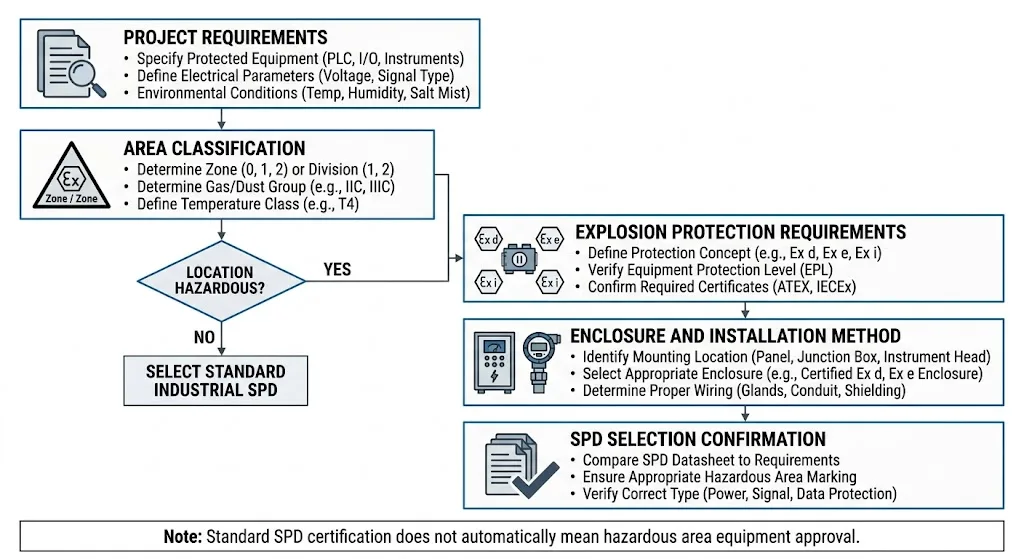
La selezione della protezione contro le sovratensioni in aree pericolose richiede una conferma specifica del progetto relativa a classificazione, approvazioni, involucro e metodo di installazione.
Tipi di SPD comunemente valutati nei sistemi oil and gas
La protezione contro le sovratensioni negli impianti oil and gas normalmente comporta più di una categoria di SPD. La combinazione esatta dipende dall'architettura del sistema.
| Applicazione | Categoria di protezione tipica | Punto principale di conferma |
|---|---|---|
| Alimentazione CA principale o quadro locale | SPD alimentazione CA | Tensione di sistema, configurazione di messa a terra, tipo di SPD e posizione di installazione. |
| Circuito di controllo a 24 V CC | Protezione contro le sovratensioni per alimentazione CC o circuito di controllo | Tensione di esercizio, corrente e apparecchiature collegate. |
| Anello trasmettitore 4–20 mA | SPD per linea di segnale | Tensione di loop, metodo di cablaggio, caratteristiche dell'interfaccia e messa a terra. |
| RS485 / Modbus | SPD per linee di comunicazione | Interfaccia elettrica, tensione operativa, disposizione dei conduttori e requisiti di larghezza di banda. |
Il modello finale di SPD deve essere selezionato in base ai parametri elettrici effettivi e ai requisiti del progetto. Il solo nome dell'applicazione non è sufficiente per approvare un dispositivo.
Cosa dovrebbe verificare un appaltatore EPC o un costruttore di quadri prima dell'approvazione dello SPD?
I progetti nel settore petrolifero e del gas prevedono solitamente molteplici livelli di approvazione. Un dispositivo tecnicamente idoneo può comunque essere respinto se la documentazione, il metodo di installazione o l'ambito della certificazione non corrispondono ai requisiti del progetto.
Prima dell'approvazione, i team di approvvigionamento e ingegneria devono esaminare:
- Scheda tecnica del prodotto e parametri elettrici.
- Standard di prova applicabile.
- Ambito del certificato e copertura esatta del modello.
- Disegno di installazione e disposizione dei terminali.
- Requisiti di messa a terra o collegamento equipotenziale.
- Limitazioni per aree pericolose, ove pertinente.
- Requisiti di integrazione nel pannello o nell'armadio.
- Etichettatura OEM, imballaggio e documentazione necessari per forniture ricorrenti.
Prima dell'ordine: checklist di conferma per SPD oil and gas
- Luogo di applicazione: strumento da campo, scatola di derivazione, pannello locale, quadro di controllo o sala controllo.
- Applicazione upstream, midstream o downstream.
- Ambiente di installazione pericoloso o non pericoloso.
- Classificazione dell'area e approvazioni richieste, se applicabili.
- Requisiti di protezione per alimentazione CA, CC, segnale o comunicazione.
- Tensione di sistema e configurazione di messa a terra.
- Tipo di segnale: 4–20 mA, RTD, impulsi, RS485, Modbus, Ethernet o altra interfaccia.
- Numero di conduttori e configurazione del cablaggio.
- Lunghezza del percorso del cavo e condizioni di installazione.
- Standard richiesti, certificati e documenti di progetto.
- Quantità, etichetta OEM, requisiti di imballaggio e documentazione.
Hai bisogno di assistenza per confermare una configurazione SPD per il settore Oil & Gas?
Condividi la tensione del sistema, il luogo di installazione, il tipo di segnale e i requisiti del progetto. LEEYEE può supportare la revisione dei parametri tecnici per quadri di controllo industriali, strumentazione da campo e requisiti OEM.
Richiedi una raccomandazione di modelloDomande frequenti
Gli strumenti da campo collegati tramite cavi esterni o a lunga distanza potrebbero richiedere una valutazione della protezione contro le sovratensioni, poiché il cablaggio esterno può introdurre disturbi transitori nei circuiti di misura sensibili. Il requisito dipende dal rischio del sito e dalla progettazione del progetto.
È possibile prendere in considerazione un SPD per linea di segnale, ma deve corrispondere alla tensione di loop, alla disposizione del cablaggio e alle caratteristiche elettriche del circuito del trasmettitore. Il modello esatto deve essere confermato dalla documentazione dello strumento e del sistema di controllo.
I punti di verifica tipici includono l'alimentazione in ingresso, i punti di ingresso dei cavi di campo e le interfacce di comunicazione. La posizione di installazione finale dipende dall'architettura del sistema, dalla messa a terra, dall'instradamento dei cavi e dai requisiti dell'apparecchiatura.
Non sempre. La protezione su entrambe le estremità può essere presa in considerazione per percorsi dei cavi lunghi o esposti, ma il requisito deve essere confermato in base alla messa a terra del sistema, al percorso dei cavi e alla valutazione dei rischi del progetto.
Non automaticamente. La certificazione standard per la protezione dalle sovratensioni non dimostra di per sé l'approvazione per aree pericolose. La classificazione dell'area, il metodo di protezione contro le esplosioni, l'involucro e i requisiti di certificazione devono essere verificati separatamente.
I documenti tipici includono la scheda tecnica del prodotto, i certificati applicabili, le informazioni sui test specifici del modello, le istruzioni di installazione e i disegni richiesti dal progetto. I progetti in aree pericolose potrebbero richiedere documenti di approvazione aggiuntivi.