
SPD de 1500V CC para Sistemas de Energia Solar
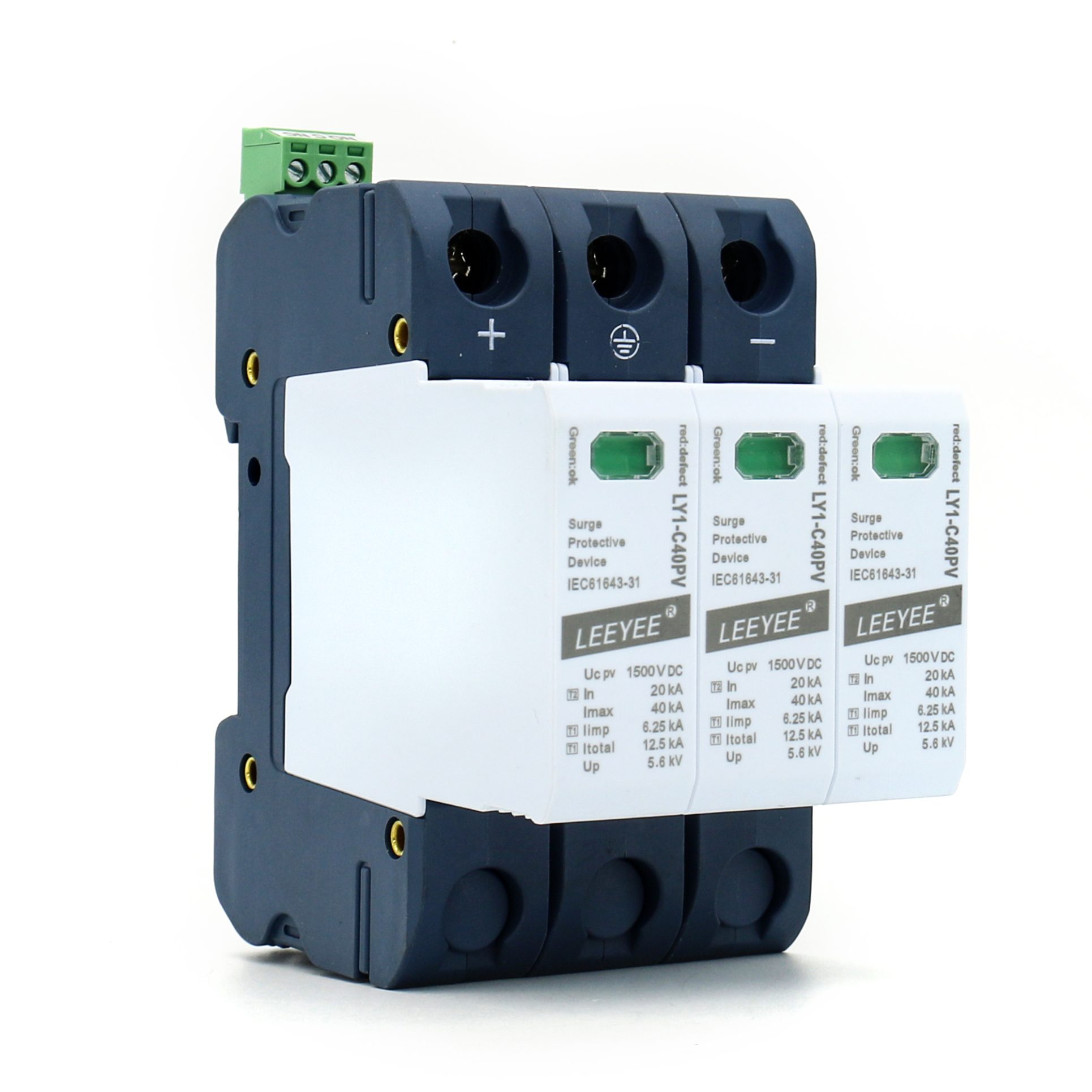
Um SPD 1500V DC protege strings PV de alta voltagem, caixas combinadoras e entradas DC de inversores contra sobretensões transitórias. A seleção correta depende de U,cpv, exposição a raios, classe de proteção, corrente de descarga, nível de proteção de voltagem e posição de instalação - não apenas na marcação “1500V”.
Resposta ao Comprador Direto
Escolha um SPD DC de 1500V quando o arranjo FV for projetado para operação em alta tensão DC e a proteção contra surtos for necessária na caixa de combinação FV, gabinete de distribuição DC ou entrada DC do inversor. Para sistemas FV de 1500V, não use um SPD DC de 1000V ou um SPD AC comum como substituto. O modelo correto deve corresponder a Ucpv, Tipo/Classe, Iimp, In, Imáximo, Up, posição de instalação e exposição a raios do projeto.
O que é um SPD DC de 1500V?
Um dispositivo de proteção contra surtos DC de 1500V está conectado em paralelo no lado DC de um sistema fotovoltaico. Quando ocorrem transientes induzidos por raios ou comutação, ele limita a tensão que atinge os equipamentos protegidos e fornece um caminho controlado para a corrente de surto. Os pontos de instalação típicos incluem caixas de combinação de strings FV, gabinetes de distribuição DC e entradas DC do inversor.
Proteja inversores de alto valor
Reduza a tensão transitória que chega à eletrônica da entrada DC do inversor e ao equipamento de monitoramento conectado.
Apoie a arquitetura FV de 1500V
Combine strings de alta tensão modernas usadas para reduzir a corrente, perdas de cabos e custos do sistema.
Reduza o tempo de paralisação evitável
Ajude a diminuir o risco de paradas relacionadas a surtos, trabalhos de substituição e manutenção de campo não planejada.
1000V DC SPD vs 1500V DC SPD
Um sistema FV de 1500V requer um SPD DC com uma classificação Ucpv adequada. Um SPD DC de 1000V não deve ser usado como substituto em um arranjo fotovoltaico de 1500V.
| Item | SPD CC 1000V | SPD CC 1500V |
|---|---|---|
| Uso principal | Strings FV de classe 1000V e sistemas comerciais menores | Sistemas FV comerciais e de utilidade de classe 1500V |
| Classificação chave | Ucpv adequado para o conjunto real de 1000V | Ucpv adequado para o conjunto real de 1500V |
| Posição típica | Caixa de união PV, entrada DC do inversor, gabinete DC | caixa combinadora de PV, entrada DC do inversor, distribuição DC de alta tensão |
| risco de seleção incorreta | Um SPD com classificação inferior pode estar sobrecarregado durante a operação normal de PV e não deve ser selecionado apenas porque a aparência do produto ou a classificação em kA parecem semelhantes. | |
Nota de seleção: sempre calcule a tensão máxima em circuito aberto do PV na menor temperatura esperada do módulo antes de confirmar a classificação do SPD U.cpv Classificação.
Tipo 1+2 ou Tipo 2: Qual SPD DC de 1500V é necessário?
A tensão do sistema não determina a classe de proteção por si só. Zonas de proteção contra raios, proteção externa contra raios, posição de instalação e especificações do projeto também devem ser consideradas.
SPD de DC Tipo 1+2
Para posições onde a corrente de relâmpago parcial pode entrar no sistema fotovoltaico DC, enquanto também fornece proteção contra surtos do Tipo 2.
- Usinas fotovoltaicas em grande escala e expostas em campo aberto
- Arranjos associados a um sistema de proteção contra relâmpagos externo
- Caixas combinadoras em limites de LPZ de maior exposição
- Projetos que requerem capacidade de corrente de impulso de 10/350 μs
SPD de DC Tipo 2
Para posições de instalação onde o dever de corrente de relâmpago direto não é especificado, ou como proteção coordenada a jusante.
- Entradas DC do inversor e distribuição DC a jusante
- Sistemas fotovoltaicos comerciais com menor exposição a relâmpagos diretos
- Proteção secundária coordenada com o Tipo 1+2 a montante
- Projetos avaliados principalmente com uma forma de onda de corrente de 8/20 μs
Sete Classificações Que Decidem Se um SPD 1500V DC É Adequado
Um modelo tecnicamente correto deve corresponder à voltagem real do arranjo, nível de resistência do equipamento, ambiente de surto, condições de curto-circuito e topologia de aterramento PV.
| Classificação | Significado | Verificação do comprador |
|---|---|---|
| Ucpv | Tensão máxima contínua de operação para um SPD fotovoltaico. | Compare-a com a tensão máxima calculada de circuito aberto do PV na menor temperatura esperada do módulo. |
| Tipo / Classe | Classificação Tipo 1+2 ou Tipo 2. | Combine-a com a exposição a raios, posição do LPZ, proteção externa contra raios e a especificação do projeto. |
| Iimp | Corrente de descarga de impulso usando a forma de onda de 10/350 μs. | Necessário onde é especificada a carga de corrente de raio Tipo 1. |
| In / Imáximo | Corrente nominal e máxima de descarga usando a forma de onda de 8/20 μs. | Avalie a carga de surto repetida e a capacidade máxima de descarga Tipo 2. |
| Up | Nível de proteção de tensão medido durante a descarga. | Coordene-a com o nível de resistência a impulso do inversor e outros equipamentos protegidos. |
| Iscpv / SCCR | Capacidade de resistência a curto-circuito da PV ou classificação de corrente de curto-circuito. | Assegure-se de que o SPD e seu arranjo de desconexão sejam adequados para a corrente de falta disponível. |
| Modo de proteção | Conexão interna entre DC+, DC− e PE. | Confirme a compatibilidade com a topologia do sistema PV e o arranjo de aterramento. |
Não selecione um SPD PV apenas com base em Imax. Ucpv, Up, classe de proteção, adequação à corrente de falta e topologia do sistema são igualmente importantes.
Onde é instalado um SPD DC de 1500V?
O SPD deve ser posicionado como parte de um caminho de proteção coordenado, próximo à seção do circuito ou equipamento que protege.
Prioridades de instalação
- Mantenha os condutores de conexão SPD curtos, diretos e livres de laços desnecessários.
- Instale próximo ao equipamento ou seção do circuito sendo protegido.
- Coordene a proteção DC com os SPDs do lado AC e da linha de comunicação.
- Use o tamanho de condutor especificado, o torque e a proteção de backup.
- Adicione proteção coordenada quando a distância do cabo ou a exposição exigir.
Erros comuns
- Instalando um SPD classificado para 1000V em um sistema PV de 1500V.
- Selecionando apenas por Imax e ignorando Ucpv ou Up.
- Usando condutores de terra longos que aumentam o nível de proteção instalado.
- Utilizar um SPD de CA comum como substituto para um SPD de CC fotovoltaico.
- Proteger o circuito de CC enquanto deixa os circuitos de CA e de sinal expostos.
SPD de CC de 1500V Tipo 1+2 para proteção de combinadores e inversores fotovoltaicos
Um dispositivo de proteção contra sobretensões (SPD) fotovoltaico com cartucho substituível para matrizes solares de alta tensão, caixas combinadoras de strings, quadros de distribuição de CC e entradas de CC de inversores.
O que os compradores podem verificar nesta página
Uma página de categoria de produto credível deve ligar as reivindicações a um modelo, um ficheiro de parâmetros, uma norma e uma aplicação real — não confiar numa linguagem genérica de "alta qualidade".
Modelo nomeado
O LY1-C40PV/3(S) está ligado a uma página técnica dedicada do produto em vez de ser apresentado como uma imagem de categoria anónima.
Classificações legíveis
Ucpv, classe de proteção, Iimp, In, Imax, Up, modo de proteção e montagem são apresentados como valores de atributo de entidade.
Ficheiros para download
As ligações para a folha de parâmetros, manual do utilizador e página de certificados estão disponíveis diretamente para análise do comprador.
Posição clara no sistema
O modelo está ligado a matrizes fotovoltaicas, caixas combinadoras, distribuição de CC e proteção de entrada de inversores.
Dos Dados do Projeto à Seleção Confirmada de SPD de 1500V
Esta página de categoria ajuda os compradores a restringir os requisitos; a confirmação final deve utilizar os dados reais do projeto.
Envie a tensão do sistema
Tensão máxima de circuito aberto do arranjo e temperatura mais baixa do local.
Defina a posição
Caixa de junção (combiner box), quadro de distribuição DC ou entrada do inversor.
Confirme a exposição
Proteção contra descargas atmosféricas externa, limite da LPZ e tipo necessário.
Verifique o modelo
Classificações, topologia, contacto remoto, documentação e quantidade.
1500V DC SPD FAQ
Para que é utilizado um SPD de 1500V CC?
É utilizado no lado de corrente contínua (CC) de sistemas fotovoltaicos de alta tensão para limitar sobretensões transitórias e desviar correntes de surto. Locais típicos incluem caixas de junção (string boxes), quadros de distribuição CC e entradas CC de inversores.
Um SPD de 1000V CC pode ser usado em um sistema PV de 1500V?
Não. A tensão máxima de operação contínua do SPD deve ser adequada para a tensão máxima real do array. Um SPD com classificação inferior pode ser sobrecarregado durante a operação normal.
“1500V” é a tensão nominal do sistema ou Ucpv?
As marcações dos produtos e as fichas técnicas devem ser verificadas cuidadosamente. Para a seleção do SPD PV, Ucpv é a classificação de tensão de operação contínua importante e deve ser comparada com a tensão máxima em circuito aberto calculada do conjunto.
Quando é necessário um SPD DC 1500V Tipo 1+2?
O Tipo 1+2 é habitualmente selecionado quando componentes de corrente de relâmpago podem entrar no sistema DC, quando existe um sistema de proteção contra descargas atmosféricas externo, ou quando o projeto exige capacidade de corrente de impulso de 10/350 μs.
Onde deve ser instalado um SPD de 1500V CC?
As posições comuns estão dentro da caixa combinadora de PV e próximas à entrada DC do inversor. O posicionamento final depende do comprimento do cabo, das zonas de proteção contra raios, do arranjo de aterramento e do nível de resistência dos equipamentos.
Um SPD de AC pode ser usado no lado DC de um sistema fotovoltaico?
Nenhuma aplicação de PV DC requer SPDs classificados para DC selecionados para tensão fotovoltaica, comportamento de arco DC, arranjo de desconexão e a classificação Ucpv correta. Um SPD AC comum não deve ser usado como substituto para um SPD PV DC de 1500V.
Por que os condutores de ligação SPD devem ser curtos?
Uma corrente de surto rápida que flui através de condutores longos ou em laço cria uma tensão indutiva adicional. Conexões curtas e diretas ajudam a manter o nível de proteção instalado mais próximo do desempenho do SPD testado.
A LEEYEE suporta pedidos de SPD de 1500V DC OEM?
Sim. O fornecimento de OEM e de projeto pode incluir branding, rótulos, embalagens e documentação específica do pedido, sujeita a confirmação técnica e requisitos do pedido.
Precisa de uma Configuração de SPD DC de 1500V Confirmada?
Envie os detalhes elétricos e de instalação abaixo. A LEEYEE pode verificar se o modelo Tipo 1+2 disponível se adequa ao seu projeto ou se é necessária uma configuração diferente.
- Tensão máxima de circuito aberto fotovoltaica
- Temperatura mínima esperada no local
- Instalação em caixa de junção ou inversor
- Sistema de proteção contra descargas atmosféricas externo
- Tipo necessário, contacto remoto e quantidade