
เปรียบเทียบอุปกรณ์ป้องกันไฟกระชากประเภท 1, ประเภท 2 และประเภท 3 ตามตำแหน่งการติดตั้ง รูปคลื่นทดสอบ พิกัดกระแส และบทบาทในการป้องกัน.
สารบัญ
ค้นหาข้อมูลที่คุณต้องการ
เปรียบเทียบอย่างรวดเร็วของ SPD ประเภท 1, ประเภท 2 และประเภท 3
วิธีที่เข้าใจง่ายที่สุดในการทำความเข้าใจ SPD ทั้งสามประเภท คือการเชื่อมโยงแต่ละประเภท กับตำแหน่งปกติของมันในระบบติดตั้งไฟฟ้า.
| ประเภท SPD | ตำแหน่งโดยทั่วไป | บทบาทการป้องกันหลัก | หน้าที่ทดสอบหลัก | ค่าพิกัดสำคัญที่ใช้ร่วมกัน |
|---|---|---|---|---|
| ประเภท 1 | แหล่งกำเนิดหรือแผงจ่ายไฟเข้าหลัก | ระบายกระแสฟ้าผ่าบางส่วนที่มีพลังงานสูง | กระแสอิมพัลส์ 10/350 μs | Iimp |
| ประเภท 2 | แผงจ่ายไฟหลักหรือแผงจ่ายไฟย่อย | จำกัดแรงดันกระชากจากฟ้าผ่าและการสวิตช์ที่เหนี่ยวนำ | กระแสคายประจุ 8/20 μs | In และ Imax |
| ประเภท 3 | ใกล้อุปกรณ์ปลายทางที่ไวต่อสัญญาณ | จำกัดแรงดันเกินตกค้างที่เหลือ | การทดสอบคลื่นผสม | Uoc และ Up |
อุปกรณ์ป้องกันไฟกระชากประเภท 1 คืออะไร?
อุปกรณ์ป้องกันไฟกระชาก (SPD) ประเภทที่ 1 ได้รับการออกแบบมาสำหรับการติดตั้งในจุดที่กระแสฟ้าผ่าบางส่วนอาจเข้าสู่ระบบไฟฟ้าแรงดันต่ำ
โดยทั่วไปจะพิจารณาติดตั้งที่จุดเริ่มต้นของระบบไฟฟ้า โดยเฉพาะในอาคารที่มีระบบป้องกันฟ้าผ่าภายนอก หรือในกรณีที่การจัดวางระบบจ่ายไฟขาเข้ามีความเสี่ยงต่อการได้รับผลกระทบจากกระแสฟ้าผ่าสูง
อุปกรณ์ป้องกันไฟกระชาก (SPD) ประเภทที่ 1 ทำหน้าที่อะไร?
อุปกรณ์ป้องกันไฟกระชาก (SPD) ประเภทที่ 1 ทำหน้าที่เบี่ยงเบนกระแสอิมพัลส์พลังงานสูงไปยังระบบปรับศักย์ไฟฟ้าและระบบสายดิน โดยมีบทบาทหลักในการป้องกันไม่ให้กระแสฟ้าผ่าไหลผ่านระบบไฟฟ้าภายในอาคารโดยไม่มีการควบคุม
รูปคลื่นทดสอบสำหรับอุปกรณ์ประเภทที่ 1
อุปกรณ์ป้องกันไฟกระชาก (SPD) ประเภทที่ 1 ได้รับการทดสอบโดยใช้ กระแสอิมพัลส์ 10/350 μs。 พิกัดหลักที่เกี่ยวข้องกับการทดสอบนี้คือ Iimpหรือ กระแสคายประจุอิมพัลส์
ไม่ควรเปรียบเทียบค่า Iimp โดยตรงกับค่า Imax ของอุปกรณ์ป้องกันไฟกระชาก (SPD) ประเภทที่ 2 เนื่องจากพิกัดทั้งสองใช้รูปคลื่นที่แตกต่างกันและแสดงถึงหน้าที่ในการทดสอบที่ต่างกัน
อุปกรณ์ป้องกันไฟกระชาก (SPD) ประเภทที่ 1 ติดตั้งไว้ที่ใด?
- ทางเข้าของระบบไฟฟ้า;
- ตู้สวิตช์บอร์ดแรงดันต่ำหลัก;
- จุดเริ่มต้นของการติดตั้งระบบไฟฟ้า;
- เขตเปลี่ยนผ่านการป้องกันฟ้าผ่าซึ่งคาดว่าจะมีกระแสฟ้าผ่าบางส่วนไหลผ่าน
ควรพิจารณาใช้อุปกรณ์ป้องกันประเภทที่ 1 เมื่อใด?
- อาคารมีการติดตั้งระบบป้องกันฟ้าผ่าภายนอก
- ระบบจ่ายไฟขาเข้ามีความเสี่ยงต่อการได้รับกระแสฟ้าผ่าโดยตรง
- การประเมินความเสี่ยงของโครงการระบุถึงกระแสฟ้าผ่าบางส่วน;
- กฎการติดตั้งระดับชาติกำหนดให้มีการป้องกันประเภทที่ 1;
- การติดตั้งนี้เป็นโครงสร้างพื้นฐานที่สำคัญซึ่งมีแนวคิดการป้องกันฟ้าผ่าที่ชัดเจน
อุปกรณ์ป้องกันไฟกระชากประเภท 2 คืออะไร?
อุปกรณ์ป้องกันไฟกระชาก (SPD) ประเภทที่ 2 (Type 2) เป็นอุปกรณ์ที่พบได้บ่อยที่สุดในระดับการจ่ายไฟของการติดตั้งระบบไฟฟ้าแรงดันต่ำ
อุปกรณ์นี้ช่วยจำกัดแรงดันไฟฟ้าเกินชั่วขณะที่เกิดจากผลกระทบทางอ้อมของฟ้าผ่า การสลับการทำงานของระบบไฟฟ้า และพลังงานกระชากตกค้างจากขั้นตอนการป้องกันในระดับต้นทาง
อุปกรณ์ประเภทที่ 2 สามารถรับมือกับแหล่งกำเนิดไฟกระชากประเภทใดได้บ้าง?
- ผลกระทบจากฟ้าผ่าทางอ้อม;
- การปฏิบัติงานสับเปลี่ยนวงจร;
- มอเตอร์และหม้อแปลงไฟฟ้า;
- ความผิดปกติของโครงข่ายสาธารณูปโภค;
- พลังงานกระชากคงเหลือหลังจากอุปกรณ์ป้องกันไฟกระชาก (SPD) ต้นทาง
รูปคลื่นทดสอบประเภทที่ 2
อุปกรณ์ป้องกันไฟกระชาก (SPD) ประเภทที่ 2 ได้รับการทดสอบโดยใช้ รูปคลื่นกระแส 8/20 μs. การจัดอันดับที่สำคัญประกอบด้วย ใน, IMAX, Up และ Uc.
อุปกรณ์ป้องกันไฟกระชาก (SPD) ประเภทที่ 2 ติดตั้งไว้ที่ใด?
- ตู้เมนไฟฟ้า;
- ตู้ย่อยสำหรับจ่ายไฟฟ้า;
- ตู้ควบคุมเครื่องจักร;
- แผงควบคุมอุตสาหกรรม;
- ตู้ควบคุมไฟฟ้าเชิงพาณิชย์;
- ตู้จ่ายไฟฟ้ากระแสสลับสำหรับอินเวอร์เตอร์พลังงานแสงอาทิตย์
เมื่อใดที่อุปกรณ์ป้องกันไฟกระชากประเภท 2 (Type 2) เพียงพอต่อการใช้งาน?
อุปกรณ์ป้องกันไฟกระชากประเภท 2 (Type 2) อาจเพียงพอสำหรับการติดตั้งที่จุดเริ่มต้นของระบบในกรณีที่ระบบไม่มีความเสี่ยงต่อการได้รับกระแสฟ้าผ่าบางส่วน
ซึ่งอาจรวมถึงการติดตั้งบางประเภทที่มี:
- ระบบจ่ายไฟขาเข้าแบบฝังใต้ดิน;
- ไม่มีระบบป้องกันฟ้าผ่าภายนอก;
- ความเสี่ยงต่อกระแสฟ้าผ่าที่ได้รับการประเมินว่าต่ำกว่า;
- ไม่มีข้อกำหนดหน้าที่ประเภทที่ 1 สำหรับอุปกรณ์ต้นทาง
อุปกรณ์ป้องกันไฟกระชากประเภท 3 คืออะไร?
อุปกรณ์ป้องกันไฟกระชาก (SPD) ประเภทที่ 3 ให้การป้องกัน ณ จุดใช้งานสำหรับอุปกรณ์ปลายทางที่มีความละเอียดอ่อน โดยจะจำกัดแรงดันไฟฟ้ากระชากที่เหลืออยู่หลังจากผ่านการป้องกันจากต้นทางหรือที่เกิดขึ้นตามแนวตัวนำไฟฟ้าปลายทาง
อุปกรณ์ประเภทที่ 3 ติดตั้งไว้ที่ใด?
อุปกรณ์ป้องกันไฟกระชากประเภทที่ 3 จะถูกติดตั้งไว้ใกล้กับอุปกรณ์ที่ต้องการการป้องกัน ซึ่งรวมถึง:
- อุปกรณ์ควบคุมแบบโปรแกรมได้ (PLCs);
- เซิร์ฟเวอร์;
- ระบบควบคุม;
- อุปกรณ์สื่อสาร;
- อุปกรณ์ทางการแพทย์;
- แหล่งจ่ายไฟที่มีความละเอียดอ่อน;
- อุปกรณ์อิเล็กทรอนิกส์สำหรับใช้ในครัวเรือน.
การป้องกันประเภทที่ 3 อาจถูกติดตั้งไว้ภายในเต้ารับ รางปลั๊กไฟ โมดูลป้องกันอุปกรณ์ อุปกรณ์ควบคุมในตู้คอนโทรล หรือชุดป้องกันที่จุดเชื่อมต่อ
วิธีการทดสอบประเภทที่ 3
อุปกรณ์ประเภทที่ 3 มักได้รับการประเมินด้วยเครื่องกำเนิดสัญญาณแบบผสม (combination-wave generator) ซึ่งสร้างรูปคลื่นแรงดันไฟฟ้าวงจรเปิดขนาด 1.2/50 μs และรูปคลื่นกระแสไฟฟ้าลัดวงจรขนาด 8/20 μs โดยค่าพิกัดที่เกี่ยวข้องอาจรวมถึง Uoc และ Up.
อุปกรณ์ประเภทที่ 3 สามารถใช้งานเพียงลำพังได้หรือไม่?
โดยปกติแล้ว อุปกรณ์ประเภทที่ 3 ไม่ควรถูกคาดหวังให้ทำหน้าที่ระบายพลังงานจากไฟกระชากสูงที่เกิดขึ้นบริเวณทางเข้าของระบบไฟฟ้าหรือระดับแผงจ่ายไฟหลัก
การเปรียบเทียบทางเทคนิค: ประเภท 1 เทียบกับ ประเภท 2 เทียบกับ ประเภท 3
| รายการเปรียบเทียบ | SPD ประเภท 1 | ชนิดที่ 2 SPD | ชนิดที่ 3 SPD |
|---|---|---|---|
| บทบาทหลัก | การคายประจุกระแสฟ้าผ่า | การจำกัดไฟกระชากในระดับการจ่ายไฟ | การป้องกันอุปกรณ์ขั้นสุดท้าย |
| ตำแหน่งโดยทั่วไป | แหล่งกำเนิดหรือแผงจ่ายไฟเข้าหลัก | แผงจ่ายไฟหลักหรือแผงจ่ายไฟย่อย | ใกล้กับอุปกรณ์ปลายทาง |
| ระดับการทดสอบ | คลาส I | คลาส II | คลาส III |
| รูปคลื่นหลัก | 10/350 μs | 8/20 μs | คลื่นผสม |
| พิกัดที่สำคัญ | Iimp | In และ Imax | Uoc |
| ประเมินเพิ่มเติม | พฤติกรรมของ Uc, Up และความผิดปกติ | พิกัด Uc, Up และการลัดวงจร | ความเข้ากันได้ของ Up และโหลด |
| สภาพแวดล้อมไฟกระชากทั่วไป | กระแสฟ้าผ่าบางส่วน | แรงดันเกินชั่วขณะจากการเหนี่ยวนำของฟ้าผ่าและการสับเปลี่ยนอุปกรณ์ | แรงดันไฟฟ้าตกค้างจากไฟกระชาก |
| สามารถป้องกันการติดตั้งทั้งหมดได้เพียงลำพังหรือไม่? | ไม่จำเป็นเสมอไป | ไม่จำเป็นเสมอไป | ไม่ใช่ |
| เทคโนโลยีทั่วไป | เทคโนโลยี Spark gap, MOV หรือแบบผสม | เทคโนโลยีที่ใช้ MOV หรือแบบผสม | การป้องกันขนาดกะทัดรัดที่ใช้ MOV, GDT หรือตัวกรอง |
10/350 μs เทียบกับ 8/20 μs: เหตุใดรูปคลื่นทดสอบจึงสำคัญ
ค่ากระแสไฟฟ้าที่แสดงเป็นกิโลแอมแปร์จะมีความหมายก็ต่อเมื่อทราบรูปคลื่นและนิยามของพิกัดที่เกี่ยวข้องด้วยเท่านั้น
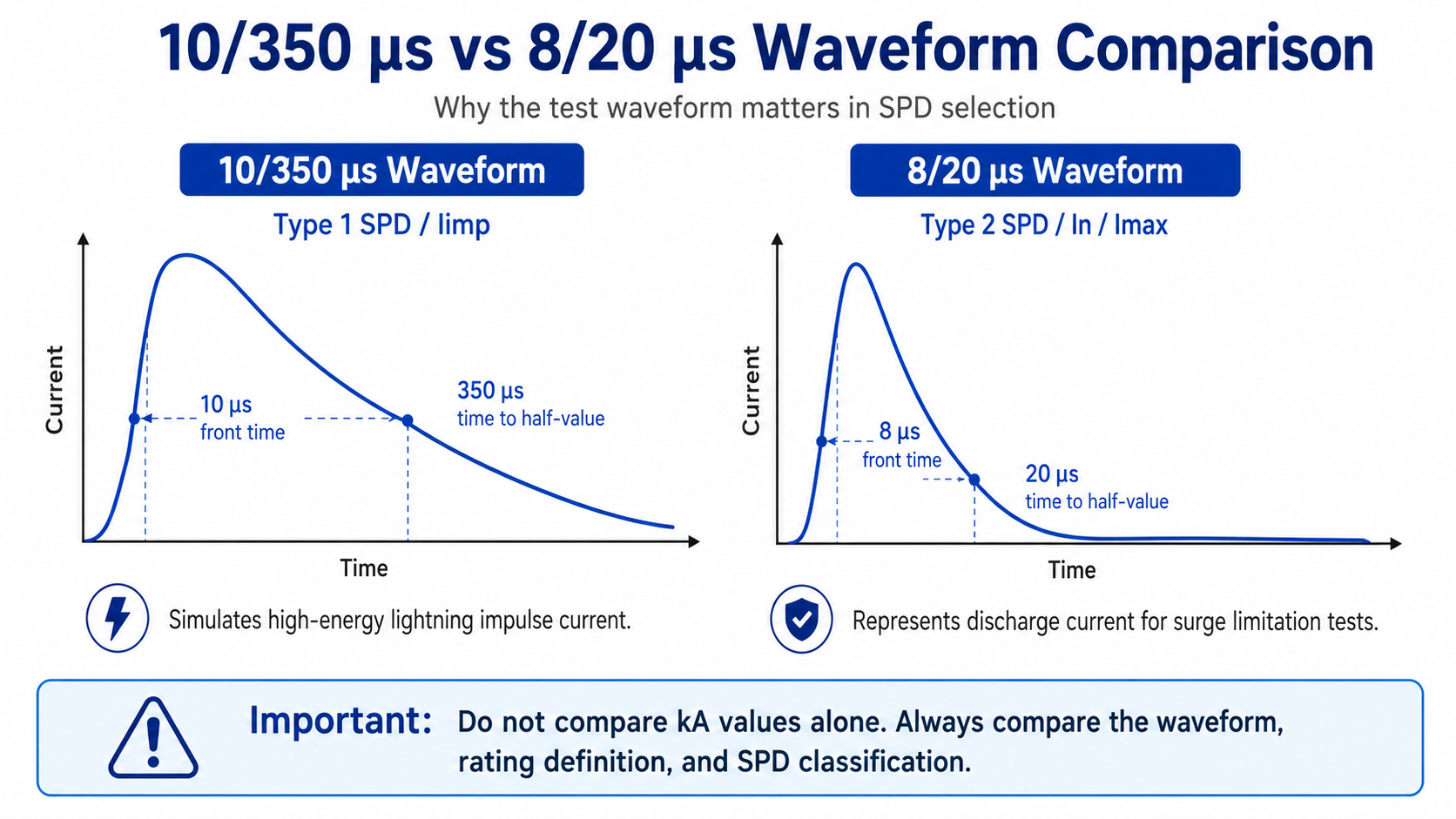
Iimp เทียบกับ In เทียบกับ Imax เทียบกับ Uoc
ค่าเหล่านี้อธิบายถึงการทดสอบที่แตกต่างกันและไม่ควรนำมาใช้แทนกันได้แม้จะเป็นพิกัดกระแสไฟฟ้าเดียวกันก็ตาม
ค่าสำคัญอื่นๆ ได้แก่ Uc, Up, พิกัดกระแสลัดวงจร และข้อกำหนดในการป้องกันสำรอง
SPD ประเภท 1, ประเภท 2 และประเภท 3 ทำงานร่วมกันอย่างไร
การป้องกันไฟกระชากที่มีประสิทธิภาพขึ้นอยู่กับการประสานงานของขั้นตอนการป้องกัน ไม่ใช่เพียงแค่การติดตั้งอุปกรณ์ป้องกันไฟกระชาก (SPD) ที่มีพิกัดกระแสสูงสุดเท่านั้น
แนวคิดทั่วไปอาจใช้:
- ประเภท 1 ที่จุดเริ่มต้นเพื่อระบายกระแสฟ้าผ่าบางส่วน
- ประเภท 2 ในแผงจ่ายไฟปลายทางเพื่อจำกัดแรงดันไฟฟ้าเกินที่เหลืออยู่
- ประเภท 3 ใกล้กับอุปกรณ์ที่มีความละเอียดอ่อนเพื่อลดแรงดันไฟฟ้ากระชากที่หลงเหลืออยู่ขั้นสุดท้าย
ทั้งนี้ไม่ได้หมายความว่าทุกอาคารจะต้องใช้อุปกรณ์ป้องกันไฟกระชาก (SPD) แยกกันสามชุด ทางเลือกที่เป็นไปได้ ได้แก่ SPD แบบรวมประเภท 1+2, SPD แบบรวมประเภท 2+3 หรือการติดตั้งระบบป้องกันประเภท 2 ที่จุดเริ่มต้นในกรณีที่ไม่จำเป็นต้องใช้การป้องกันประเภท 1
ไม่มีกฎเกณฑ์เรื่องระยะห่างของสายเคเบิลเพียงข้อเดียวที่สามารถใช้ได้กับ SPD ทุกรูปแบบ การประสานงานที่จำเป็นขึ้นอยู่กับเทคโนโลยีของ SPD, การทดสอบการประสานงานโดยผู้ผลิต, การจัดวางตัวนำ, ระดับการป้องกัน และอุปกรณ์ที่ต้องการการป้องกัน
SPD แบบผสมประเภท 1+2 คืออะไร?
SPD ประเภท 1+2 ได้รับการทดสอบสำหรับทั้งการใช้งานประเภท 1/Class I และประเภท 2/Class II โดยเป็นการรวมความสามารถในการระบายกระแสอิมพัลส์จากฟ้าผ่าและการจำกัดแรงดันไฟฟ้าเกินในระดับการจ่ายไฟเข้าด้วยกัน
SPD ประเภท 1+2 อาจมีประโยชน์ในกรณีดังต่อไปนี้:
- จำเป็นต้องมีระบบป้องกันทั้งสองประเภทที่จุดติดตั้งเดียวกัน
- พื้นที่บนเมนบอร์ดมีจำกัด
- การประสานงานของอุปกรณ์ป้องกันไฟกระชาก (SPD) แบบแยกส่วนทำได้ยาก
- ต้องการโซลูชันขนาดกะทัดรัดที่มีการประสานงานภายในตัว
สำหรับคำแนะนำในการเลือก Type 1+2 อย่างครบถ้วน โปรดดูที่ คู่มือ SPD ประเภท 1+2.
คุณต้องการ SPD ประเภทใด?
ตารางต่อไปนี้เป็นแนวทางเบื้องต้น การตัดสินใจเลือกขั้นสุดท้ายยังคงต้องเป็นไปตามการออกแบบระบบจริงและข้อกำหนดที่เกี่ยวข้อง
| สถานะโครงการ | ทิศทางการคัดเลือกเบื้องต้น |
|---|---|
| อาคารมีระบบป้องกันฟ้าผ่าภายนอก | พิจารณาประเภท 1 หรือประเภท 1+2 |
| อาจมีกระแสฟ้าผ่าบางส่วนเข้ามาในระบบติดตั้ง | จำเป็นต้องมีการป้องกันประเภทที่ 1 |
| การป้องกันแผงควบคุมหลักทั่วไปโดยไม่มีการป้องกันประเภทที่ 1 | ประเภท 2 |
| แผงควบคุมย่อยหรือแผงควบคุมเครื่องจักร | ประเภท 2 |
| อุปกรณ์ปลายทางที่มีความไวสูง | ประเภทที่ 3 ใกล้กับอุปกรณ์ |
| จำเป็นต้องมีอุปกรณ์ป้องกันไฟกระชากประเภท 1 และประเภท 2 ในแผงควบคุมหลัก | ประเภท 1+2 |
| อุปกรณ์อยู่ห่างจากอุปกรณ์ป้องกันไฟกระชาก (SPD) หลัก | พิจารณาติดตั้งอุปกรณ์ป้องกันไฟกระชากประเภท 2 หรือประเภท 3 เพิ่มเติม |
| จำเป็นต้องมีการป้องกันไฟกระชากในวงจรไฟฟ้ากระแสตรงของระบบโซลาร์เซลล์ | ใช้อุปกรณ์ป้องกันไฟกระชาก (SPD) แบบ DC ที่ออกแบบมาสำหรับระบบ PV โดยเฉพาะ |
วิธีเลือก SPD ประเภทที่ถูกต้อง
- ระบุตำแหน่งในการติดตั้ง SPD ติดตั้งอยู่ที่จุดเริ่มต้นของระบบ แผงจ่ายไฟ ตู้ควบคุมเครื่องจักร หรืออุปกรณ์ปลายทาง?
- ประเมินความเสี่ยงต่อการเกิดฟ้าผ่า ตรวจสอบระบบป้องกันฟ้าผ่าภายนอก แหล่งจ่ายไฟขาเข้า และโซนป้องกันฟ้าผ่า
- ยืนยันการใช้งานว่าเป็นระบบ AC หรือ DC ห้ามใช้ SPD สำหรับระบบ AC ทั่วไปกับฝั่ง DC ของระบบผลิตไฟฟ้าจากพลังงานแสงอาทิตย์
- ยืนยันระบบการต่อลงดิน. ระบุรูปแบบการต่อลงดินของระบบ TN-S, TN-C, TT, IT หรือรูปแบบ DC ที่เกี่ยวข้อง
- ตรวจสอบชุดพิกัดทั้งหมด ตรวจสอบค่า Uc, Up, Iimp, In, Imax, Uoc, พิกัดการลัดวงจร และระบบป้องกันสำรอง
- ตรวจสอบการประสานการทำงาน ตรวจสอบความสัมพันธ์ระหว่างอุปกรณ์ป้องกันต้นทาง, อุปกรณ์ป้องกันไฟกระชาก (SPD) ปลายทาง และอุปกรณ์ที่ได้รับการป้องกัน
ข้อผิดพลาดทั่วไปในการเลือก SPD
- การเลือกโดยพิจารณาจากค่า kA ที่สูงที่สุดเพียงอย่างเดียว ค่ากระแสที่สูงขึ้นไม่สามารถแก้ไขรูปคลื่น พิกัดแรงดันไฟฟ้า หรือการกำหนดค่าวงจรที่ผิดพลาดได้
- การเปรียบเทียบค่า Iimp กับ Imax โดยตรง ค่าเหล่านี้แสดงถึงหน้าที่ในการทดสอบและรูปคลื่นที่แตกต่างกัน
- การใช้ Type 3 เป็นอุปกรณ์ป้องกันไฟกระชาก (SPD) หลักของอาคาร Type 3 มีวัตถุประสงค์เพื่อการป้องกันอุปกรณ์ขั้นสุดท้าย ไม่ใช่สำหรับกระแสไฟกระชากพลังงานสูงที่เข้ามา
- สมมติว่า Type 1 สามารถป้องกันโหลดทุกจุดได้ แรงดันตกค้างและผลกระทบจากตัวนำไฟฟ้าในส่วนปลายทางอาจยังคงจำเป็นต้องมีการป้องกันเพิ่มเติม
- การใช้กฎระยะ 10 เมตรแบบคงที่ การประสานงานต้องเป็นไปตามเทคโนโลยี SPD ที่เลือกและเอกสารของผู้ผลิต
- การละเลยค่า Uc และ Up ความสามารถในการรองรับกระแสไฟฟ้าเพียงอย่างเดียวไม่สามารถกำหนดความเข้ากันได้ของแรงดันไฟฟ้าหรือการป้องกันอุปกรณ์ได้
- การใช้อุปกรณ์ป้องกันไฟกระชาก (SPD) แบบ AC กับระบบไฟฟ้ากระแสตรงจากโซลาร์เซลล์ วงจรไฟฟ้ากระแสตรงจากโซลาร์เซลล์จำเป็นต้องมีคุณสมบัติทางแรงดันไฟฟ้าและการตัดวงจรที่ออกแบบมาโดยเฉพาะ
- การละเลยการประสานงานด้านการป้องกันไฟฟ้าลัดวงจร อุปกรณ์ป้องกันไฟกระชาก (SPD) ฟิวส์สำรอง และกระแสไฟฟ้าลัดวงจรที่คาดการณ์ไว้จะต้องมีความเข้ากันได้
ประเภท SPD ตาม IEC และ UL ไม่ได้มีคำจำกัดความเหมือนกัน
ทั้งระบบ IEC และ UL ต่างใช้คำศัพท์ประเภท Type 1, Type 2 และ Type 3 เหมือนกัน แต่ไม่ควรจัดประเภทเหล่านี้ว่าสามารถใช้ทดแทนกันได้อย่างสมบูรณ์
ภายใต้กรอบการทำงานของ IEC ประเภทต่างๆ จะมีความเกี่ยวข้องอย่างใกล้ชิดกับระดับการทดสอบ รูปคลื่น และหน้าที่ในการป้องกัน ส่วนภายใต้มาตรฐาน UL 1449 ประเภทของอุปกรณ์ป้องกันไฟกระชาก (SPD) จะมีความเกี่ยวข้องอย่างมากกับตำแหน่งการเชื่อมต่อที่อนุญาตและการติดตั้งเมื่อเทียบกับอุปกรณ์บริการและอุปกรณ์ป้องกันกระแสเกิน
สำหรับโครงการในอเมริกาเหนือ โปรดตรวจสอบ:
- การรับรองมาตรฐาน UL;
- ประเภทของอุปกรณ์ป้องกันไฟกระชาก (SPD);
- กระแสคายประจุที่กำหนด;
- ระดับการป้องกันแรงดันไฟฟ้า;
- พิกัดกระแสไฟฟ้าลัดวงจร
- ตำแหน่งการเชื่อมต่อที่อนุญาต
คำถามที่พบบ่อยเกี่ยวกับ SPD ประเภท 1 เทียบกับ ประเภท 2 เทียบกับ ประเภท 3
ความแตกต่างหลักระหว่าง SPD ประเภท 1, ประเภท 2 และประเภท 3 คืออะไร?
Type 1 ทำหน้าที่จัดการกระแสฟ้าผ่าที่จุดต้นทาง, Type 2 ให้การป้องกันไฟกระชากระดับการจ่ายไฟ, และ Type 3 จำกัดแรงดันไฟกระชากตกค้างใกล้อุปกรณ์ที่มีความไวต่อสัญญาณ.
ประเภทที่ 1 ดีกว่าประเภทที่ 2 หรือไม่?
ไม่ใช่ ทั้งสองมีบทบาทแตกต่างกัน โดยชนิดที่ 1 รองรับการทำงานกับกระแสฟ้าผ่า ส่วนชนิดที่ 2 จำกัดแรงดันเกินชั่วขณะในระบบจำหน่ายไฟฟ้า.
สามารถติดตั้ง Type 2 ที่ตู้จ่ายไฟหลักได้หรือไม่?
ใช่ โดยทั่วไปจะติดตั้ง Type 2 ในตู้เมนและตู้จ่ายย่อยในกรณีที่ไม่จำเป็นต้องใช้ Type 1 สำหรับรองรับกระแสฟ้าผ่าหรือเมื่อมีขั้น Type 1 อยู่ต้นทางแล้ว.
การติดตั้งทุกจุดจำเป็นต้องมี SPD ประเภท 1 หรือไม่?
ไม่ ความจำเป็นในการใช้ Type 1 ขึ้นอยู่กับการรับกระแสฟ้าผ่า การป้องกันฟ้าผ่าภายนอก รูปแบบการจ่ายไฟขาเข้า และข้อกำหนดของโครงการที่เกี่ยวข้อง.
สามารถใช้ SPD ประเภท 3 ได้โดยไม่ใช้ประเภท 1 หรือประเภท 2 หรือไม่?
โดยปกติไม่ควรพึ่งพา Type 3 เป็นการป้องกันเพียงอย่างเดียวในกรณีที่อาจมีไฟกระชากพลังงานสูงเข้าสู่การติดตั้ง อุปกรณ์นี้มีไว้เป็นหลักสำหรับการป้องกันที่ปลายทางแบบประสานงานกัน.
Type 1+2 เหมือนกับ Type 1 และ Type 2 หรือไม่?
SPD ประเภท 1+2 ได้รับการทดสอบสำหรับทั้งหน้าที่ประเภท 1 และประเภท 2 ภายในผลิตภัณฑ์เดียว อุปกรณ์ประเภท 1 และประเภท 2 แยกกันสามารถให้การป้องกันในขั้นตอนเดียวกันได้ แต่ต้องตรวจสอบการประสานงานของอุปกรณ์เหล่านี้.
ความแตกต่างระหว่าง Iimp และ Imax คืออะไร?
Iimp เกี่ยวข้องกับการทดสอบกระแสอิมพัลส์ประเภทที่ 1 ขนาด 10/350 μs ส่วน Imax เกี่ยวข้องกับการทดสอบกระแสคายประจุสูงสุดประเภทที่ 2 ขนาด 8/20 μs
LEEYEE สามารถช่วยเลือกประเภท SPD ที่ถูกต้องได้หรือไม่?
ใช่ โปรดระบุแรงดันไฟฟ้าของระบบ การใช้งานแบบ AC หรือ DC รูปแบบการต่อลงดิน ตำแหน่งการติดตั้ง จำนวนโพล ค่าพิกัดที่ต้องการ และปริมาณสำหรับโครงการ.
คู่มือป้องกันไฟกระชากที่เกี่ยวข้อง
ต้องการความช่วยเหลือในการเลือก SPD ประเภทที่ถูกต้องหรือไม่?
โปรดระบุการใช้งานแบบ AC หรือ DC, แรงดันไฟฟ้าของระบบ, รูปแบบการต่อลงดิน, ตำแหน่งการติดตั้ง, จำนวนขั้วที่ต้องการ, พิกัดกระแสไฟฟ้า และจำนวนที่ต้องการในโครงการ LEEYEE จะช่วยคุณกำหนดค่าอุปกรณ์ป้องกันไฟกระชากที่เหมาะสมให้