
Stasiun pengisian EV tidak boleh hanya dilindungi di terminal pengisi. Desain SPD yang lengkap harus mempertimbangkan papan distribusi utama, papan distribusi sub, input AC pengisi, bagian pengisian cepat DC yang mungkin, jalur komunikasi, sistem pembumian, dan pemantauan pemeliharaan.
Panduan ini ditulis untuk pemasang pengisi EV, kontraktor stasiun pengisian, insinyur listrik, pembangun panel, dan pembeli OEM yang membutuhkan jalur pemilihan SPD yang jelas sebelum pemesanan proyek.
- SPD Input AC
- SPD Papan Distribusi
- Tipe 1+2 vs Tipe 2
- Ulasan Pengisi Daya Cepat DC
- Perlindungan Jalur Sinyal
- Alarm Jarak Jauh
Daftar Isi
Jawaban Cepat: Di Mana SPD Harus Digunakan dalam Proyek Pengisian EV?
Untuk sebagian besar proyek pengisian EV komersial atau publik, pemilihan SPD bukanlah keputusan satu perangkat. Kontraktor harus memeriksa setiap titik perlindungan dari pasokan daya masuk ke pengisi daya, jalur komunikasi, dan sistem pemantauan.
| Titik Perlindungan | Arah SPD yang Direkomendasikan | Arti Kontraktor |
|---|---|---|
| Papan distribusi masuk utama | Gunakan SPD Tipe 1+2 ketika ada perlindungan petir eksternal, pasokan overhead, atau paparan petir tinggi. Gunakan SPD Tipe 2 untuk kondisi pasokan dengan risiko lebih rendah. | Ini adalah tahap perlindungan pertama untuk pasokan daya pengisian EV. |
| Papan distribusi sub dekat pengisi daya | Gunakan SPD Tipe 2, dikordinasikan dengan SPD hulu. | Ini mengurangi lonjakan residual sebelum mencapai input pengisi daya. |
| Input AC pengisi daya EV | Pilih SPD AC fase tunggal atau tiga fase berdasarkan tegangan sistem, sistem pentanahan, konfigurasi makhluk, dan posisi pemasangan. | Ini melindungi elektronik pengisi daya, modul daya, pengukuran, dan sirkuit kontrol dari lonjakan tegangan transien. |
| Bagian pengisi daya cepat DC | Periksa persyaratan sisi DC kasus per kasus sesuai dengan arsitektur pengisi daya, tegangan DC, desain isolasi, dan persetujuan pabrikan. | Jangan gunakan SPD DC PV secara membabi buta sebagai pengganti universal untuk pengisi daya cepat DC. |
| Jalur komunikasi dan kontrol | Gunakan SPD sinyal yang sesuai untuk Ethernet yang terbuka, RS485, pengukuran, pemantauan, atau kabel terkait OCPP. | Lonjakan dapat masuk melalui jalur data, tidak hanya melalui jalur daya AC. |
| Sistem alarm jarak jauh dan pemeliharaan | Gunakan model SPD dengan kontak sinyal jarak jauh ketika stasiun memiliki beberapa pengisi daya atau memerlukan pemantauan terpusat. | Tim pemeliharaan dapat menemukan modul SPD yang gagal dengan cepat tanpa membuka setiap kabinet. |
Aturan sederhana: lindungi pasokan yang masuk terlebih dahulu, kemudian lindungi panel hilir dan input pengisi daya. Untuk proyek luar ruangan atau publik, juga periksa jalur sinyal, pentanahan, dan persyaratan alarm jarak jauh sebelum memesan.
Apakah Stasiun Pengisian EV Membutuhkan Perlindungan Lonjakan?
Ya, stasiun pengisian EV biasanya membutuhkan perlindungan lonjakan, terutama untuk titik pengisian umum, pengisi daya luar ruangan, area parkir komersial, stasiun pengisian armada, dan proyek pengisi daya cepat DC. Pengisi daya EV mengandung komponen elektronik sensitif, komponen konversi daya, sirkuit komunikasi, modul pengukuran, dan papan kontrol.
Risiko lonjakan dapat berasal dari aktivitas petir di dekatnya, operasi switching di jaringan, jalur kabel yang panjang, pengikatan yang buruk, saluran pasokan overhead, dan kabel komunikasi yang terbuka. Sebuah lonjakan mungkin tidak langsung menghancurkan seluruh pengisi daya, tetapi dapat merusak papan kontrol, port komunikasi, modul daya, atau sirkuit pemantauan.
Penting: Pengaturan SPD yang benar tergantung pada kode listrik setempat, paparan petir, metode pasokan, sistem pembumian, jenis pengisi daya, jarak antara panel dan pengisi daya, dan apakah lokasi tersebut memiliki sistem perlindungan petir eksternal.
Posisi Pemasangan SPD di Stasiun Pengisian EV
Stasiun pengisian EV yang andal harus diperiksa sebagai sebuah sistem. SPD tidak boleh dipilih hanya dengan melihat nama plat pengisi daya. Kontraktor harus meninjau di mana lonjakan dapat masuk dan bagaimana arus lonjakan dapat dibuang dengan aman.
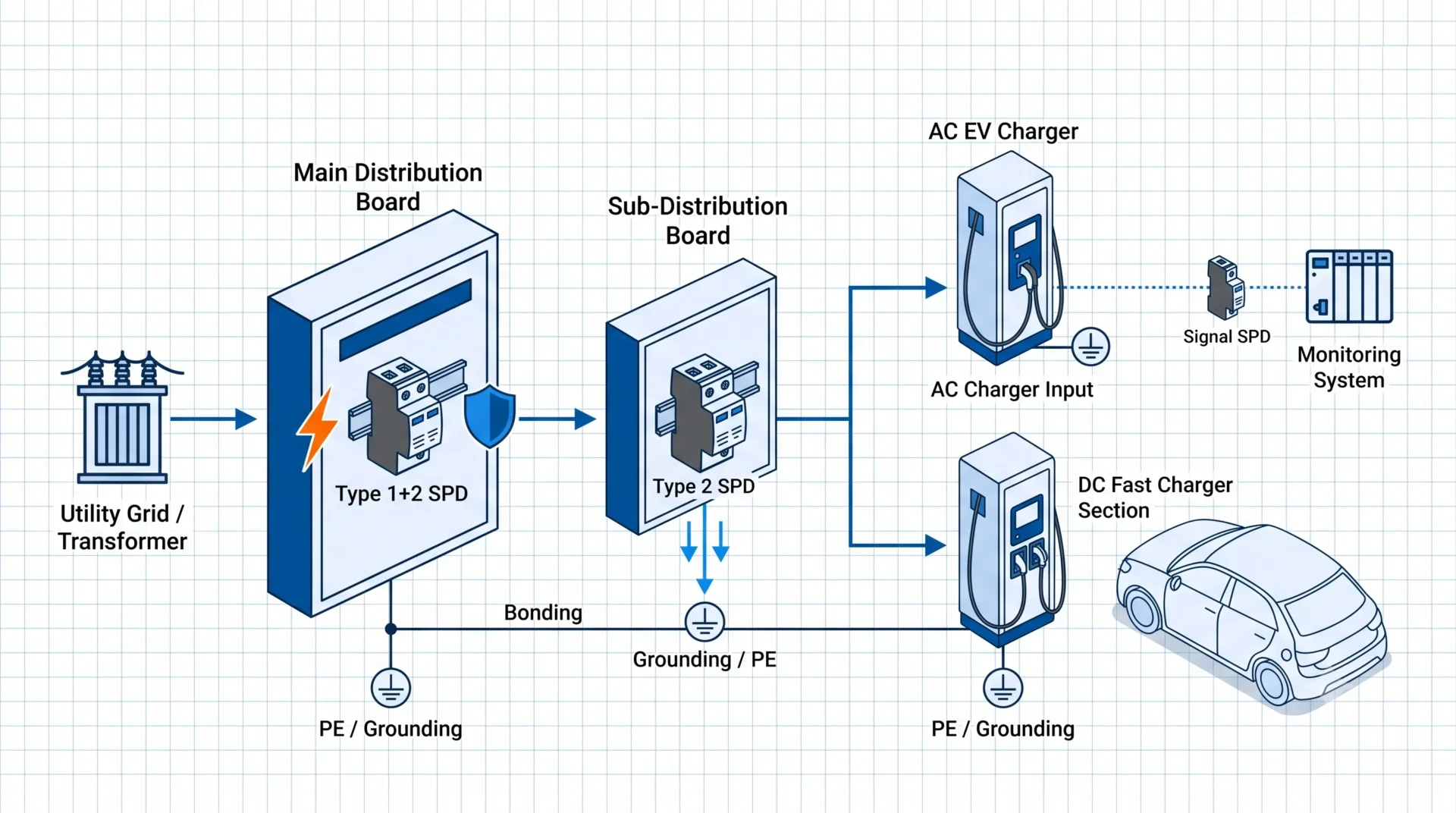
Arsitektur perlindungan SPD yang direkomendasikan untuk proyek stasiun pengisian EV.
Papan Distribusi Utama
Ini adalah tahap perlindungan pertama untuk pasokan pengisian EV. Gunakan Tipe 1+2 ketika risiko arus petir diharapkan, atau Tipe 2 untuk pasokan masuk yang berisiko lebih rendah.
Papan Distribusi Sub
Ketika pengisi daya disuplai dari sub-panel lokal, SPD Tipe 2 hilir membantu mengurangi sisa lonjakan sebelum mencapai input pengisi daya.
Input AC dari Pengisi Daya
Pilih SPD berdasarkan tegangan sistem AC, konfigurasi kutub, sistem pembumian, rating arus lepas, dan kebutuhan sinyal jarak jauh.
Garis Sinyal dan Pemantauan
Kabel Ethernet, RS485, metering, billing, atau garis komunikasi terkait OCPP mungkin memerlukan SPD sinyal, terutama ketika kabel tersebut berjalan di luar ruangan atau antara kabinet.
Standar dan Aturan Pemasangan yang Harus Diketahui Kontraktor
Dalam proyek EVSE berbasis IEC, perlindungan lonjakan sering diperiksa bersama dengan aturan instalasi listrik untuk peralatan pengisian EV dan standar produk SPD untuk sistem AC tegangan rendah. Ini tidak berarti setiap lokasi menggunakan pengaturan SPD yang sama. Ini berarti kontraktor harus mengonfirmasi kondisi lokasi sebelum memilih jenis SPD.
| Area Referensi | Apa Artinya untuk Pemilihan SPD Pengisian EV | Tindakan Kontraktor |
|---|---|---|
| Aturan instalasi listrik EVSE | Instalasi EVSE publik atau komersial mungkin memerlukan perlindungan lonjakan transien tergantung pada kondisi instalasi dan kode lokal. | Periksa apakah panel switchboard, sub-panel, atau kabinet pengisi daya EVSE memerlukan perlindungan SPD tambahan. |
| IEC 61643-11 untuk SPD AC | SPD AC tegangan rendah harus dipilih dan didokumentasikan sesuai dengan standar produk SPD yang relevan dan cakupan sertifikasi yang diperlukan. | Konfirmasi Tipe 1+2 atau Tipe 2, Uc, In, Imax, Iimp, Up, konfigurasi tiang, dan persyaratan sertifikat. |
| Jarak antara SPD hulu dan pengisi daya | Ketika pengisi daya jauh dari titik perlindungan hulu, peralatan hilir mungkin masih melihat stres lonjakan residu yang tinggi. | Pertimbangkan tambahan SPD Tipe 2 dekat EVSE atau papan sub-distribusi lokal, terutama untuk rute kabel feeder yang panjang. |
| Sistem perlindungan petir eksternal atau pasokan overhead | Keadaan ini meningkatkan kebutuhan untuk mempertimbangkan pelepasan arus petir di sisi masuk. | Tinjau SPD Tipe 1+2 atau perlindungan terkoordinasi Tipe 1 + Tipe 2 di posisi masuk utama. |
| Inspeksi lokal dan spesifikasi proyek | Banyak proyek pengisian EV memiliki kode spesifik negara, persyaratan utilitas, atau spesifikasi konsultan. | Tanyakan kepada pelanggan mengenai spesifikasi proyek sebelum mengonfirmasi model SPD akhir. |
Aturan praktis untuk pembeli: jangan hanya meminta “harga SPD pengisi daya EV”. Kirim diagram satu garis, posisi pemasangan, jarak pengisi daya, sistem pembumian, dan paparan petir terlebih dahulu. Detail ini menentukan apakah proyek membutuhkan Tipe 1+2, Tipe 2, SPD sinyal, atau opsi alarm jarak jauh.
Tipe 1+2 vs Tipe 2 SPD untuk Stasiun Pengisian EV
Pilihan antara SPD Tipe 1+2 dan Tipe 2 harus mengikuti risiko lokasi dan posisi pemasangan. Jangan memilih Tipe 1+2 hanya karena terdengar lebih kuat. Juga jangan menggunakan Tipe 2 di mana-mana tanpa memeriksa paparan petir dan desain perlindungan hulu.
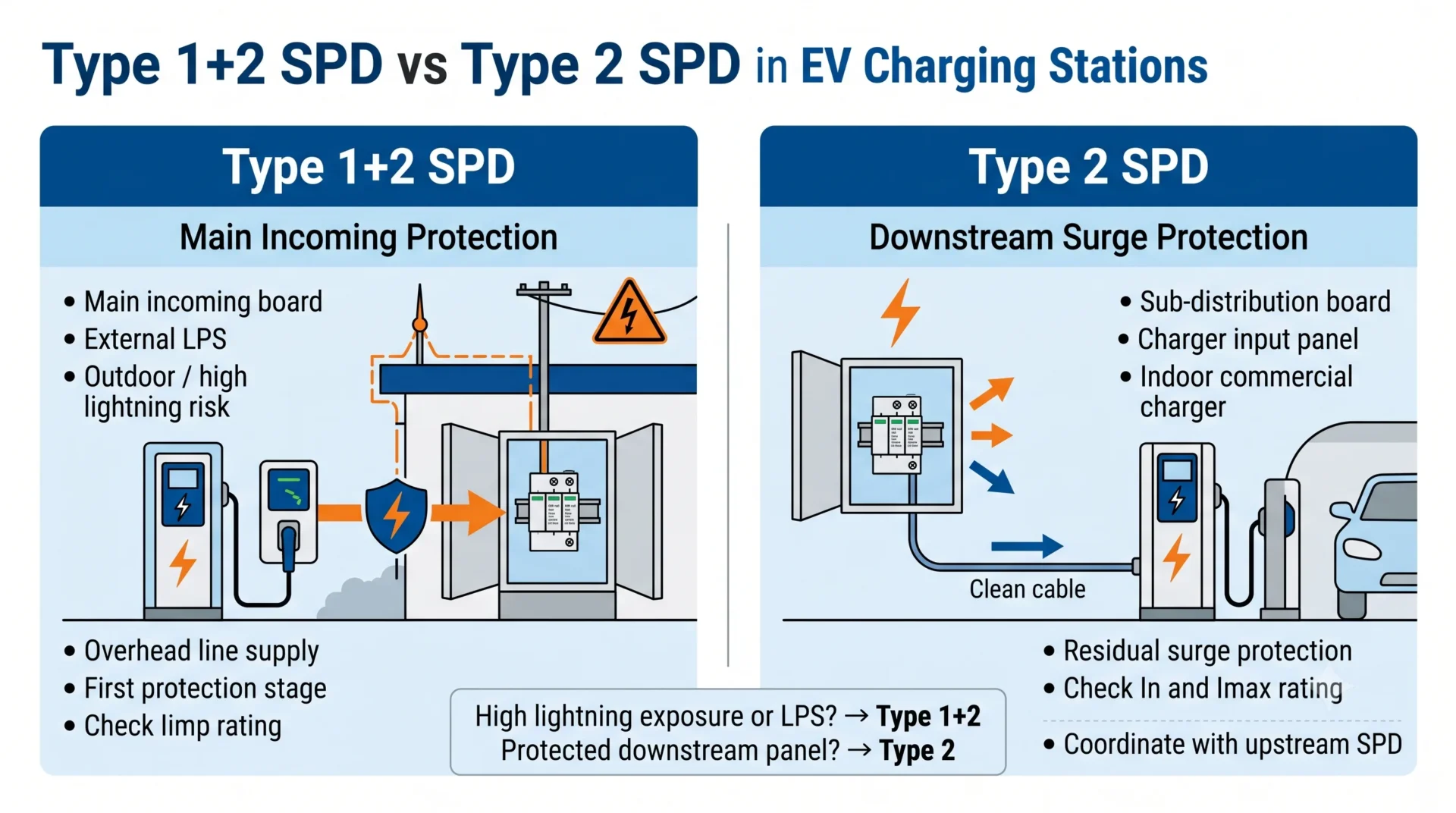
Logika pemilihan SPD Tipe 1+2 dan Tipe 2 untuk panel penyedia daya pengisi daya EV.
| Situasi Proyek | Arah SPD yang lebih baik | Mengapa Ini Penting |
|---|---|---|
| Bangunan memiliki sistem perlindungan petir eksternal | SPD Tipe 1+2 di papan utama atau panel penyedia daya EV yang masuk | Papan utama mungkin perlu membuang arus petir dan mengurangi lonjakan residu untuk peralatan hilir. |
| Stasiun pengisian daya luar ruangan dengan paparan petir tinggi | SPD Tipe 1+2 atau perlindungan Tipe 1 + Tipe 2 yang terkoordinasi | Pengisi daya luar ruangan dan jalur kabel yang panjang lebih rentan terhadap transien akibat petir. |
| Pengisi daya AC komersial dalam ruangan yang dipasok dari papan yang terlindungi | Tipe 2 SPD | SPD Tipe 2 umumnya digunakan untuk perlindungan terhadap lonjakan arus induksi dan lonjakan arus sakelar di papan distribusi. |
| Pengisi daya berada jauh dari panel utama | Tambahkan SPD Tipe 2 di dekat pengisi daya atau papan sub-distribusi lokal | Kabel pengumpan yang panjang dapat meningkatkan tekanan lonjakan sisa di sisi EVSE. |
| Jalur kabel sinyal di luar ruangan atau di antara kabinet | SPD sinyal untuk antarmuka komunikasi yang benar | SPD daya tidak dapat melindungi saluran data tegangan rendah dengan benar. |
Untuk proyek pengisian daya kendaraan listrik, jenis SPD harus dipilih bersamaan dengan lokasi perlindungannya. Papan masuk utama, sub-panel, kabinet pengisi daya, dan kabinet sinyal mungkin memerlukan perangkat perlindungan yang berbeda.
Pemilihan SPD Input AC untuk Pengisi EV
Untuk pengisi daya AC dan input AC pengisi daya cepat DC, SPD harus sesuai dengan sistem pasokan daya yang sebenarnya. Kontraktor dan pembuat panel tidak boleh memesan hanya berdasarkan “SPD pengisi daya EV”. Pemasok memerlukan informasi sistem kelistrikan untuk merekomendasikan model yang tepat.
Parameter SPD AC Utama untuk Dikonfirmasi
- Tegangan sistem: 230V, 400V, 415V, atau tegangan pasokan lokal lainnya.
- Tipe fase: pasokan pengisi daya satu fase atau tiga fase.
- Sistem pentanahan: TN-S, TN-C-S, TT, IT, atau sistem khusus proyek.
- Jenis SPD: Tipe 1+2 atau Tipe 2, tergantung pada posisi pemasangan dan risiko petir.
- Konfigurasi kutub: 1P+N, 2P, 3P, 4P, 3P+N, atau susunan lain yang diperlukan oleh panel.
- Uc / MCOV: harus sesuai dengan tegangan kerja kontinu sistem.
- Dalam / Imax: arus pembuangan nominal dan maksimum untuk pemilihan SPD Tipe 2.
- Iimp: Peringkat arus impuls untuk SPD Tipe 1 atau Tipe 1+2.
- Naik: tingkat perlindungan tegangan yang sesuai untuk pengisi daya dan elektronik hilir.
- Alarm jarak jauh: opsi kontak kering / sinyal jarak jauh untuk pemantauan pemeliharaan.
Untuk model SPD AC rel DIN, Anda juga dapat meninjau halaman produk SPD AC terkait dari LEEYEE: Pelindung Lonjakan DIN Rail Tipe 2 dan Pelindung Lonjakan DIN Rail Tipe 1+2.
Perlindungan Lonjakan Pengisi Cepat DC: Apa yang Harus Diperiksa?
Pengisi daya cepat DC memerlukan perhatian khusus karena mencakup input AC, konversi daya, output DC, sirkuit kontrol, port komunikasi, dan terkadang rute kabel yang panjang. Sisi input AC biasanya mengikuti logika pemilihan SPD tegangan rendah AC. Sisi DC harus ditinjau secara terpisah.
Jangan asal menggunakan SPD DC PV untuk pengisi daya cepat DC. String PV dan pengisi daya cepat DC EV adalah aplikasi yang berbeda. Perlindungan sisi DC bergantung pada tegangan output pengisi daya, arsitektur konverter, koordinasi isolasi, perutean kabel, desain penutup (enclosure), dan persetujuan produsen.
Sebelum memilih perlindungan sisi DC, konfirmasikan hal berikut:
- Rentang tegangan output DC dari pengisi daya.
- Apakah sisi DC dapat diakses untuk pemasangan SPD eksternal.
- Desain konverter internal dan isolasi.
- Skema perlindungan yang disetujui produsen.
- Standar proyek yang berlaku dan persyaratan inspeksi lokal.
- Apakah risikonya ada pada input AC, kabel output DC, saluran komunikasi, atau pembumian kabinet.
Perlindungan Lonjakan Jalur Sinyal untuk Stasiun Pengisian EV
Stasiun pengisian daya EV bukan hanya sekadar perangkat listrik. Stasiun ini sering terhubung ke sistem pembayaran, sistem manajemen beban, platform backend, meteran energi, PLC, dan perangkat pemantauan. Lonjakan arus dapat masuk melalui saluran sinyal ini.
Untuk pemilihan perlindungan sinyal, lihat: Panduan Pengkabelan dan Pemilihan SPD RS485.
Titik Penting Pembumian dan Pengikatan yang Harus Dikonfirmasi Kontraktor
SPD memerlukan jalur pembuangan yang andal. Jika desain pembumian dan penyambungan buruk, SPD mungkin terpasang di kabinet tetapi tetap gagal melindungi pengisi daya EV secara efektif.
- Sistem pembumian: TN-S, TN-C-S, TT, IT, atau pengaturan khusus proyek.
- Perutean konduktor PE dari papan utama ke kabinet EVSE.
- Koneksi antara penutup pengisi daya logam dan arde pelindung (protective earth).
- Ikatan ekipotensial antara kabinet, struktur logam, dan peralatan area parkir.
- Persyaratan batang pembumian untuk titik pengisian daya luar ruangan atau independen.
- Panjang koneksi SPD terpendek yang praktis untuk mengurangi tegangan sisa.
Alarm Jauh, Indikator Visual, dan Penggantian Pemeliharaan
Stasiun pengisian daya EV biasanya memiliki beberapa pengisi daya. Dalam situasi ini, pemeliharaan SPD tidak boleh hanya bergantung pada seseorang yang membuka setiap kabinet dan memeriksa jendela indikator secara manual.
Untuk pengkabelan alarm jarak jauh, lihat: Bagaimana Menghubungkan Kontak Alarm Jarak Jauh SPD ke PLC atau Sistem Pemantauan.
Arah Produk SPD Pengisian EV untuk Kontraktor dan Pembangun Panel
Setelah informasi proyek dikonfirmasi, langkah selanjutnya adalah mencocokkan titik perlindungan dengan arah produk SPD yang tepat. Tabel ini bukan daftar model final. Ini membantu kontraktor dan pembeli OEM menyiapkan permintaan yang lebih jelas sebelum meminta penawaran.
Untuk pesanan OEM atau pembuat panel, LEEYEE dapat mendukung pemilihan SPD AC, pemilihan SPD sinyal, opsi alarm jarak jauh, perencanaan modul pengganti, penandaan produk, dan persyaratan pengemasan batch.
Sebelum Memesan SPD Stasiun Pengisian EV: Daftar Periksa Kontraktor
Jika Anda membeli SPD untuk proyek pengisian daya EV, pemasok tidak boleh merekomendasikan model hanya berdasarkan daya pengisi daya. Kirimkan informasi berikut terlebih dahulu. Ini membantu menghindari Uc yang salah, konfigurasi kutub yang salah, jenis SPD yang salah, dan kontak alarm jarak jauh yang hilang.
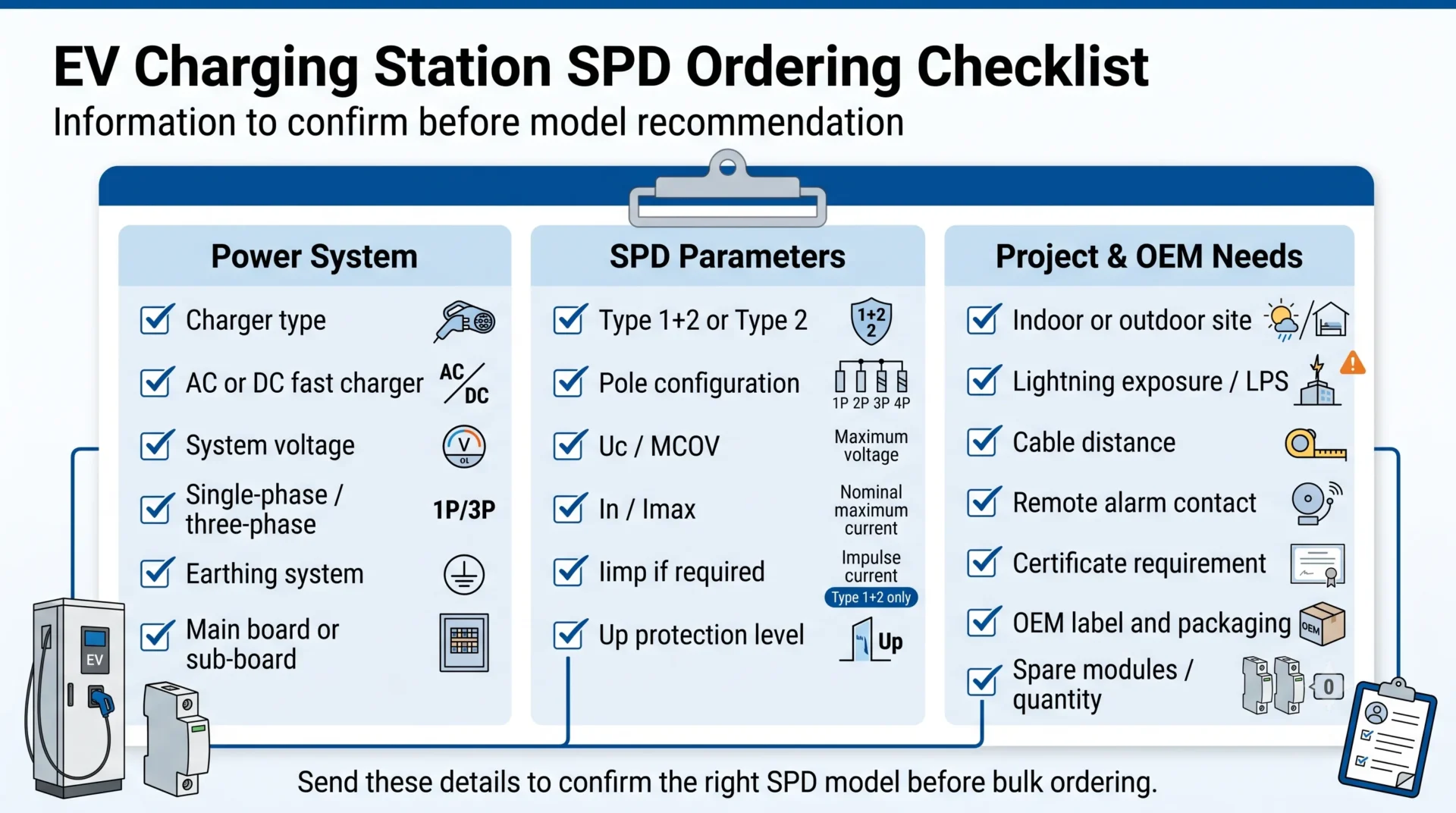
Daftar periksa pemesanan untuk pemasang pengisi daya EV, pembuat panel, dan pembeli proyek.
Halaman SPD LEEYEE Terkait
Halaman-halaman ini dapat membantu kontraktor dan pembuat panel memeriksa parameter SPD terkait sebelum pemilihan akhir.
FAQ: Pemilihan SPD untuk Stasiun Pengisian EV
Apakah stasiun pengisian daya EV memerlukan SPD?
Ya, stasiun pengisian daya EV biasanya memerlukan perlindungan lonjakan arus, terutama untuk proyek publik, komersial, luar ruangan, armada, dan pengisian daya cepat DC.
Di mana SPD harus dipasang untuk pengisi daya EV?
Posisi umum mencakup papan distribusi utama, papan distribusi sub di dekat pengisi daya, input AC pengisi daya, saluran sinyal, dan sirkuit pemantauan.
Apakah saya harus menggunakan SPD Tipe 1+2 atau Tipe 2 untuk stasiun pengisian daya EV?
Gunakan SPD Tipe 1+2 di papan masuk utama jika lokasi memiliki perlindungan petir eksternal, suplai di atas kepala (overhead), atau paparan petir yang tinggi. Gunakan SPD Tipe 2 untuk papan distribusi hilir dan panel input pengisi daya.
Perlu Bantuan Memilih SPD untuk Proyek Pengisian EV?
Kirimkan jenis pengisi daya, tegangan sistem, sistem pembumian, posisi panel, jarak kabel, dan apakah lokasi berada di dalam ruangan, luar ruangan, atau dilindungi oleh sistem perlindungan petir eksternal kepada kami.
- ✓ Pemilihan SPD input AC
- ✓ Rekomendasi Tipe 1+2 / Tipe 2
- ✓ Arah SPD saluran sinyal
- ✓ Opsi kontak alarm jarak jauh
- ✓ Dukungan label dan pengemasan OEM
- ✓ Dukungan sertifikat dan lembar data (datasheet)
Catatan: Pemilihan SPD akhir harus mengikuti gambar proyek, kode kelistrikan lokal, persyaratan produsen pengisi daya, dan penilaian risiko lokasi.