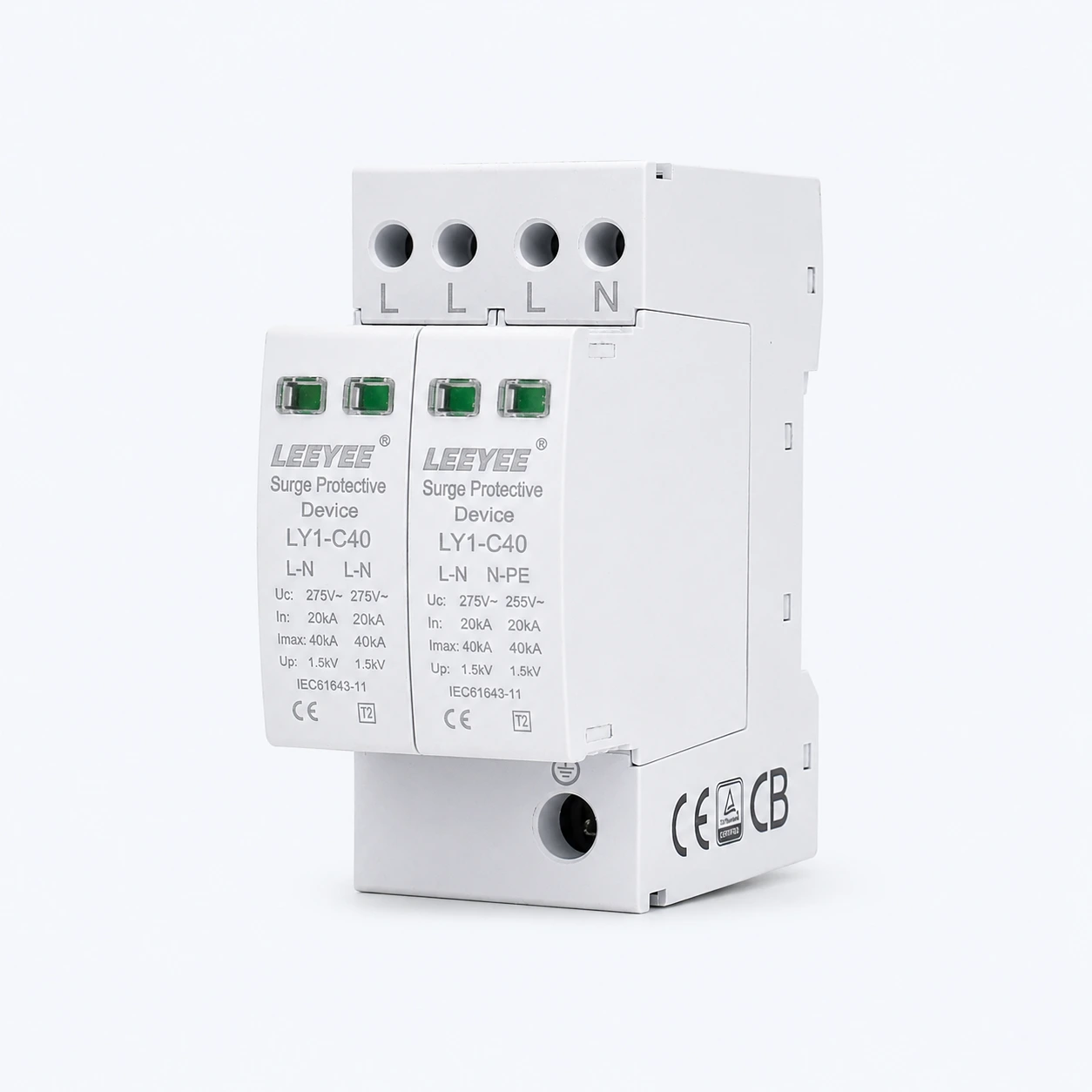
Perangkat Pelindung Lonjakan AC
For main and sub-distribution boards, commercial buildings, industrial panels, machinery and OEM electrical cabinets.
Choose the right surge protective device by circuit type, system voltage, installation position and required surge duty. LEEYEE supplies AC power SPDs, solar/DC SPDs and signal-line SPDs for distributors, panel builders, contractors, OEM brands and electrical projects.
A surge protective device (SPD) limits transient overvoltage and diverts surge current away from protected equipment. The correct SPD is selected from the actual circuit first—AC power, DC/PV power or signal/data— then by voltage, SPD type, discharge ratings, protection level, wiring configuration and installation position.
Start with what you need to protect. AC power, photovoltaic/DC power and communication circuits use different surge protective device designs and selection parameters.
For main and sub-distribution boards, commercial buildings, industrial panels, machinery and OEM electrical cabinets.
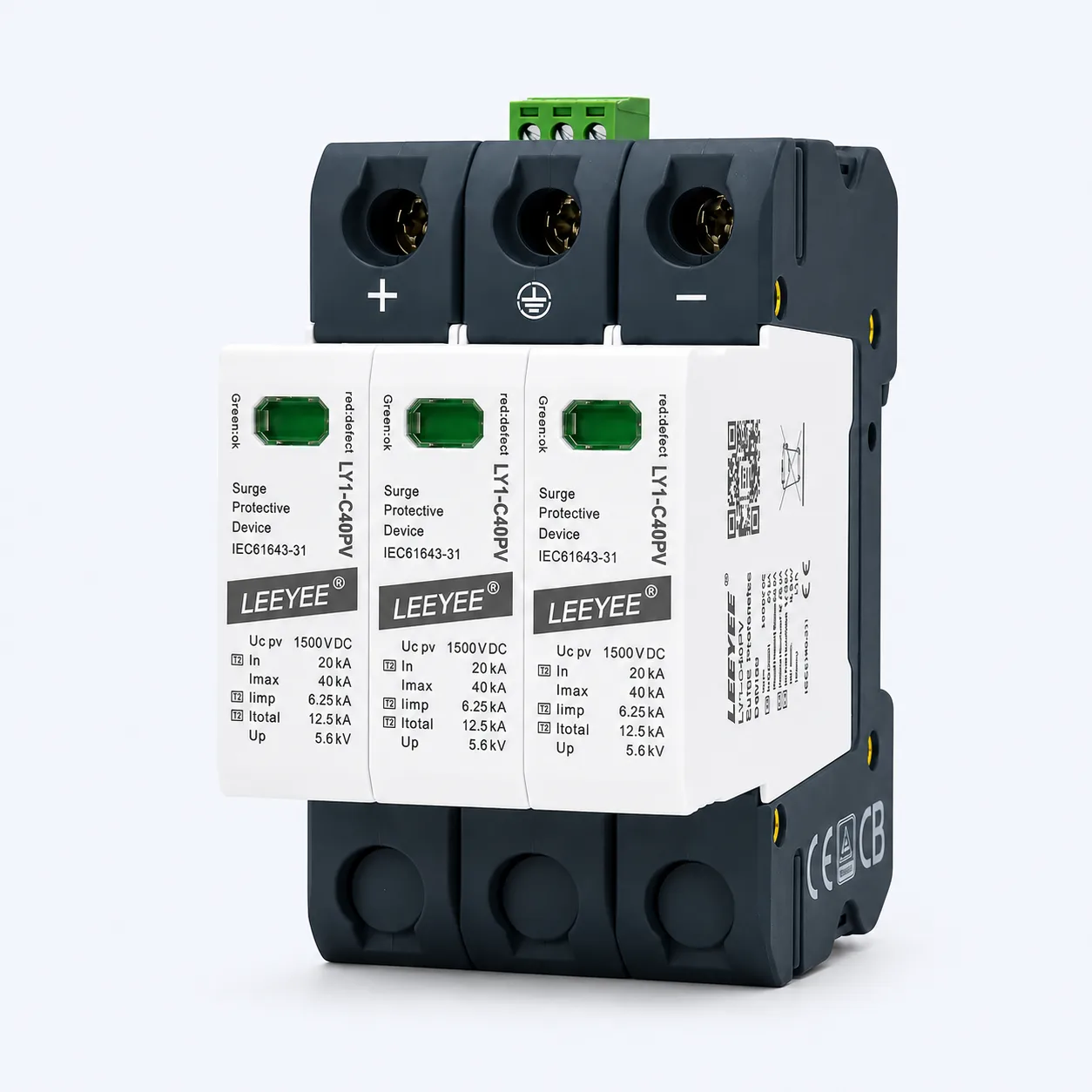
For PV strings, combiner boxes, inverter DC inputs, battery systems, telecom power and industrial DC distribution.
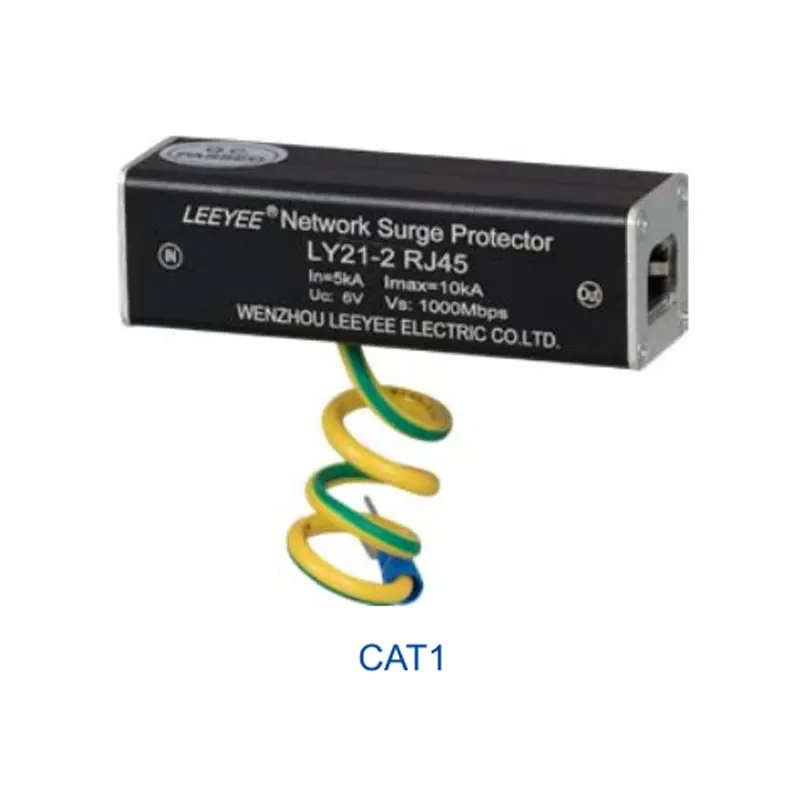
For RS485, Ethernet, CCTV, monitoring, telecom and industrial communication lines where data interfaces also require surge protection.
SPD type should match the installation position and surge duty. Do not select the device only from the largest kA number.
Lightning-current duty at the origin or high-exposure incoming position.
View Type 1 →Combined lightning-current and surge protection in one coordinated device.
View Type 1+2 →Distribution-level protection against induced lightning and switching transients.
View Type 2 →Coordinated distribution and equipment-level surge protection.
View Type 2+3 →Final-stage protection close to sensitive terminal equipment.
View Type 3 →A surge protective device is a complete rating set. Uc/Ucpv, Up, discharge-current ratings, protection mode and backup protection should be checked together.
| Parameter | Apa Artinya | Why Buyers Check It |
|---|---|---|
| Uc \/ MCOV | Maximum continuous operating voltage for the SPD. | Must match the actual AC system and protection mode. |
| Ucpv | Maximum continuous operating voltage for photovoltaic DC SPDs. | Must be compatible with the maximum PV array voltage under project conditions. |
| Naik | Tingkat perlindungan tegangan di bawah kondisi pengujian yang ditentukan. | Helps evaluate the residual voltage stress reaching protected equipment. |
| In | Nominal discharge current associated with repeated surge-current duty. | A core Type 2 performance value used in product and project specifications. |
| Imax | Maximum discharge current associated with Type 2 testing. | Useful only together with Uc, In, Up and the actual installation. |
| Iimp | Arus pelepasan impuls untuk tugas arus petir Tipe 1. | Required where the protection concept calls for Type 1 capability. |
| Poles / Mode | Protected electrical paths such as L-N, L-PE or N-PE. | Must match the phase arrangement and earthing system. |
| Perlindungan Cadangan | External fuse or protective-device requirement where specified. | Must follow the exact model documentation and fault-current conditions. |
For project, distribution and OEM orders, this sequence removes most avoidable specification mistakes before quotation.
AC power, DC/PV power, Ethernet, RS485, CCTV or another signal line.
Provide nominal voltage, maximum operating voltage, phase arrangement and grounding/earthing configuration.
Main board, sub-board, control cabinet, PV combiner box, inverter input or near terminal equipment.
Type 1, Type 1+2, Type 2, Type 2+3 or Type 3 according to the protection concept.
Review Uc/Ucpv, Up, In, Imax, Iimp where applicable, poles and backup protection.
Match the approved model with its datasheet, wiring, dimensions, label and certificate scope before bulk ordering.
“SPD” covers different circuit families. The applicable technical framework changes with the circuit being protected, and certificate claims should always be checked against the exact model.
Final compliance depends on the exact model, rating, test scope and destination-market requirement.
A surge protective device (SPD) limits transient overvoltage and diverts surge current away from protected electrical or electronic equipment. SPDs are used on AC power, DC/PV power and signal/data circuits.
An SPD limits short-duration transient overvoltage. A circuit breaker provides overcurrent and short-circuit protection. They perform different functions and may be used together in the same protection system.
Do not assume an AC SPD is suitable for DC. The device ratings and product documentation must explicitly cover the intended AC, DC or photovoltaic application.
No. Correct selection also depends on system voltage, SPD type, protection level, discharge ratings, wiring configuration, fault conditions and installation position.
Depending on the protection concept, an SPD may be installed at the service entrance, main distribution board, sub-distribution board, control cabinet, PV combiner box, inverter input or close to sensitive terminal equipment.
Send the circuit type, system voltage, phase/wiring arrangement, installation position, required SPD type, available project specification, certification requirement, quantity and destination market.
LEEYEE combines in-house SPD production, routine testing, model-specific certification support and OEM packaging control. For distributors, panel builders and OEM buyers, this means each order can be checked from manufacturing and inspection through documentation, labeling and final shipment preparation.
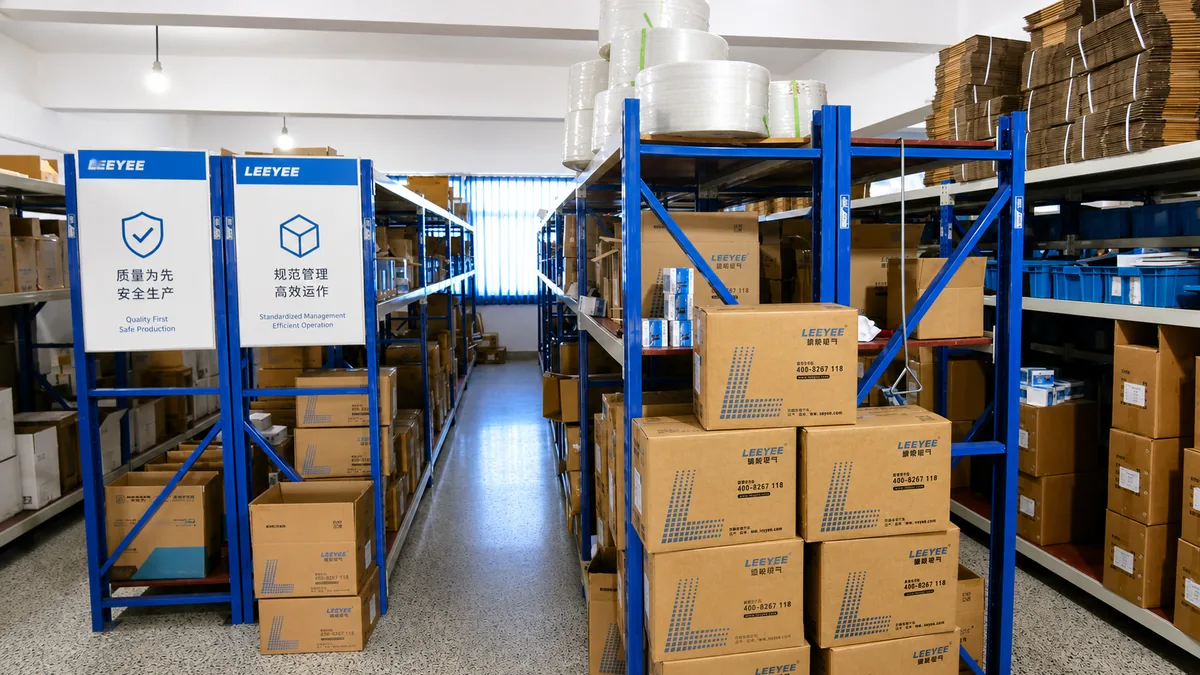
LEEYEE supports stable production for standard SPD models, project orders, distributor inventory and repeat OEM supply. Production control covers assembly, product identification, visual checking, labeling and order preparation.
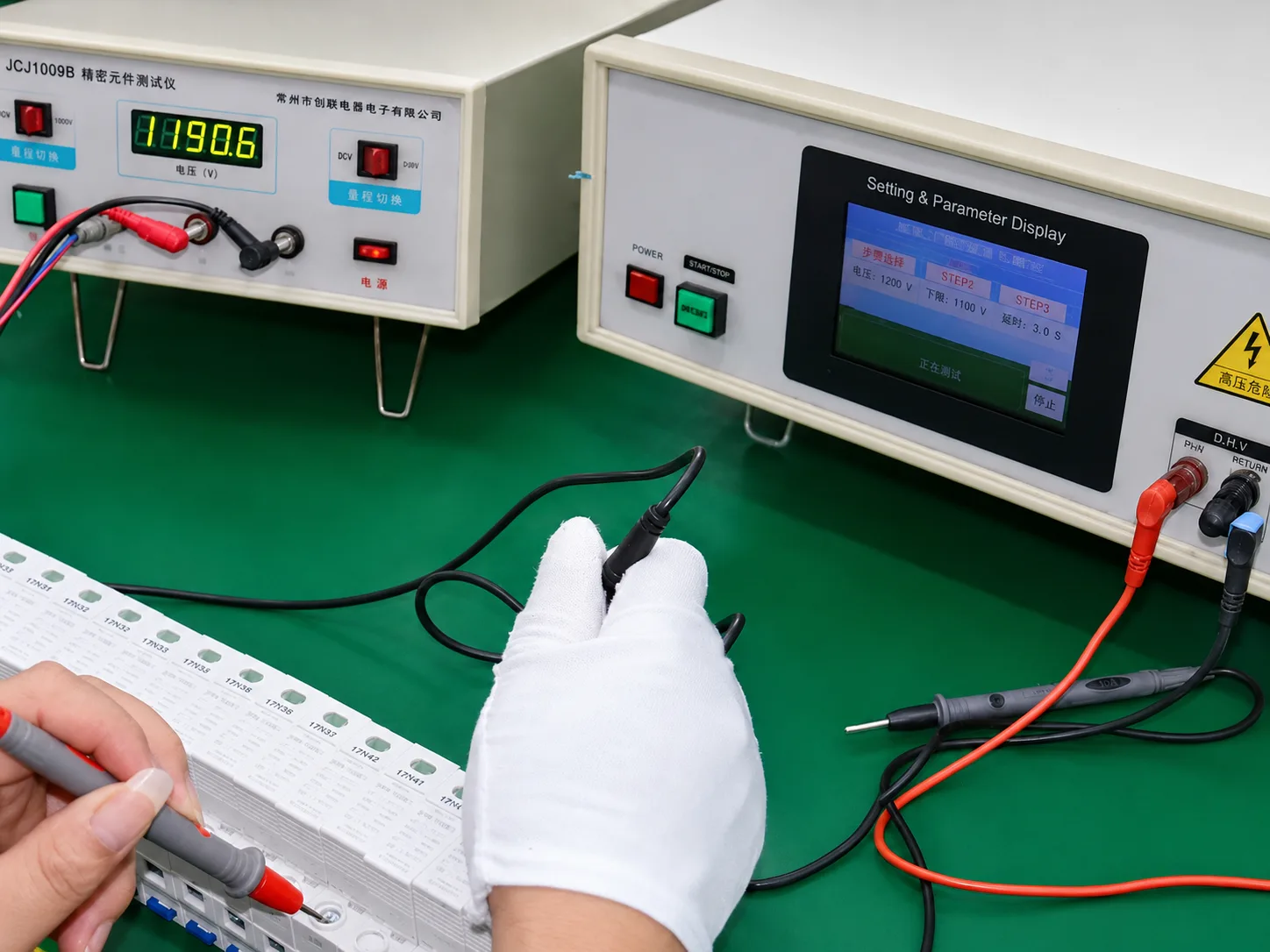
Testing is part of product release, not only certification. LEEYEE uses dedicated equipment for SPD components and completed products, with routine inspection before shipment.
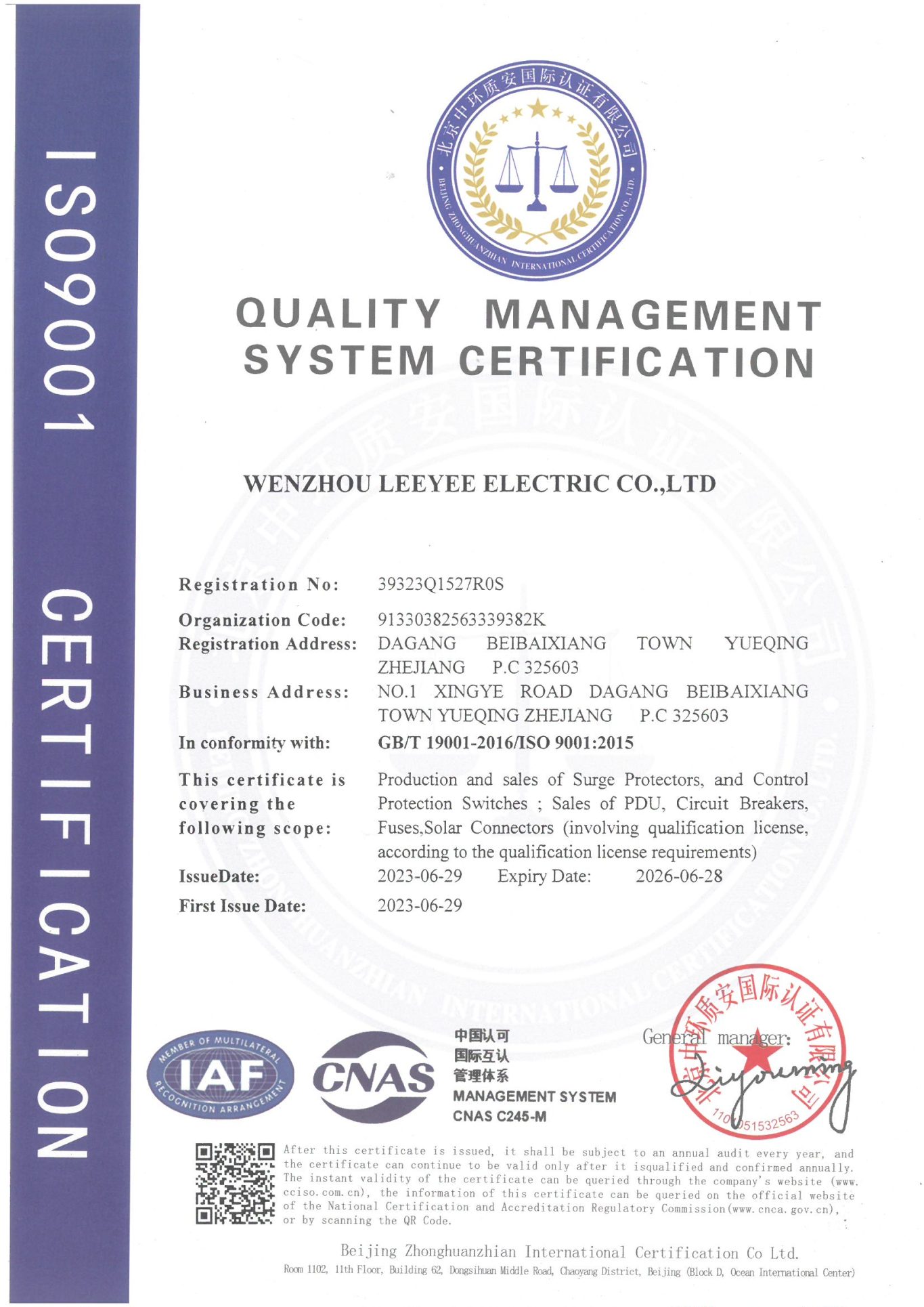
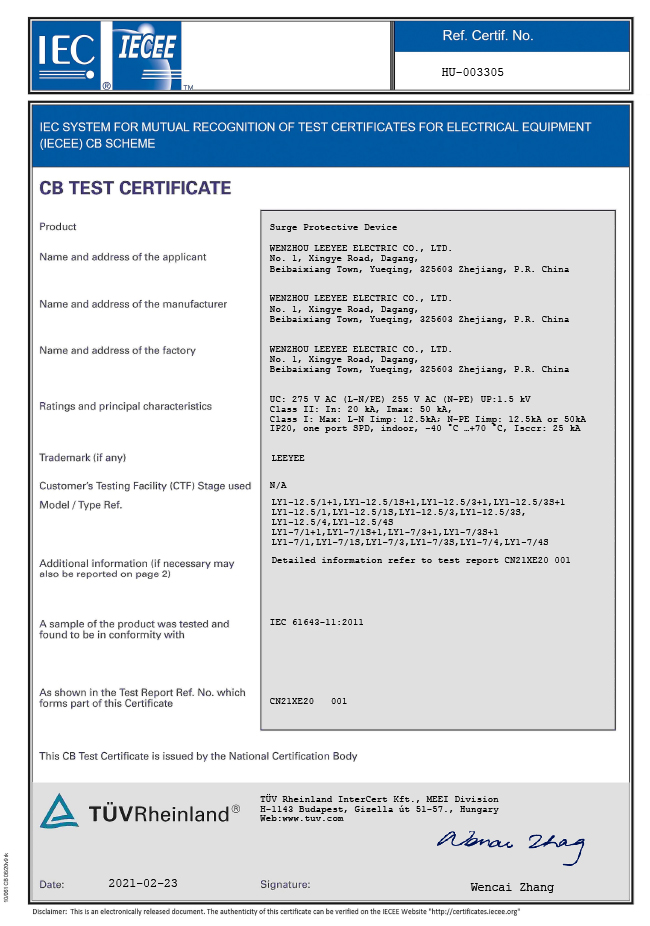
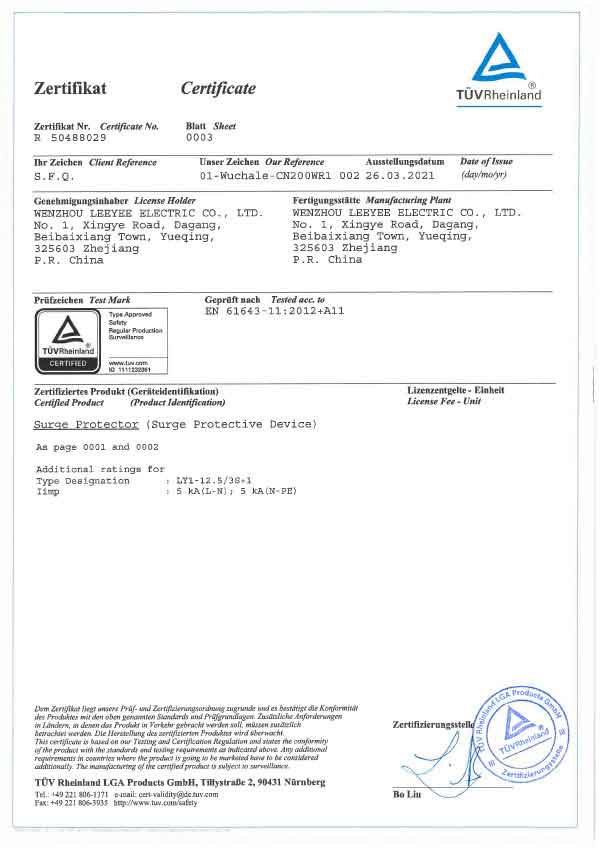
Key LEEYEE SPD ranges have TÜV, CB, CE and related compliance documentation, supported by an ISO 9001 quality management system. Buyers can request the applicable certificate according to the exact model, voltage, pole configuration and application.
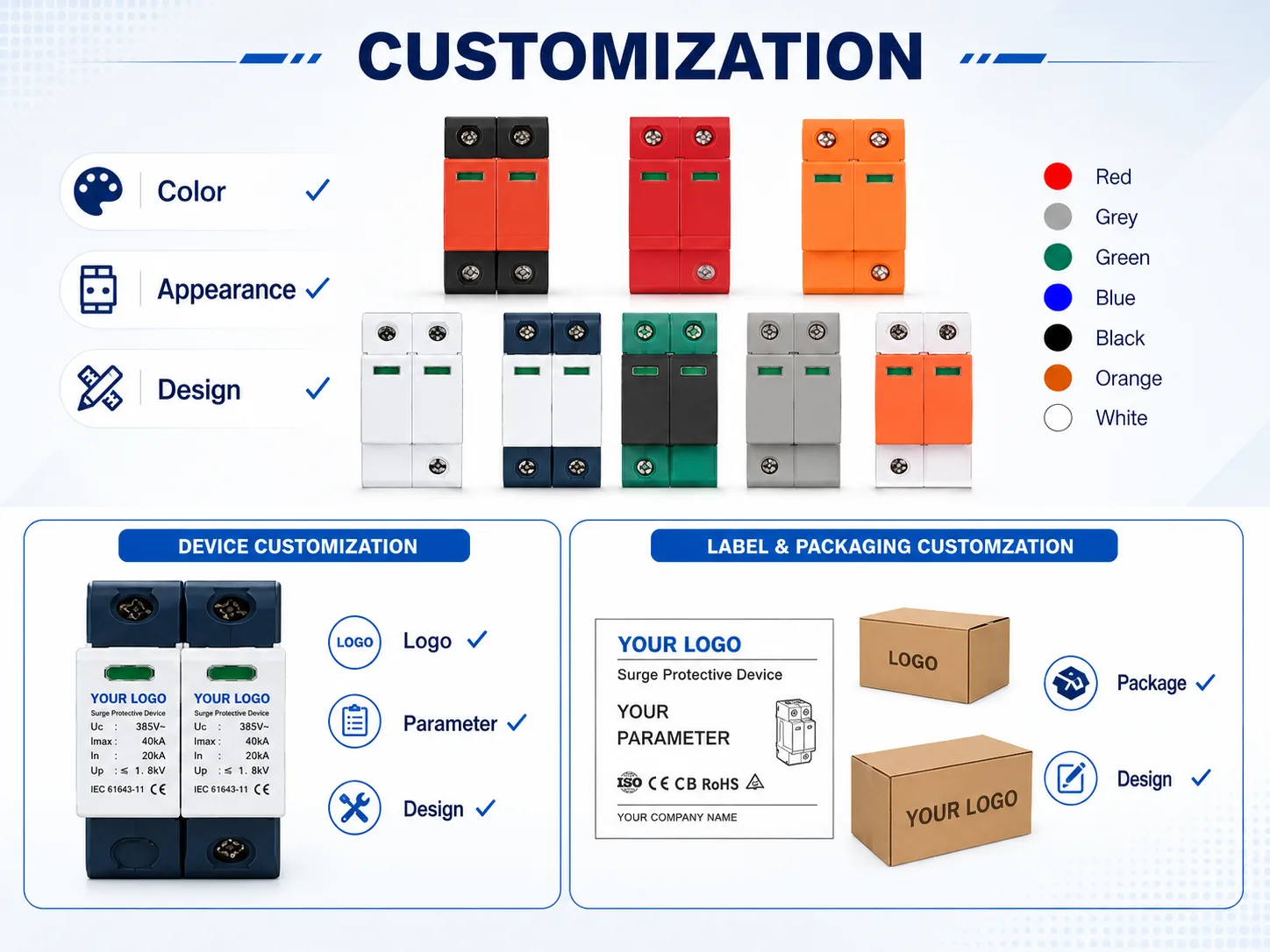
For private-label and distributor orders, LEEYEE can confirm product appearance, branding, parameter labels and packaging requirements before production so the delivered order matches the approved commercial specification.
Send the system voltage, AC/DC/signal application, installation position, wiring arrangement, required ratings and estimated quantity. LEEYEE can help identify the correct product family before quotation.
Final SPD selection and installation should be checked against the exact product documentation, electrical system design, applicable standard and local project requirements.