
Confronta i dispositivi di protezione da sovratensioni di Tipo 1, Tipo 2 e Tipo 3 per posizione di installazione, forma d'onda del test, capacità di corrente e ruolo di protezione.
Indice dei contenuti
Trova le informazioni di cui hai bisogno
Confronto rapido Tipo 1, Tipo 2 e Tipo 3 SPD
Il modo più semplice per comprendere i tre tipi di SPD è collegare ogni tipo con la sua posizione normale nell'installazione elettrica.
| Tipo di SPD | Posizione tipica | Ruolo principale di protezione | Obbligo di test principale | Valutazione chiave comune |
|---|---|---|---|---|
| Tipo 1 | Pannello principale o di ingresso principale | Scarica corrente parziale di fulmini ad alta energia | Corrente d'impulso 10/350 μs | Iimp |
| Tipo 2 | Pannello principale o sub-distribuzione | Limita i fulmini indotti e le sovratensioni da commutazione | Corrente di scarica 8/20 μs | In e Imax |
| Tipo 3 | Vicino a apparecchi terminali sensibili | Limita la sovratensione residua rimanente | Test a onda combinata | Uoc e Up |
Che cos'è un dispositivo di protezione da sovratensioni di Tipo 1?
Uno SPD di Tipo 1 è progettato per l'installazione in cui una corrente di fulmine parziale può entrare nel sistema elettrico a bassa tensione.
È comunemente considerato all'origine di un'installazione, in particolare dove l'edificio ha un sistema di protezione contro i fulmini esterno o dove l'arrangiamento della fornitura in arrivo crea un'esposizione significativa alla corrente di fulmine.
Cosa fa uno SPD di Tipo 1?
Uno SPD di Tipo 1 deviate la corrente di impulso ad alta energia verso il sistema di messa a terra e di collegamento equipotenziale. Il suo ruolo principale è prevenire che la corrente di fulmine passi in modo incontrollato attraverso l'installazione elettrica interna.
Forma d'onda di prova di Tipo 1
Gli SPD di Tipo 1 vengono testati utilizzando una impulso di corrente 10/350 μs..La valutazione principale associata a questo test è Iimp, o corrente di scarica dell'impulso.
Iimp non dovrebbe essere confrontato direttamente con il valore Imax di uno SPD di Tipo 2 perché le due valutazioni utilizzano forme d'onda diverse e rappresentano diversi doveri di prova.
Dove viene installato uno SPD di Tipo 1?
- Entrata del servizio;
- Quadro elettrico principale a bassa tensione;
- Origine dell'installazione elettrica;
- Transizione della zona di protezione contro i fulmini dove ci si aspetta una corrente di fulmine parziale.
Quando dovrebbe essere considerato il Tipo 1?
- L'edificio ha un sistema di protezione contro i fulmini esterno;
- L'approvvigionamento in arrivo è esposto all'ingresso della corrente atmosferica;
- Una valutazione del rischio di progetto identifica la corrente atmosferica parziale;
- Le norme nazionali di installazione specificano la protezione di tipo 1;
- L'installazione è un'infrastruttura critica con un concetto di protezione contro i fulmini definito.
Che cos'è un dispositivo di protezione da sovratensioni di Tipo 2?
Un SPD di tipo 2 è il dispositivo di protezione da sovratensioni più comune a livello di distribuzione nelle installazioni elettriche a bassa tensione.
Limita le sovratensioni transitorie causate da effetti indiretti dei fulmini, operazioni di commutazione e energia residua da una fase di protezione a monte.
Quali sorgenti di sovratensioni affronta il tipo 2?
- Effetti indiretti dei fulmini;
- Operazioni di commutazione;
- Motori e trasformatori;
- Disturbi della rete elettrica;
- Energia residua delle sovratensioni dopo un SPD a monte.
Forma d'onda di prova di tipo 2
Gli SPD di tipo 2 vengono testati utilizzando il 8/20 μs forma d'onda di corrente..Le valutazioni importanti includono In, Imax, Su e Uc.
Dove viene installato un SPD di tipo 2?
- Quadri di distribuzione principali;
- Quadri di sottodistrozione;
- Armadi di controllo macchina;
- Pannelli industriali;
- Pannelli elettrici commerciali;
- Pannelli di distribuzione AC per inverter solari.
Quando il Tipo 2 può essere sufficiente?
Un SPD di Tipo 2 può essere sufficiente all'origine di alcune installazioni dove il sistema non è previsto per sopportare corrente di fulmine parziale.
Questo può includere alcune installazioni con:
- Fornitura in arrivo sotterranea;
- Nessun sistema di protezione dai fulmini esterno;
- Minore esposizione valutata al corrente di fulmine;
- Nessun requisito di dovere di Tipo 1 a monte.
Che cos'è un dispositivo di protezione da sovratensioni di Tipo 3?
Un SPD di Tipo 3 fornisce protezione al punto d'uso per attrezzature terminali sensibili. Limita la tensione di sovratensione residua che rimane dopo la protezione a monte o si sviluppa lungo i conduttori a valle.
Dove viene installato il Tipo 3?
Il Tipo 3 è installato vicino all'attrezzatura protetta, inclusi:
- PLC;
- Server;
- Sistemi di controllo;
- Attrezzature di comunicazione;
- Attrezzature mediche;
- Alimentatori sensibili;
- Attrezzature elettroniche domestiche.
La protezione di Tipo 3 può essere integrata in prese, ciabatte, moduli di protezione degli apparecchi, dispositivi dei pannelli di controllo o unità di protezione terminale.
Metodo di prova di Tipo 3
I dispositivi di Tipo 3 vengono comunemente valutati con un generatore di onde a combinazione che produce un'onda di tensione a circuito aperto di 1.2/50 μs e un'onda di corrente di cortocircuito di 8/20 μs. Le valutazioni pertinenti possono includere Uoc e Su.
Il Tipo 3 può essere utilizzato da solo?
Il Tipo 3 non dovrebbe normalmente essere previsto per scaricare l'alta energia di sovratensione presente all'ingresso del servizio o al livello di distribuzione principale.
Confronto tecnico: Tipo 1 vs Tipo 2 vs Tipo 3
| Elemento di confronto | DOCUP di tipo 1 | DOCUP di tipo 2 | DOCUP di tipo 3 |
|---|---|---|---|
| Ruolo principale | Scarica di corrente da fulmine | Limitazione delle sovratensioni a livello di distribuzione | Protezione dell'apparecchiatura finale |
| Posizione tipica | Pannello principale o di ingresso principale | Pannello principale o sub-distribuzione | Vicino all'apparecchiatura terminale |
| Classe di prova | Classe I | Classe II | Classe III |
| Forma d'onda principale | 10\/350 μs | 8/20 μs | Onda combinata |
| Valutazione importante | Iimp | In e Imax | Uoc |
| Valuta anche | Uc, Up e comportamento in caso di guasto | Uc, Up e rating di cortocircuito | Up e compatibilità di carico |
| Ambiente tipico di sovratensione | Corrente parziale da fulmine | Fulmini indotti e transitori di commutazione | Tensione di sovratensione residua |
| Può proteggere da solo l'intera installazione? | Non necessariamente | Non necessariamente | No |
| Tecnologia comune | Gap di scintilla, MOV o tecnologia combinata | Tecnologia basata su MOV o tecnologia combinata | Protezione compatta basata su MOV, GDT o filtro |
10/350 μs vs 8/20 μs: perché la forma d'onda del test è importante
Un valore di corrente indicato in kiloampere ha un significato solo quando l'onda associata e la definizione della classificazione sono anch'esse note.
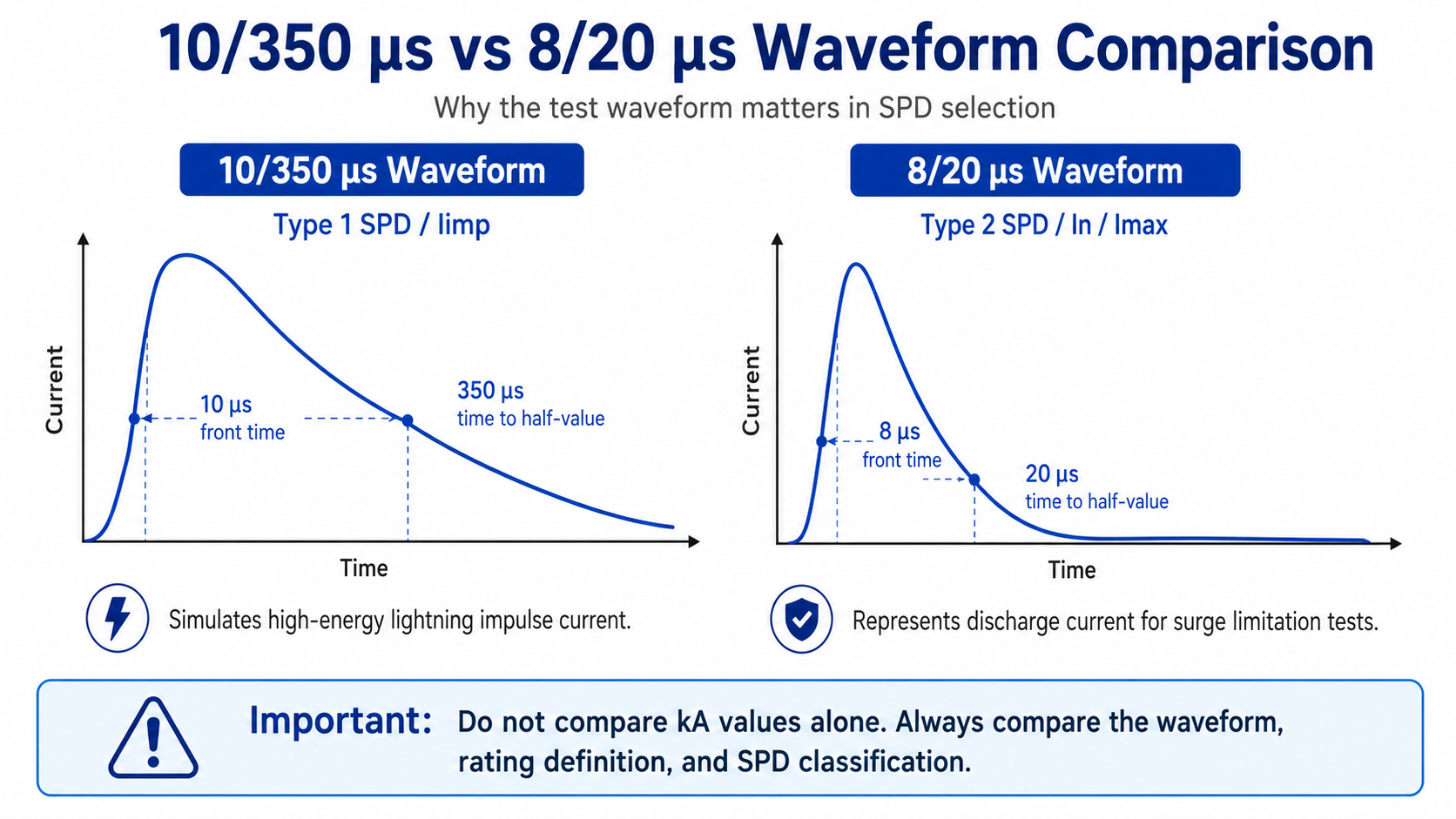
Iimp rispetto a In rispetto a Imax rispetto a Uoc
Questi valori descrivono diversi test e non dovrebbero essere trattati come versioni intercambiabili della stessa valutazione di corrente.
Altri valori importanti includono Uc, Up, valutazione della corrente di cortocircuito e requisiti di protezione di backup.
Come funzionano insieme i SPD di Tipo 1, Tipo 2 e Tipo 3
Una protezione contro i sovratensioni efficace si basa su stadi di protezione coordinati, non semplicemente sull'installare l'SPD con la maggiore valutazione di corrente.
Un concetto tipico può utilizzare:
- Tipo 1 all'origine per scaricare la corrente parziale del fulmine;
- Tipo 2 in un quadro di distribuzione a valle per limitare la sovratensione residua;
- Tipo 3 vicino a attrezzature sensibili per ridurre la tensione di sovratensione residua finale.
Questo non significa che ogni edificio debba utilizzare tre SPD separati. Le possibili alternative includono SPD combinati di Tipo 1+2, SPD combinati di Tipo 2+3, o protezione di Tipo 2 all'origine dove il dovere di Tipo 1 non è richiesto.
Nessuna regola di distanza del cavo dovrebbe essere applicata a ogni combinazione di SPD. La coordinazione richiesta dipende dalla tecnologia SPD, dalla coordinazione testata dal produttore, dalla disposizione dei conduttori, dai livelli di protezione e dall'attrezzatura protetta.
Che cos'è un SPD combinato di Tipo 1+2?
Un SPD di Tipo 1+2 è testato per entrambi i doveri di Tipo 1/Classe I e Tipo 2/Classe II. Combina la scarica della corrente d'impulso del fulmine e la limitazione della tensione di sovratensione a livello di distribuzione.
Un SPD di Tipo 1+2 può essere utile dove:
- Entrambi i doveri di protezione sono richiesti in un punto d'installazione;
- Lo spazio sul quadro principale è limitato;
- La coordinazione separata degli SPD sarebbe difficile;
- Si preferisce una soluzione compatta e coordinata internamente.
Per una guida completa alla selezione del tipo 1+2, vedere il dedicato Guida SPD tipo 1+2.
Di quale tipo di SPD hai bisogno?
La tabella seguente fornisce una direzione iniziale. La selezione finale deve comunque seguire il progetto del sistema effettivo e i requisiti applicabili.
| Situazione del progetto | Direzione di selezione iniziale |
|---|---|
| L'edificio ha un sistema di protezione contro le scariche atmosferiche esterno | Considerare il tipo 1 o tipo 1+2 |
| La corrente di fulmine parziale può entrare nell'installazione | È richiesta la funzione tipo 1 |
| Protezione generale del pannello principale senza funzione tipo 1 | Tipo 2 |
| Sotto-distribuzione o pannello di controllo della macchina | Tipo 2 |
| Attrezzature terminali sensibili | Tipo 3 vicino all'attrezzatura |
| Le funzioni tipo 1 e tipo 2 sono richieste in un'unica scheda principale | Tipo 1+2 |
| L'attrezzatura è lontana dallo SPD principale | Considerare un tipo 2 aggiuntivo o un tipo 3 |
| È necessaria la protezione contro sovratensioni su un circuito DC PV solare | Utilizzare uno SPD DC specifico per PV |
Come selezionare il tipo di SPD corretto
- Identificare la posizione di installazione. Lo SPD è installato all'origine, nel quadro di distribuzione, nel pannello della macchina o nell'apparecchiatura terminale?
- Valutare l'esposizione ai fulmini. Verificare il sistema di protezione contro i fulmini esterno, l'alimentazione in ingresso e le zone di protezione contro i fulmini.
- Confermare l'applicazione AC o DC. Non utilizzare uno SPD AC normale sul lato DC di un sistema fotovoltaico.
- Confermare il sistema di messa a terra. Identificare TN-S, TN-C, TT, IT o la disposizione di messa a terra DC pertinente.
- Controllare l'intero set di valutazione. Rivedere Uc, Up, Iimp, In, Imax, Uoc, la valutazione del cortocircuito e la protezione di backup.
- Verifica il coordinamento. Controlla la relazione tra la protezione a monte, gli SPD a valle e l'attrezzatura protetta.
Errori comuni nella selezione degli SPD
- Scegliere solo in base al valore kA più grande. Un numero di corrente più grande non corregge la forma d'onda errata, la tensione nominale o la configurazione del circuito.
- Confrontare direttamente Iimp con Imax. Questi valori rappresentano diversi doveri di prova e diverse forme d'onda.
- Utilizzare il Tipo 3 come SPD principale per l'edificio. Il Tipo 3 è destinato alla protezione dell'attrezzatura finale, non alla corrente di sovratensione in ingresso ad alta energia.
- Assumere che il Tipo 1 protegga ogni carico. La tensione residua e gli effetti del conduttore a valle potrebbero comunque richiedere ulteriore protezione.
- Utilizzare una regola fissa di 10 metri. Il coordinamento deve seguire le tecnologie SPD selezionate e la documentazione del produttore.
- Ignorare Uc e Up. La capacità di corrente da sola non determina la compatibilità della tensione o la protezione dell'attrezzatura.
- Utilizzare un SPD AC su PV DC. I circuiti DC fotovoltaici richiedono caratteristiche di tensione e disconnessione specifiche per l'applicazione.
- Ignorare il coordinamento del cortocircuito. L'SPD, il fusibile di backup e la corrente di cortocircuito prospettica devono essere compatibili.
I tipi di SPD IEC e UL non sono definizioni identiche
I sistemi IEC e UL utilizzano entrambi la terminologia Tipo 1, Tipo 2 e Tipo 3, ma le classificazioni non devono essere trattate come completamente intercambiabili.
Nel quadro IEC, i tipi sono strettamente associati a classi di prova, forme d'onda e doveri di protezione. Secondo l'UL 1449, i tipi di SPD sono fortemente legati alla posizione di connessione consentita e all'installazione in relazione all'attrezzatura di servizio e alla protezione da sovracorrente.
Per i progetti nordamericani, confermare:
- elenco UL;
- tipo SPD;
- corrente di scarica nominale;
- classe di protezione dalla tensione;
- classe di corrente di cortocircuito;
- Posizione di connessione consentita.
Domande frequenti sugli SPD di Tipo 1 vs Tipo 2 vs Tipo 3
Qual è la principale differenza tra SPD di Tipo 1, Tipo 2 e Tipo 3?
Il Tipo 1 gestisce il dovere di corrente di fulmine all'origine, il Tipo 2 fornisce protezione contro le sovratensioni a livello di distribuzione e il Tipo 3 limita la tensione residua di sovratensione vicino a apparecchiature sensibili.
È il Tipo 1 migliore del Tipo 2?
No. Svolgono ruoli diversi. Il Tipo 1 gestisce il compito di corrente di fulmine, mentre il Tipo 2 limita le sovratensioni transitorie nel sistema di distribuzione elettrica.
Può essere installato il Tipo 2 nel quadro di distribuzione principale?
Sì. Il Tipo 2 è comunemente installato nelle quadri di distribuzione principali e secondari dove non è richiesta la prestazione di corrente da fulmine Tipo 1 o dove esiste già una fase Tipo 1 a monte.
È necessaria una SPD di tipo 1 per ogni installazione?
No. La necessità del Tipo 1 dipende dall'esposizione alla corrente atmosferica, dalla protezione esterna contro i fulmini, dalla disposizione dell'alimentazione in ingresso e dai requisiti di progetto applicabili.
La SPD di Tipo 3 può essere utilizzata senza il Tipo 1 o il Tipo 2?
Il Tipo 3 non dovrebbe normalmente essere considerato come l'unica protezione in presenza di possibili picchi energetici elevati che possono entrare nell'installazione. È principalmente destinato come protezione terminale coordinata.
È il Tipo 1+2 lo stesso del Tipo 1 e del Tipo 2?
Un SPD di Tipo 1+2 è testato per sia i doveri di Tipo 1 che di Tipo 2 all'interno di un unico prodotto. Dispositivi separati di Tipo 1 e Tipo 2 possono fornire le stesse fasi, ma la loro coordinazione deve essere verificata.
Qual è la differenza tra Iimp e Imax?
Iimp è associato al test di corrente d'impatto di tipo 1 di 10/350 μs. Imax è associato al test di correnti di scarica massime di tipo 2 di 8/20 μs.
Può LEEYEE aiutare a selezionare il tipo di SPD corretto?
Sì. Fornire la tensione del sistema, applicazione AC o DC, disposizione di messa a terra, posizione di installazione, poli, potenze richieste e quantità di progetto.
Guide correlate alla protezione contro le sovratensioni
Hai bisogno di aiuto per selezionare il tipo di SPD corretto?
Invia l'applicazione AC o DC, la tensione del sistema, l'organizzazione di messa a terra, la posizione di installazione, i poli richiesti, le classificazioni di corrente e la quantità del progetto. LEEYEE aiuterà a identificare una configurazione di protezione contro le sovratensioni adeguata.