
SPD พลังงานแสงอาทิตย์สำหรับการป้องกันไฟกระชากในระบบโฟโตโวลตาอิก
Solar SPD คืออุปกรณ์ป้องกันไฟกระชากที่ใช้ในระบบไฟฟ้าโซลาร์เซลล์ เพื่อปกป้องแผง PV, กล่องรวมสาย, อินเวอร์เตอร์ และอุปกรณ์จ่ายไฟ AC จากไฟกระชากที่เกิดจากฟ้าผ่าและแรงดันเกินชั่วขณะ
LEEYEE จัดหาอุปกรณ์ป้องกันไฟกระชาก DC และ AC สำหรับระบบ PV บนหลังคา ระบบเชิงพาณิชย์ และระบบสาธารณูปโภค โดยมีให้เลือกทั้งแบบ 600V, 1000V และ 1500V DC Solar SPD รวมถึง Type 2 และ Type 1+2 PV SPD และ AC SPD สำหรับเอาต์พุตอินเวอร์เตอร์และตู้จ่ายไฟ
คำตอบด่วนสำหรับผู้ซื้อ
สำหรับระบบ Solar PV ส่วนใหญ่ ควรพิจารณาการป้องกันไฟกระชากทั้งสองด้านของอินเวอร์เตอร์
DC Solar SPD จะช่วยปกป้องสตริง PV, กล่องรวมสาย และอินพุต DC ของอินเวอร์เตอร์ ส่วน AC Solar SPD จะช่วยปกป้องเอาต์พุต AC ของอินเวอร์เตอร์ ตู้จ่ายไฟ และแผงไฟฟ้าแรงดันต่ำที่อยู่ถัดไป
สรุปคำตอบ
อุปกรณ์ป้องกันไฟกระชาก DC สำหรับระบบ Solar PV
ในการใช้งานพลังงานแสงอาทิตย์ อุปกรณ์ป้องกันไฟกระชาก DC คืออุปกรณ์ป้องกันไฟกระชากที่ได้มาตรฐาน PV ซึ่งติดตั้งไว้ที่ด้านกระแสตรงของระบบ อุปกรณ์จะทำหน้าที่จำกัดแรงดันเกินชั่วขณะและเบี่ยงเบนกระแสไฟกระชากก่อนที่กระแสจะเข้าสู่อินเวอร์เตอร์หรืออุปกรณ์ที่ละเอียดอ่อนอื่นๆ
ผู้ซื้อระบบพลังงานแสงอาทิตย์ควรเลือกอย่างไร?
เลือก SPD ตามตำแหน่งที่ติดตั้งเป็นอันดับแรก จากนั้นยืนยันแรงดันไฟฟ้า, ประเภท SPD, กระแสคายประจุ, การกำหนดค่าขั้ว, ข้อกำหนดด้านใบรับรอง และมาตรฐานที่เกี่ยวข้อง
กฎสำคัญในการเลือก
อย่าเลือก DC Solar SPD โดยดูจากแรงดันไฟฟ้าระบบ PV ที่ระบุเพียงอย่างเดียว ควรตรวจสอบแรงดันไฟฟ้าวงจรเปิด (Voc) ของสตริง PV สูงสุดที่อุณหภูมิการออกแบบต่ำสุด ก่อนเลือกค่า Ucpv
ตัวอย่างเช่น ระบบ PV 1000V DC ไม่ได้หมายความว่า SPD 1000V DC ทุกรุ่นจะเหมาะสม ควรตรวจสอบค่า Voc ของโมดูล, จำนวนโมดูลต่อสตริง, การเพิ่มขึ้นของแรงดันไฟฟ้าที่อุณหภูมิต่ำ, วิธีการต่อสายดิน และข้อกำหนดทางไฟฟ้าในพื้นที่
ตัวเลือกผลิตภัณฑ์จริง
รุ่น Solar SPD สำหรับการป้องกันด้าน 600V, 1000V, 1500V DC และ AC
รุ่นเหล่านี้เป็นจุดเริ่มต้นที่ใช้งานได้จริงสำหรับผู้ซื้อในการเลือกอุปกรณ์ป้องกันไฟกระชากสำหรับระบบ PV อย่างไรก็ตาม การเลือกขั้นสุดท้ายควรได้รับการยืนยันตามแรงดันไฟฟ้าของสตริง PV, วิธีการเดินสาย, ระบบสายดิน, ความเสี่ยงต่อฟ้าผ่า และข้อกำหนดของใบรับรองโครงการ
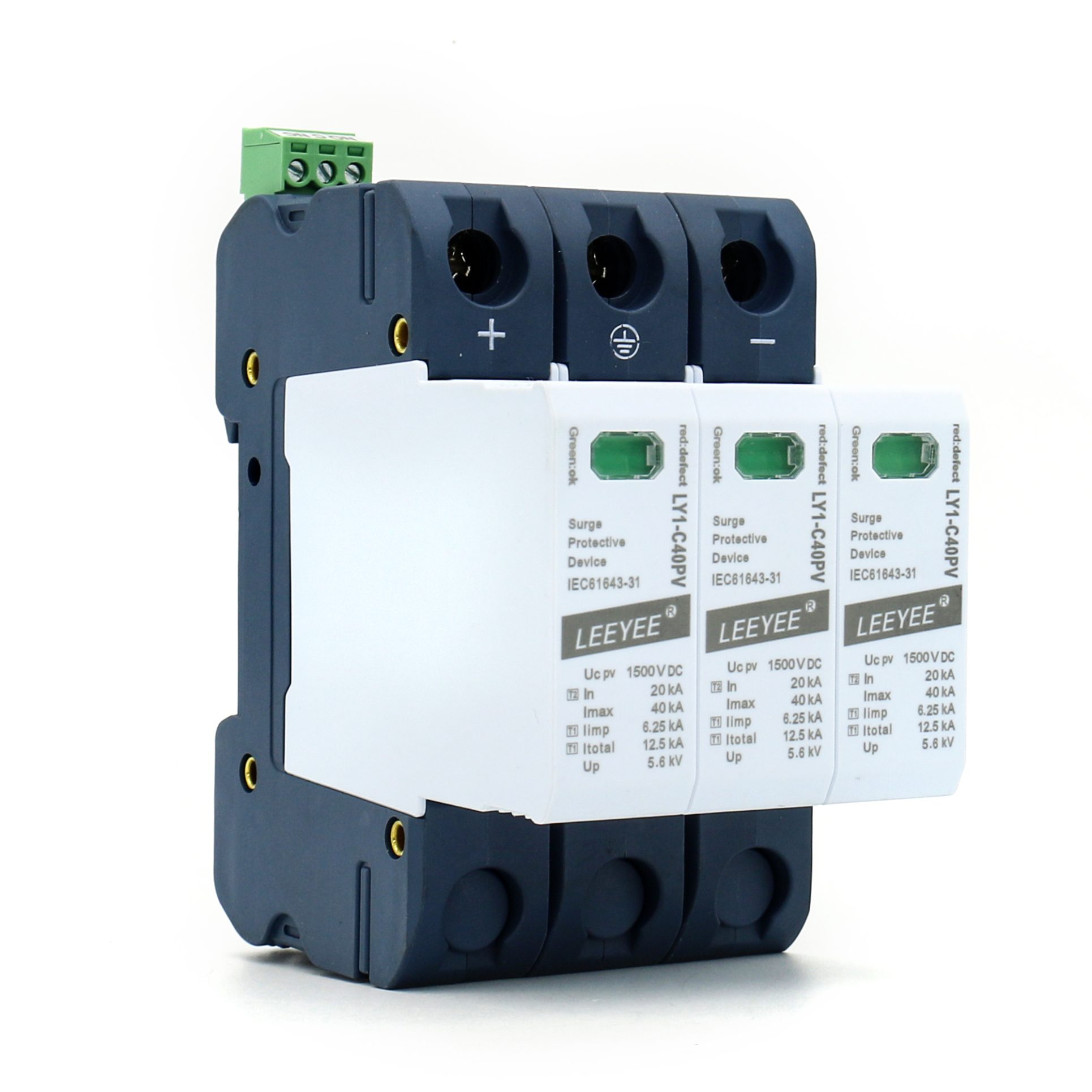
LY1-C40PV/3(S) 1500V(D4)
อุปกรณ์ป้องกันไฟกระชาก (SPD) แรงดันสูงสำหรับระบบโซลาร์เซลล์ขนาดใหญ่ (Utility-scale), ตู้รวมไฟ (Combiner boxes), อินพุต DC ของอินเวอร์เตอร์ และแผงกระจายไฟ DC
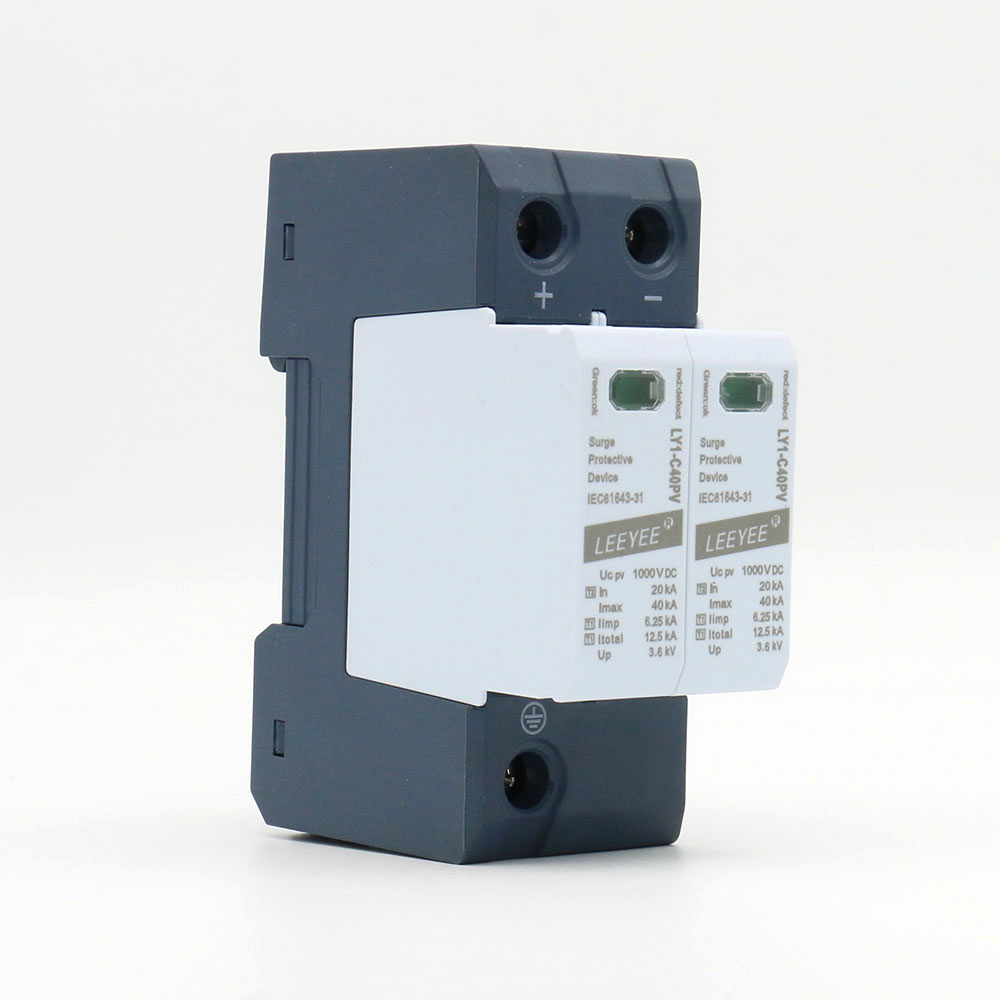
LY1-C40PV/2(S) 1000V
SPD ประเภท DC Type 1+2 แบบเสียบได้ 2 ขั้ว สำหรับระบบ PV 1000V, ตู้รวมไฟ, อินพุต DC ของอินเวอร์เตอร์ และตู้ DC
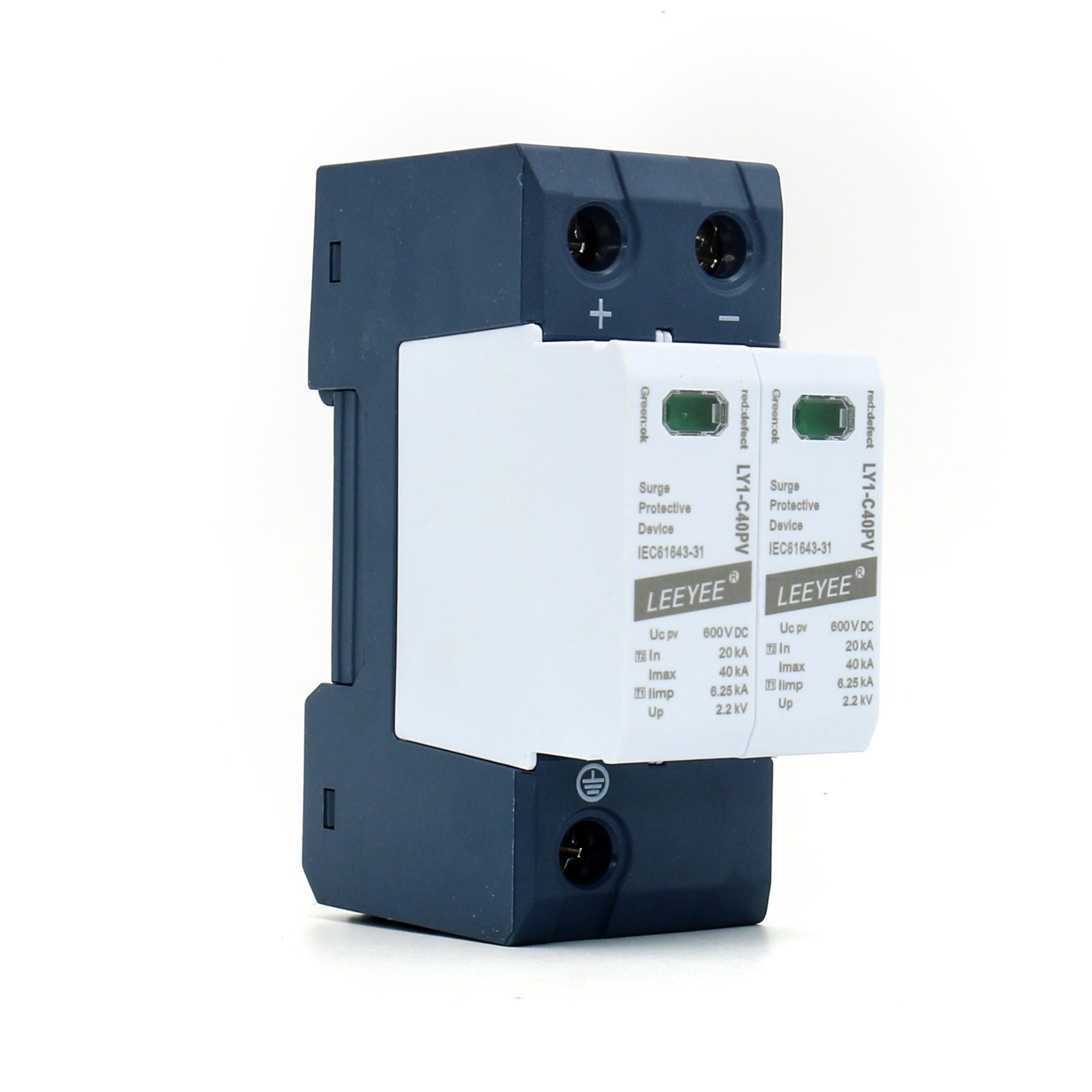
LY1-C40PV/2(S) 600V
SPD ประเภท DC Type 2 แบบ 2 ขั้ว สำหรับระบบ PV 600V, โซลาร์เซลล์ที่อยู่อาศัย, โซลาร์เซลล์เชิงพาณิชย์, แผง DC และวงจร DC ของระบบกักเก็บพลังงาน
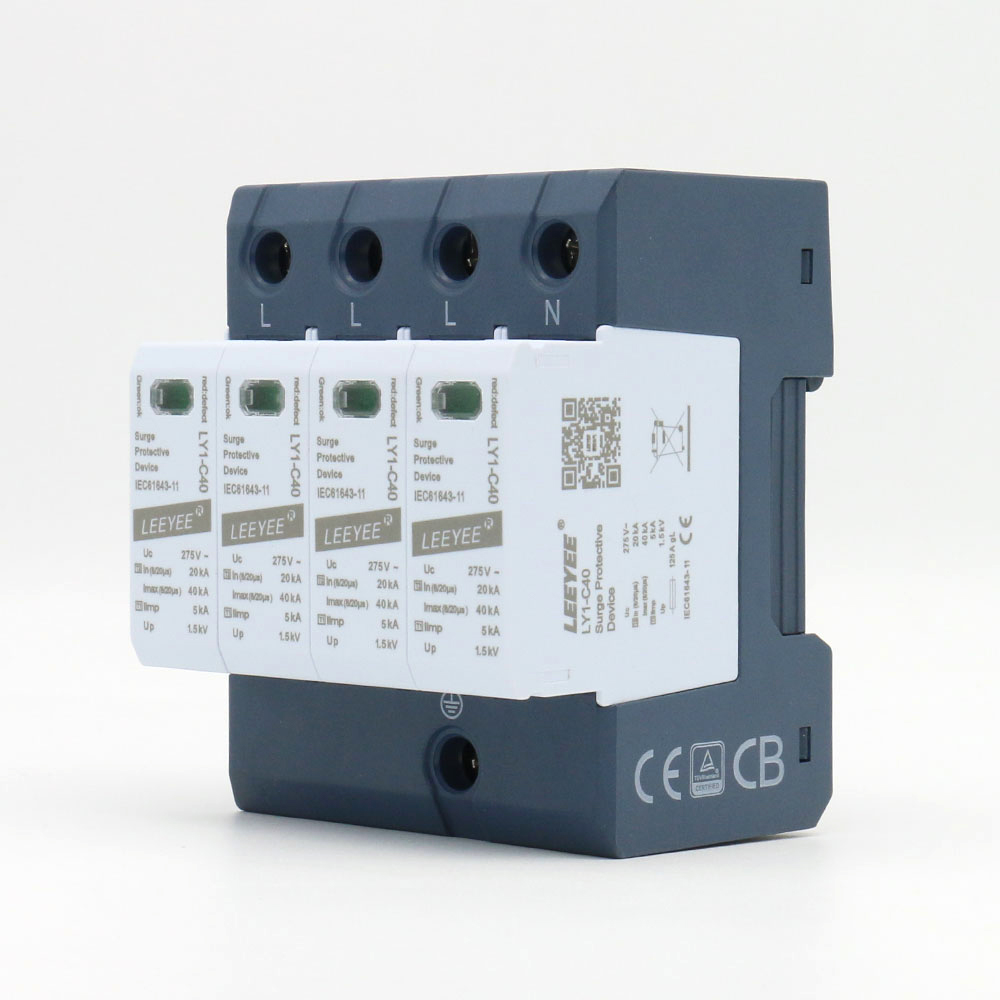
LY1-C40/4(S) AC SPD
อุปกรณ์ป้องกันไฟกระชาก AC ประเภท 2 สำหรับเอาต์พุต AC ของอินเวอร์เตอร์, ตู้จ่ายไฟ AC, แผงควบคุมแรงดันไฟฟ้าต่ำ และการป้องกันด้าน AC ของระบบโซลาร์เซลล์
*การ์ดผลิตภัณฑ์ 600V แสดงค่า Iimp ตามข้อมูลผลิตภัณฑ์ที่ได้รับการยืนยันในปัจจุบัน สำหรับการส่งโครงการอย่างเป็นทางการ โปรดตรวจสอบใบเสนอราคาขั้นสุดท้ายและขอบเขตของใบรับรองให้ตรงกับรุ่นที่เลือกอย่างถูกต้อง
คำจำกัดความ
Solar SPD คืออะไร?
Solar SPD หรืออุปกรณ์ป้องกันไฟกระชากสำหรับระบบ PV เป็นอุปกรณ์ที่ใช้เพื่อลดความเสี่ยงของความเสียหายต่ออุปกรณ์ที่เกิดจากฟ้าผ่า การสับเปลี่ยนวงจร และแรงดันไฟฟ้าเกินชั่วขณะในระบบไฟฟ้าโซลาร์เซลล์
เหตุผลที่สำคัญ
เหตุใดระบบโซลาร์ PV จึงจำเป็นต้องมีการป้องกันไฟกระชาก
ระบบโซลาร์ PV มักติดตั้งกลางแจ้ง โดยมีการเดินสายไฟระยะไกลและมีอุปกรณ์อิเล็กทรอนิกส์ในอินเวอร์เตอร์ที่ไวต่อแรงดันไฟฟ้า การป้องกันไฟกระชากจึงมีความสำคัญเนื่องจากเหตุการณ์ไฟกระชากเพียงครั้งเดียวสามารถทำให้อินเวอร์เตอร์เสียหาย ขัดจังหวะการผลิตไฟฟ้า และเพิ่มค่าใช้จ่ายในการบำรุงรักษา
การติดตั้งกลางแจ้ง
โมดูล PV, สายเคเบิล DC และตู้รวมไฟมีความเสี่ยงต่อไฟกระชากที่เกี่ยวข้องกับฟ้าผ่ากลางแจ้ง
การเดินสายไฟระยะไกล
การเดินสาย DC ระยะไกลสามารถเหนี่ยวนำให้เกิดแรงดันไฟฟ้ากระชากได้ โดยเฉพาะในระบบ PV บนหลังคาและระบบติดตั้งบนพื้นดิน
การป้องกันอินเวอร์เตอร์
อินเวอร์เตอร์มีอุปกรณ์อิเล็กทรอนิกส์ที่ไวต่อสัญญาณ ความเสียหายจากไฟกระชากอาจทำให้เกิดการหยุดชะงักของระบบ ค่าใช้จ่ายในการเปลี่ยนอุปกรณ์ และสูญเสียรายได้จากการผลิตไฟฟ้า
ความต่อเนื่องของระบบ
การเลือก SPD ที่ถูกต้องช่วยลดความล้มเหลวที่ไม่คาดคิดในสตริง PV, ตู้ DC, ตู้อินเวอร์เตอร์ และแผง AC
ตำแหน่งการติดตั้ง
SPD ติดตั้งที่จุดใดในระบบโซลาร์ PV?
การป้องกันไฟกระชากสำหรับโซลาร์เซลล์มักจะจัดวางไว้ทั้งด้าน DC และด้าน AC โดย DC SPD จะช่วยปกป้องแผง PV และอินพุตของอินเวอร์เตอร์ ส่วน AC SPD จะช่วยปกป้องเอาต์พุตของอินเวอร์เตอร์และระบบกระจายไฟปลายทาง
กรณีที่ DC SPD เพียงหนึ่งชุดอาจเพียงพอ
อาจพิจารณาติดตั้ง DC SPD เพียงชุดเดียวใกล้กับอินพุต DC ของอินเวอร์เตอร์ หากแผง PV อยู่ใกล้กับอินเวอร์เตอร์ มีความยาวสายเคเบิลสั้น และการประเมินความเสี่ยงของโครงการไม่จำเป็นต้องมีการป้องกันเพิ่มเติมที่ด้านแผง PV
กรณีที่อาจจำเป็นต้องมีการป้องกันทั้งสองปลายของสายเคเบิล
หากระยะห่างระหว่างแผง PV หรือตู้รวมไฟกับอินเวอร์เตอร์มีมาก อาจต้องพิจารณาการป้องกันไฟกระชากที่ทั้งสองปลายของเส้นทางสายเคเบิล DC ตามการออกแบบระบบและข้อกำหนดในท้องถิ่น
ด้าน DC เทียบกับ ด้าน AC
DC Solar SPD เทียบกับ AC Solar SPD
SPD สำหรับ DC และ AC ไม่สามารถใช้แทนกันได้ เนื่องจากพฤติกรรมการเกิดอาร์ค ลักษณะวงจร อัตราแรงดันไฟฟ้า และมาตรฐานการทดสอบที่เกี่ยวข้องมีความแตกต่างกัน
DC Solar SPD
DC Solar SPD ได้รับการออกแบบมาสำหรับวงจร DC ของระบบโซลาร์เซลล์ และมักใช้ในระบบ PV ที่มีแรงดัน 600V, 1000V หรือ 1500V DC
- กล่องคอมไบเนอร์สตริง PV
- ตู้กระจายไฟ DC
- ด้านอินพุต DC ของอินเวอร์เตอร์
- วงจร DC ของโซลาร์เซลล์
- อ้างอิงมาตรฐาน IEC/EN 61643-31
AC Solar SPD
AC solar SPD จะถูกติดตั้งหลังอินเวอร์เตอร์เพื่อป้องกันวงจรไฟฟ้าแรงดันต่ำกระแสสลับและอุปกรณ์จำหน่ายไฟฟ้า
- เอาต์พุตไฟฟ้ากระแสสลับของอินเวอร์เตอร์
- ตู้จำหน่ายไฟฟ้ากระแสสลับ (AC distribution cabinet)
- แผงควบคุมไฟฟ้าแรงดันต่ำหลัก
- ระบบโซลาร์เซลล์แบบเชื่อมต่อสายส่ง (Grid-connected PV systems)
- อ้างอิงตามมาตรฐาน IEC/EN 61643-11
การเลือกประเภท
อุปกรณ์ป้องกันไฟกระชาก (SPD) สำหรับโซลาร์เซลล์ ชนิดที่ 2 เทียบกับ ชนิดที่ 1+2
ควรเลือกประเภท SPD ตามความเสี่ยงจากการถูกฟ้าผ่า ระบบป้องกันฟ้าผ่าภายนอก เส้นทางสายเคเบิล ระบบสายดิน และการประเมินความเสี่ยงของโครงการ
| เงื่อนไขโครงการโซลาร์เซลล์ | ทิศทางทั่วไปของ SPD | หมายเหตุสำหรับผู้ซื้อ |
|---|---|---|
| ระบบโซลาร์เซลล์บนหลังคาหรือเชิงพาณิชย์มาตรฐานที่ไม่มีความเสี่ยงต่อการถูกฟ้าผ่าโดยตรง | ประเภท 2 PV SPD | มักใช้สำหรับป้องกันไฟกระชากที่เกิดจากฟ้าผ่าเหนี่ยวนำและแรงดันเกินจากการสับสวิตช์ |
| ระบบโซลาร์เซลล์ที่ได้รับผลกระทบจากระบบป้องกันฟ้าผ่าภายนอก | ประเภท 1+2 PV SPD | พิจารณาจุดที่กระแสฟ้าผ่าบางส่วนอาจเข้าสู่ระบบไฟฟ้าของโซลาร์เซลล์ |
| ฟาร์มโซลาร์เซลล์ระดับสาธารณูปโภคหรือพื้นที่ที่มีความเสี่ยงต่อฟ้าผ่าสูง | การประสานงานของ SPD ประเภท 1+2 และประเภท 2 ตามเฉพาะโครงการ | การเลือกใช้งานควรเป็นไปตามการออกแบบระบบป้องกันที่สมบูรณ์ รวมถึงระบบ DC, AC, สายดิน และการจัดวางสายเคเบิล |
| เส้นทางสายเคเบิล DC ระยะไกลระหว่างแผงโซลาร์เซลล์และอินเวอร์เตอร์ | อาจจำเป็นต้องติดตั้งอุปกรณ์ป้องกัน SPD ที่ปลายสายเคเบิลทั้งสองด้าน | ยืนยันความจำเป็นตามความยาวสายเคเบิล การเดินสายผ่านพื้นที่เสี่ยง และกฎระเบียบด้านไฟฟ้าในท้องถิ่น |
คู่มือการเลือกใช้งาน
วิธีเลือก Solar SPD
เลือก Solar SPD ตามฝั่งที่ติดตั้ง แรงดันไฟฟ้าของระบบโซลาร์เซลล์ ประเภทของ SPD, ความสามารถในการระบายกระแส, วิธีการเดินสาย, ความเสี่ยงจากฟ้าผ่าของโครงการ และข้อกำหนดด้านใบรับรอง
| จุดที่ต้องเลือก | สิ่งที่ต้องตรวจสอบ | แนวทางการแนะนำ | เหตุผลที่สำคัญ |
|---|---|---|---|
| ฝั่งการติดตั้ง | ฝั่ง DC หรือฝั่ง AC | ใช้ DC SPD ก่อนเข้าอินเวอร์เตอร์ และใช้ AC SPD หลังจากออกจากอินเวอร์เตอร์ | วงจร DC และ AC ต้องการการออกแบบ SPD ที่แตกต่างกัน |
| แรงดันไฟฟ้าระบบ PV | แรงดันไฟฟ้าวงจรเปิด (Voc) ของสตริงโซลาร์เซลล์ที่คำนวณได้สูงสุด ณ อุณหภูมิออกแบบต่ำสุด | เลือก SPD ที่มีค่า Ucpv เหมาะสมและสูงกว่าแรงดันไฟฟ้าสูงสุดของสตริงที่คำนวณได้ | ต้องพิจารณาค่า Module Voc, จำนวนโมดูลต่อสตริง และแรงดันที่เพิ่มขึ้นจากอุณหภูมิต่ำ |
| ประเภท SPD | ความเสี่ยงจากฟ้าผ่า ระบบป้องกันฟ้าผ่าภายนอก และการประเมินความเสี่ยง | ประเภท 2 สำหรับไฟกระชากจากการเหนี่ยวนำและการสับสวิตช์; ประเภท 1+2 สำหรับจุดที่กระแสฟ้าผ่าบางส่วนอาจเข้ามาได้ | ระดับ SPD ที่ต้องการขึ้นอยู่กับความเสี่ยงต่อกระแสฟ้าผ่าจริงของสถานที่ติดตั้ง |
| ความสามารถในการคายประจุ | ค่าพิกัด In, Imax หรือ Iimp | เลือกตามการออกแบบการป้องกันของโครงการ | ความเสี่ยงจากไฟกระชากที่สูงกว่าอาจต้องใช้ความสามารถในการระบายกระแสที่สูงขึ้น |
| การเดินสาย / ขั้ว (Poles) | โครงสร้างการเดินสายโซลาร์เซลล์และวิธีการต่อสายดิน | การกำหนดค่าแบบ 2P, 3P, 4P หรือการกำหนดค่าเฉพาะสำหรับโครงการ | การกำหนดค่าขั้วที่ถูกต้องช่วยรองรับการระบายไฟกระชากได้อย่างปลอดภัย |
| วิธีการติดตั้ง | การติดตั้งในตู้, กล่องรวมสาย (Combiner box) หรือบนราง DIN | นิยมใช้ SPD แบบเสียบได้กับราง DIN ขนาด 35 มม. | การเปลี่ยนและบำรุงรักษาที่ง่ายช่วยลดเวลาหยุดทำงานของระบบ |
| ข้อกำหนดด้านใบรับรอง | ใบรับรอง TUV, CB, CE, รายงานผลการทดสอบ หรือเอกสารยื่นเสนอโครงการ | ยืนยันขอบเขตของรุ่นสินค้าก่อนส่งเอกสารอย่างเป็นทางการ | ใบรับรองควรตรงกับรุ่นสินค้าและข้อกำหนดของโครงการอย่างถูกต้อง |
| มาตรฐานอ้างอิง | ฝั่ง PV DC หรือฝั่งไฟฟ้ากระแสสลับ (AC) | IEC/EN 61643-31 for PV DC SPD; IEC/EN 61643-11 for AC SPD | มาตรฐานช่วยกำหนดข้อกำหนดด้านการทดสอบและประสิทธิภาพ |
การเลือก SPD ขั้นสุดท้ายควรยืนยันตามการออกแบบระบบโซลาร์เซลล์จริง ระบบสายดิน ความยาวสายเคเบิล ระดับความเสี่ยงจากฟ้าผ่า และข้อกำหนดทางไฟฟ้าในท้องถิ่น
เปรียบเทียบรุ่น
ตารางเปรียบเทียบพารามิเตอร์ Solar SPD
ตารางนี้ช่วยให้ผู้ซื้อเปรียบเทียบตัวเลือกอุปกรณ์ป้องกันไฟกระชาก (SPD) สำหรับโซลาร์เซลล์ของ LEEYEE โดยแบ่งตามแรงดันไฟฟ้า ประเภท พิกัดการคายประจุ ฝั่งการติดตั้ง และการใช้งาน
| รุ่น | ฝั่งการติดตั้ง | ประเภท | แรงดันไฟฟ้า | จำนวนขั้ว | ใน / Imax | Iimp | การใช้งาน |
|---|---|---|---|---|---|---|---|
| LY1-C40PV/3(S) 1500V(D4) | ด้าน DC ของ PV | Class I+II \/ Type 1+2 | 1500V DC | 3P | 20kA / 40kA | 6.25kA | PV ขนาดสาธารณูปโภค (Utility-scale), ตู้รวมสาย (Combiner box), อินพุต DC ของอินเวอร์เตอร์ |
| LY1-C40PV/2(S) 1000V | ด้าน DC ของ PV | Class I+II \/ Type 1+2 | 1000V DC | 2P | 20kA / 40kA | 6.25kA | สตริง PV, ตู้รวมสาย, อินพุต DC ของอินเวอร์เตอร์ |
| LY1-C40PV/2(S) 600V | ด้าน DC ของ PV | ชั้น II / ประเภท 2 | 600V DC | 2P | 20kA / 40kA | 6.25kA* | PV สำหรับที่พักอาศัย, PV เชิงพาณิชย์, แผง DC, วงจร DC ของ ESS |
| LY1-C40/4(S) | ฝั่ง AC ของโซลาร์ | ประเภท 2 AC SPD | 75V / 150V / 275V / 320V / 385V / 440V AC | 1P / 2P / 3P / 4P | 20kA / 40kA | การเลือกอุปกรณ์ป้องกันไฟกระชาก (SPD) ฝั่ง AC สำหรับโครงการเฉพาะ | เอาต์พุต AC ของอินเวอร์เตอร์, ตู้จ่ายไฟ AC, แผงควบคุมแรงดันไฟฟ้าต่ำ |
*สำหรับ SPD DC Type 2 ขนาด 600V ค่า Iimp จะแสดงตามข้อมูลผลิตภัณฑ์ที่มีการยืนยันแล้ว สำหรับการยื่นขอใบรับรองหรือการประมูลอย่างเป็นทางการ โปรดตรวจสอบขอบเขตของรุ่นและรายงานผลการทดสอบขั้นสุดท้ายก่อนดำเนินการส่ง
ใบรับรองและเอกสาร
การสนับสนุนการตรวจสอบและดาวน์โหลดข้อมูล Solar SPD
สำหรับการจัดซื้อระดับมืออาชีพ ควรตรวจสอบรุ่นผลิตภัณฑ์ เอกสารข้อมูลพารามิเตอร์ ขอบเขตของใบรับรอง และรายงานผลการทดสอบร่วมกัน LEEYEE สามารถให้การสนับสนุนด้านเอกสารสำหรับชุดผลิตภัณฑ์ PV SPD และ AC SPD ที่เลือกได้
การเลือกผลิตภัณฑ์หรือการออกแบบระบบ
คุณต้องการ Solar SPD หรือโซลูชันการป้องกัน PV แบบครบวงจร?
เลือกผลิตภัณฑ์ Solar SPD เมื่อคุณทราบด้านการติดตั้ง, แรงดันไฟฟ้าของระบบ, ประเภท SPD และการกำหนดค่าการเดินสายที่ต้องการแล้ว ขอแนะนำโซลูชันการป้องกันไฟกระชาก PV แบบครบวงจรเมื่อยังจำเป็นต้องมีการประเมินสถาปัตยกรรมของระบบ
เลือกผลิตภัณฑ์ Solar SPD
ใช้หน้านี้เมื่อภารกิจหลักคือการเปรียบเทียบรุ่น DC หรือ AC SPD, ระดับแรงดันไฟฟ้า, พารามิเตอร์การคายประจุ, การกำหนดค่าโพล, รูปภาพผลิตภัณฑ์ และตำแหน่งการติดตั้งทั่วไป
- ทราบฝั่ง DC หรือ AC แล้ว
- ยืนยันแรงดันไฟฟ้าของระบบและการเดินสายแล้ว
- ระบุประเภท SPD ที่ต้องการแล้ว
- ต้องการรุ่นผลิตภัณฑ์ ใบรับรอง หรือใบเสนอราคา
เลือกโซลูชันการป้องกัน PV แบบครบวงจร
ใช้โซลูชันระดับระบบเมื่อคุณยังต้องพิจารณาว่าฝั่ง DC, ฝั่ง AC, เส้นทางสายเคเบิล, ระบบป้องกันฟ้าผ่า และสายสื่อสารควรได้รับการป้องกันร่วมกันอย่างไร
- ยังไม่ได้กำหนดประเภท 2 หรือ 1+2
- ต้องวางแผนตำแหน่งการติดตั้ง SPD
- เส้นทางสายเคเบิลระยะไกลอาจต้องมีการป้องกันที่ปลายทั้งสองด้าน
- สาย RS485, Ethernet หรือสายตรวจสอบอาจต้องได้รับการป้องกัน
แอปพลิเคชัน
การใช้งาน Solar SPD
ผลิตภัณฑ์ Solar SPD ของ LEEYEE เหมาะสำหรับการใช้งานด้านการป้องกัน PV ที่หลากหลาย ตั้งแต่ระบบขนาดเล็กบนหลังคาไปจนถึงโครงการเชิงพาณิชย์และสาธารณูปโภค
โซลาร์บนหลังคาที่พักอาศัย
ป้องกันอินพุต/เอาต์พุตของอินเวอร์เตอร์และเส้นทางสายเคเบิล PV บนหลังคาจากแรงดันไฟกระชากชั่วขณะ
ระบบ PV เชิงพาณิชย์
เหมาะสำหรับหลังคาโรงงาน, อาคารพาณิชย์, โรงเรียน, โรงพยาบาล และสถานที่สาธารณะ
ฟาร์มโซลาร์เซลล์ระดับสาธารณูปโภค
รองรับการออกแบบการป้องกันสำหรับสตริง PV, ตู้รวมสาย, สถานีอินเวอร์เตอร์ และการจ่ายไฟ AC
ตู้รวมสายโซลาร์ (Solar Combiner Boxes)
มักจะรวมเข้าในตู้รวมสาย DC พร้อมกับฟิวส์, อุปกรณ์ตัดตอน และอุปกรณ์ตรวจสอบ
ตู้ควบคุมอินเวอร์เตอร์
ใช้ที่ฝั่งอินพุต DC และเอาต์พุต AC เพื่อลดความเสี่ยงที่อินเวอร์เตอร์จะได้รับความเสียหายจากไฟกระชาก
ตู้ไฟฟ้า OEM
มีจำหน่ายสำหรับผู้สร้างตู้ควบคุม, ผู้จัดจำหน่าย, บริษัท EPC พลังงานแสงอาทิตย์ และชุดประกอบอุปกรณ์ป้องกันแบบ OEM
รายการตรวจสอบสำหรับการจัดซื้อ
ข้อมูลที่ควรเตรียมไว้ก่อนขอใบเสนอราคา Solar SPD
รายละเอียดโครงการที่ชัดเจนจะช่วยให้ซัพพลายเออร์แนะนำ Solar SPD ที่ถูกต้องได้รวดเร็วยิ่งขึ้น และลดความเสี่ยงในการเลือกแรงดันไฟฟ้า ประเภท หรือการกำหนดค่าขั้วที่ไม่ถูกต้อง
ข้อมูลทางไฟฟ้า
- แรงดันไฟฟ้าของระบบ PV
- ค่า Voc ของสตริงสูงสุด
- จำนวนโมดูลต่อสตริง
- ด้านการติดตั้ง DC หรือ AC
ข้อมูลการติดตั้ง
- อินพุตของตู้รวมไฟ (Combiner box) หรืออินเวอร์เตอร์
- ความยาวและเส้นทางของสายเคเบิล
- วิธีการต่อลงดิน
- พื้นที่ในตู้หรือบนราง DIN
ข้อมูลทางธุรกิจ
- ความต้องการใบรับรอง (Certificate)
- ปริมาณและแผนการจัดส่ง
- ความต้องการฉลาก OEM หรือบรรจุภัณฑ์
- การขอเอกสารข้อมูลทางเทคนิค (Datasheet) และรายงานผลการทดสอบ
LEEYEE / CNSPD
ซัพพลายเออร์ Solar SPD เพื่อระบบไฟฟ้าโซลาร์เซลล์ที่ปลอดภัยยิ่งขึ้น
LEEYEE เป็นผู้จัดจำหน่ายที่เชี่ยวชาญด้านการป้องกันการเกิดกระแสเกินและการป้องกันแรงดันต่ำ เชื่อถือได้สำหรับแอปพลิเคชันพลังงานแสงอาทิตย์, การจัดจำหน่ายพลังงาน, โทรคมนาคม, อุตสาหกรรม, และ OEM.
CNSPD คือแพลตฟอร์มแบรนด์ของ LEEYEE ที่มุ่งเน้นด้านอุปกรณ์ป้องกันไฟกระชาก โดยสร้างขึ้นเพื่อช่วยให้ผู้ซื้อทั่วโลกสามารถจัดหาอุปกรณ์ป้องกันไฟกระชาก (SPD) และผลิตภัณฑ์ป้องกันแรงดันไฟฟ้าต่ำที่เกี่ยวข้องได้อย่างน่าเชื่อถือ
สำหรับผู้ซื้อ Solar SPD เราสามารถจัดเตรียมเอกสารข้อมูลทางเทคนิคเฉพาะรุ่น เอกสารรับรอง รูปภาพผลิตภัณฑ์ การสนับสนุน OEM และความช่วยเหลือในการเลือกซื้อตามซีรีส์ผลิตภัณฑ์ที่เลือก
คำถามที่พบบ่อย
คำถามที่พบบ่อยเกี่ยวกับ Solar SPD
คำถามเหล่านี้ช่วยให้ผู้ซื้อเข้าใจถึงการเลือก Solar SPD, ตำแหน่งการติดตั้ง, พิกัดแรงดันไฟฟ้า, การสนับสนุนด้านใบรับรอง และข้อกำหนดในการป้องกันทั่วไปสำหรับระบบโซลาร์เซลล์
Solar SPD หมายถึงอะไร?
Solar SPD หมายถึงอุปกรณ์ป้องกันแรงดันไฟกระชากสำหรับโซลาร์ โดยติดตั้งในระบบโฟโตโวลตาอิกเพื่อจำกัดแรงดันเกินชั่วขณะและระบายกระแสไฟกระชากก่อนที่จะสร้างความเสียหายแก่เครื่องมืออุปกรณ์ PV.
อุปกรณ์ป้องกันไฟกระชาก DC สำหรับโซลาร์ PV คืออะไร?
อุปกรณ์ป้องกันไฟกระชากกระแสตรงสำหรับระบบโซลาร์ PV คือ SPD ที่ได้รับการจัดอันดับสำหรับ PV ซึ่งติดตั้งอยู่ฝั่งกระแสตรงของระบบ เช่น ในตู้รวมสาย (combiner box), กล่องป้องกันกระแสตรง หรือใกล้กับอินพุตกระแสตรงของอินเวอร์เตอร์.
ควรเลือกโมเดล SPD สำหรับโซลาร์รุ่นใดสำหรับระบบ PV 1500V?
สำหรับระบบ PV 1500V สามารถพิจารณาใช้ SPD DC 1500V เช่น LY1-C40PV/3(S) 1500V(D4) ได้เมื่อค่าพิกัดแรงดัน การจัดเรียงขั้ว ค่าพิกัดกระแสไฟกระชาก และขอบเขตใบรับรองสอดคล้องกับแบบโครงการ.
ควรเลือกโมเดล SPD สำหรับโซลาร์รุ่นใดสำหรับระบบ PV 1000V?
สำหรับสตริง PV และกล่องรวมสัญญาณขนาด 1000V DC รุ่น LY1-C40PV/2(S) 1000V เป็นอุปกรณ์ป้องกันไฟกระชาก (SPD) ชนิด DC ประเภท 1+2 ที่มีค่า In 20kA, Imax 40kA และ Iimp 6.25kA
ใช้ SPD ชนิดใดที่ด้าน AC ของอินเวอร์เตอร์พลังงานแสงอาทิตย์?
สำหรับเอาต์พุต AC ของอินเวอร์เตอร์หรือแผงจ่ายไฟ AC สามารถใช้ AC SPD เช่น LY1-C40/4(S) ได้เมื่อแรงดันไฟฟ้า AC และการกำหนดค่าขั้วที่เลือกสอดคล้องกับการออกแบบระบบ.
แผงโซลาร์เซลล์จำเป็นต้องใช้ SPD หรือไม่?
แผงโซลาร์เซลล์และระบบ PV มักถูกติดตั้งไว้กลางแจ้งโดยมีการเดินสาย DC เป็นระยะทางไกล จึงขอแนะนำอย่างยิ่งให้ติดตั้งอุปกรณ์ป้องกันไฟกระชาก (SPD) โดยเฉพาะในพื้นที่ที่มีกิจกรรมฟ้าผ่าหรือสภาวะโครงข่ายไฟฟ้าที่ไม่เสถียร
ควรติดตั้งอุปกรณ์ป้องกันไฟกระชาก (SPD) ไว้ที่จุดใดในระบบโซลาร์เซลล์ PV?
โดยปกติแล้ว DC SPD จะถูกติดตั้งไว้ระหว่างแผงโซลาร์เซลล์และอินเวอร์เตอร์ เช่น ภายในกล่องรวมสาย (Combiner Box) หรือใกล้กับจุดรับไฟ DC ของอินเวอร์เตอร์ ส่วน AC SPD มักจะติดตั้งไว้ที่ฝั่งขาออกของอินเวอร์เตอร์
DC solar SPD และ AC solar SPD มีความแตกต่างกันอย่างไร?
DC solar SPD ถูกออกแบบมาสำหรับวงจรไฟฟ้ากระแสตรงในระบบโซลาร์เซลล์ เช่น ระบบ 600V, 1000V หรือ 1500V DC ในขณะที่ AC solar SPD จะใช้สำหรับวงจรจ่ายไฟฟ้ากระแสสลับแรงดันต่ำที่อยู่ถัดจากอินเวอร์เตอร์
สามารถใช้ AC SPD กับฝั่ง DC ของระบบโซลาร์เซลล์ได้หรือไม่?
ไม่ อุปกรณ์ป้องกันไฟกระชาก (SPD) สำหรับไฟฟ้ากระแสสลับ (AC) และไฟฟ้ากระแสตรง (DC) ถูกออกแบบมาให้มีคุณลักษณะทางวงจรที่แตกต่างกัน วงจรไฟฟ้ากระแสตรงจากแผงโซลาร์เซลล์ (PV DC) ควรใช้อุปกรณ์ป้องกันไฟกระชากชนิด DC ที่ผ่านการรับรองสำหรับระบบโซลาร์เซลล์ โดยมีค่า Ucpv และมาตรฐานอ้างอิงที่เหมาะสม
ฉันจะเลือกอุปกรณ์ป้องกันไฟกระชากสำหรับระบบโซลาร์เซลล์ได้อย่างไร?
การเลือกอุปกรณ์ป้องกันไฟกระชากสำหรับระบบโซลาร์เซลล์ควรพิจารณาจากแรงดันไฟฟ้าของระบบ, แรงดันไฟฟ้าวงจรเปิดสูงสุด (Voc) ของสตริง, การติดตั้งฝั่งไฟฟ้ากระแสตรงหรือกระแสสลับ, ประเภทของอุปกรณ์ป้องกันไฟกระชาก, พิกัดกระแสคายประจุ, รูปแบบการเดินสาย, วิธีการต่อลงดิน, ความเสี่ยงต่อการเกิดฟ้าผ่าในพื้นที่โครงการ และข้อกำหนดด้านใบรับรอง
ฉันควรใช้อุปกรณ์ป้องกันไฟกระชากสำหรับระบบโซลาร์เซลล์ที่มีแรงดันไฟฟ้าเท่าใด?
ควรเลือกอุปกรณ์ป้องกันไฟกระชาก (DC SPD) ตามค่าแรงดันไฟฟ้าวงจรเปิดสูงสุดของสตริงแผงโซลาร์เซลล์ที่คำนวณได้ ณ อุณหภูมิออกแบบต่ำสุด โดยต้องพิจารณาค่า Voc ของโมดูล จำนวนโมดูลต่อสตริง และการเพิ่มขึ้นของแรงดันไฟฟ้าที่อุณหภูมิต่ำ ก่อนที่จะเลือกค่า Ucpv ที่เหมาะสม
อุปกรณ์ป้องกันไฟกระชากประเภทที่ 2 (Type 2 SPD) เพียงพอสำหรับระบบโซลาร์เซลล์หรือไม่?
อุปกรณ์ป้องกันไฟกระชากประเภทที่ 2 (Type 2 PV SPD) มักใช้ในกรณีที่ต้องการการป้องกันจากแรงดันเกินที่เกิดจากการเหนี่ยวนำและการสลับวงจรเป็นหลัก สำหรับกรณีที่มีโอกาสเกิดกระแสฟ้าผ่าบางส่วนเข้าสู่ระบบไฟฟ้า เช่น การติดตั้งที่มีระบบป้องกันฟ้าผ่าภายนอก หรือโครงการที่ระบุไว้ในการประเมินความเสี่ยง ควรพิจารณาใช้อุปกรณ์ป้องกันไฟกระชากประเภทที่ 1+2 (Type 1+2 PV SPD)
อุปกรณ์ป้องกันไฟกระชากสำหรับโซลาร์เซลล์รุ่นเหล่านี้ได้รับการรับรองมาตรฐาน TUV และ CB หรือไม่?
ใช่ อุปกรณ์ป้องกันไฟกระชาก (SPD) สำหรับระบบโซลาร์เซลล์ที่ระบุในหน้านี้มีเอกสารรับรองจาก TUV และ CB รองรับ สำหรับการยื่นประมูลหรือการยื่นเอกสารโครงการอย่างเป็นทางการ โปรดตรวจสอบขอบเขตการรับรองให้ตรงกับรุ่นที่เลือก
ฉันควรให้ข้อมูลอะไรบ้างสำหรับการเลือกอุปกรณ์ป้องกันไฟกระชาก (SPD) สำหรับระบบโซลาร์เซลล์?
คุณสามารถระบุแรงดันไฟฟ้าของระบบ PV, ค่า Voc สูงสุดของสตริง, ประเภทของอินเวอร์เตอร์, การติดตั้งฝั่ง DC หรือ AC, วิธีการต่อลงดิน, จำนวนสตริง, ประเภทของตู้ควบคุม, สถานที่ตั้งโครงการ, ระดับความเสี่ยงจากฟ้าผ่า และข้อกำหนดด้านการรับรองที่ต้องการ
หัวข้อผลิตภัณฑ์ที่เกี่ยวข้อง
หน้า Solar SPD และอุปกรณ์ป้องกันไฟกระชากที่เกี่ยวข้อง
สำรวจผลิตภัณฑ์ป้องกันไฟกระชากและหน้าข้อมูลการป้องกันระบบโซลาร์เซลล์ที่เกี่ยวข้อง เพื่อเปรียบเทียบ DC SPD, AC SPD, 1500V DC SPD, ใบรับรอง และโซลูชันการป้องกันระบบโซลาร์เซลล์แบบครบวงจร
ต้องการความช่วยเหลือในการเลือก Solar SPD ที่เหมาะสมใช่หรือไม่?
บอกแรงดันไฟฟ้าของระบบ PV ของคุณ, ค่า Voc ของสตริงสูงสุด, ฝั่งอินเวอร์เตอร์, การใช้งาน, วิธีการลงกราวด์, ข้อกำหนดของตู้, ปริมาณ และใบรับรองที่ต้องการให้เราทราบ LEEYEE สามารถช่วยแนะนำ Solar SPD แบบ DC หรือ AC ที่เหมาะสมให้กับคุณได้