
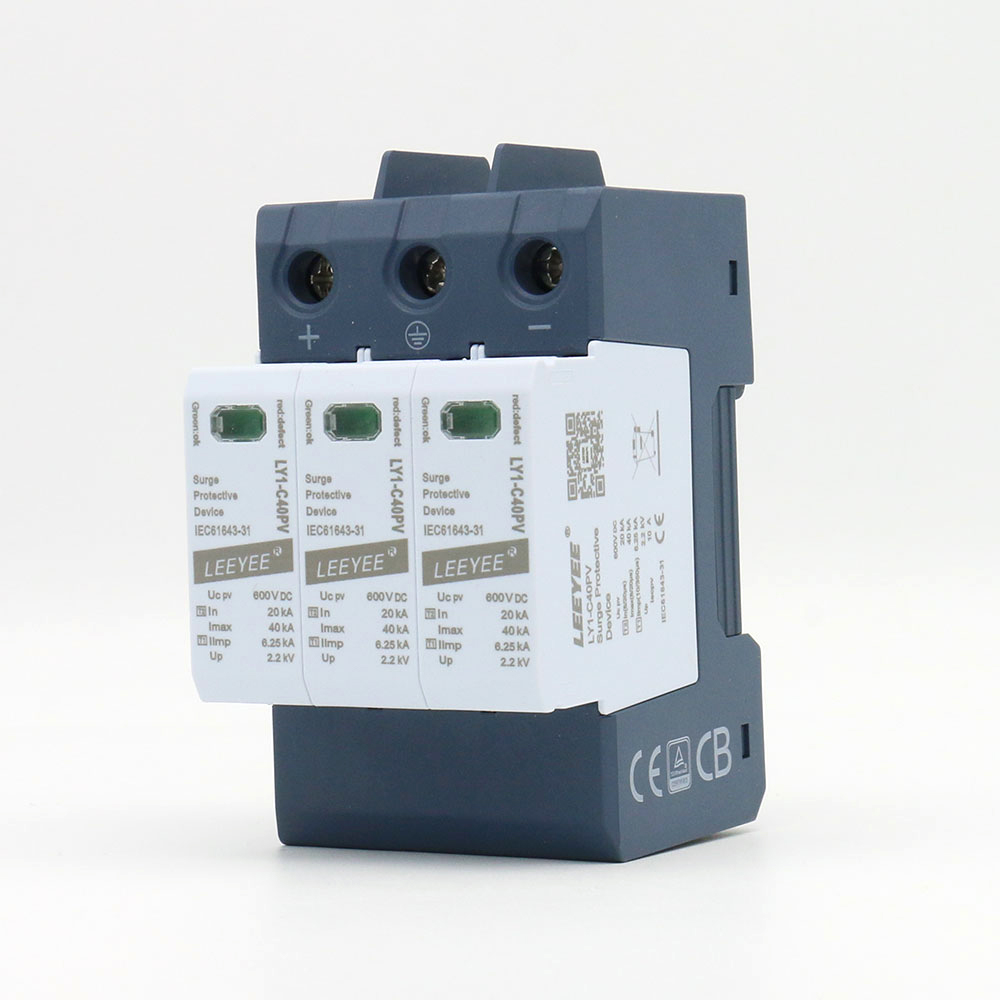
600V PV DC
Options de parafoudre PV 600V
Pour les conceptions compatibles de chaînes PV, de boîtiers de jonction et d'entrées d'onduleurs de petite taille et commerciaux.
Examen de l'option 600VCoordonnez les parafoudres DC pour les champs solaires, les boîtiers de jonction et les entrées d'onduleur avec la protection contre les surtensions AC et les lignes de communication pour les projets photovoltaïques commerciaux, à l'échelle industrielle et OEM. Envoyez vos spécifications de tension, votre schéma d'implantation et les conditions du site pour la sélection du modèle.
Confirmez d'abord le circuit de tension. Examinez ensuite le type de parafoudre, les pôles, le câblage et les documents techniques du modèle exact.
Pour les conceptions compatibles de chaînes PV, de boîtiers de jonction et d'entrées d'onduleurs de petite taille et commerciaux.
Examen de l'option 600V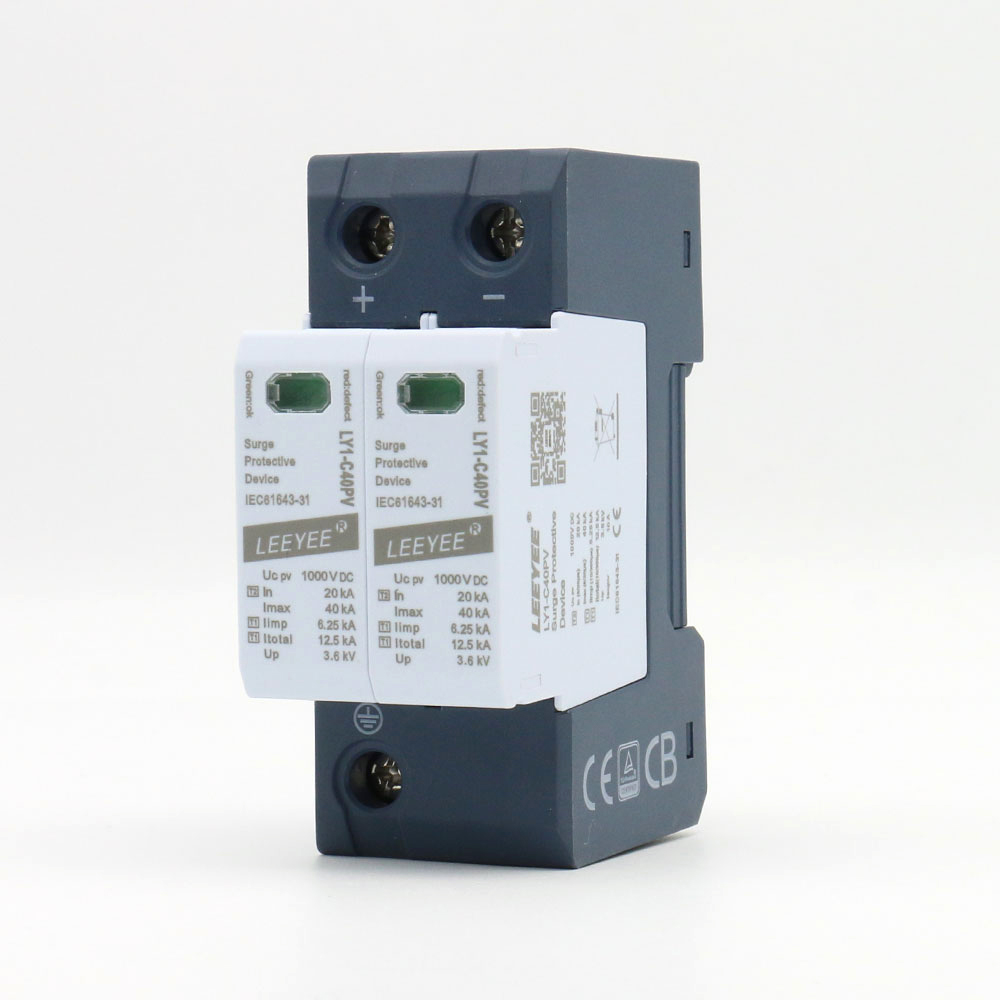
Pour les boîtiers de jonction PV commerciaux et les entrées d'onduleurs, avec examen de type 2 ou type 1+2 selon les conditions du site.
Examen de l'option 1000V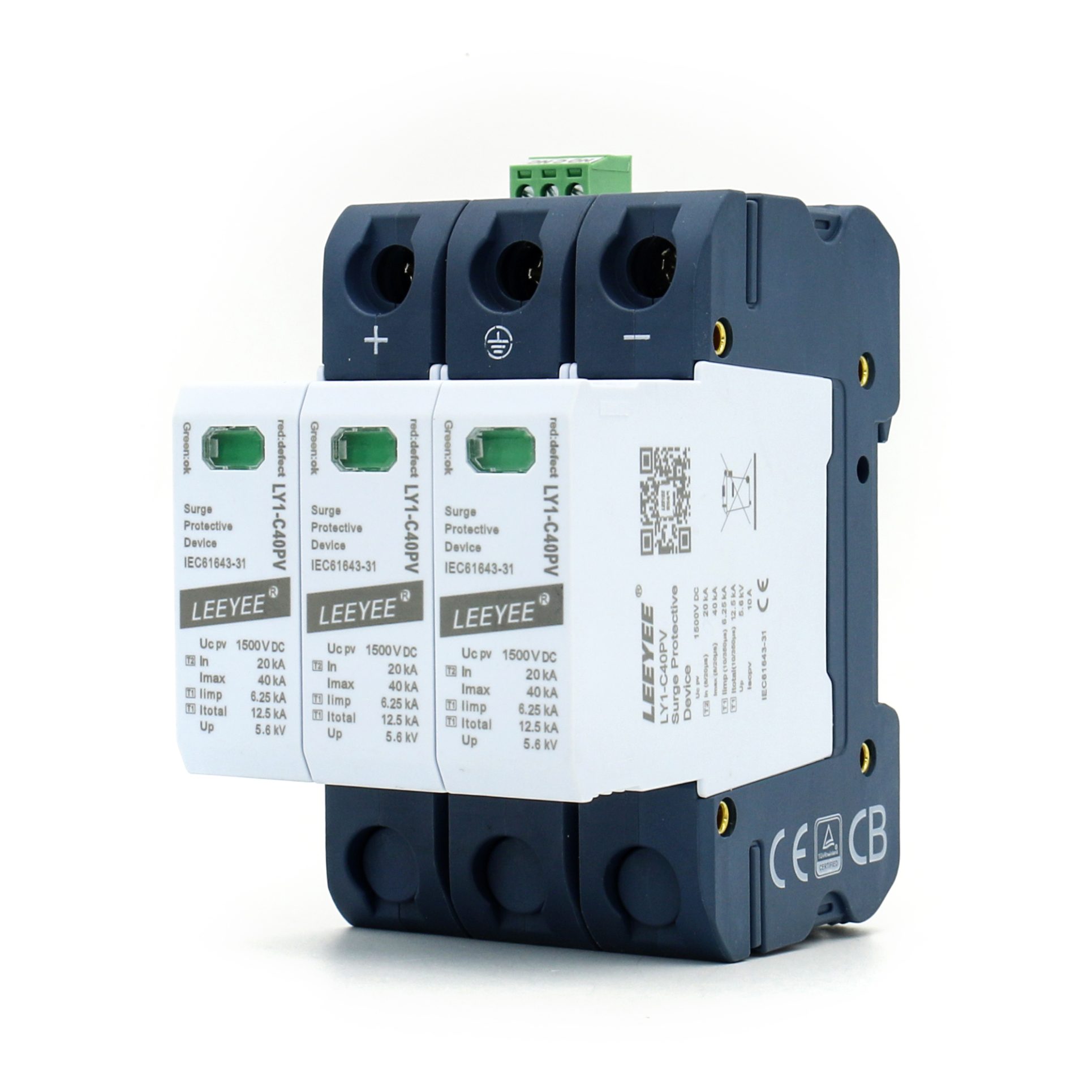
Pour les systèmes CC 1500V commerciaux et à grande échelle compatibles nécessitant une confirmation du modèle au niveau du projet.
Examen de l'option 1500VLa sélection finale doit confirmer la tension Voc maximale de la chaîne, l'Ucpv, le type, les pôles, le câblage, la protection de secours et la portée exacte du document.
Utilisez les deux voies ci-dessous pour la présélection, puis confirmez l'état complet du site et la documentation du produit.
Pour les positions où la conception ne nécessite pas de capacité de décharge du courant de foudre.
Pour les positions où la conception de la protection indique que le courant de foudre peut pénétrer dans le chemin électrique PV.
| État du site | Distribution principale | Côté CA de l'onduleur | Côté CC PV |
|---|---|---|---|
| Aucun système de protection contre la foudre (SPF) externe | Type 2 selon la conception du bâtiment | Type 2 SPD AC | Type 2 SPD PV là où cela est requis |
| SPF avec séparation maintenue | Type 1 ou Type 1+2 à l'origine selon la conception | Type 2 SPD AC | Type 2 SPD PV là où cela est requis |
| SPF sans séparation adéquate | Type 1+2 selon la conception | Type 1+2 là où le courant de foudre peut pénétrer | Parafoudre PV de type 1+2 si nécessaire |
La sélection finale doit suivre l'évaluation des risques du projet, les exigences locales, le cheminement des câbles, la mise à la terre et la documentation du modèle vérifié.
N'ouvrez que le chemin nécessaire. Les décisions concernant le produit et le type ci-dessus restent la voie principale.
La disponibilité des documents dépend de la tension exacte, du type de parafoudre, du nombre de pôles, de la série du modèle et de la configuration de la marque.
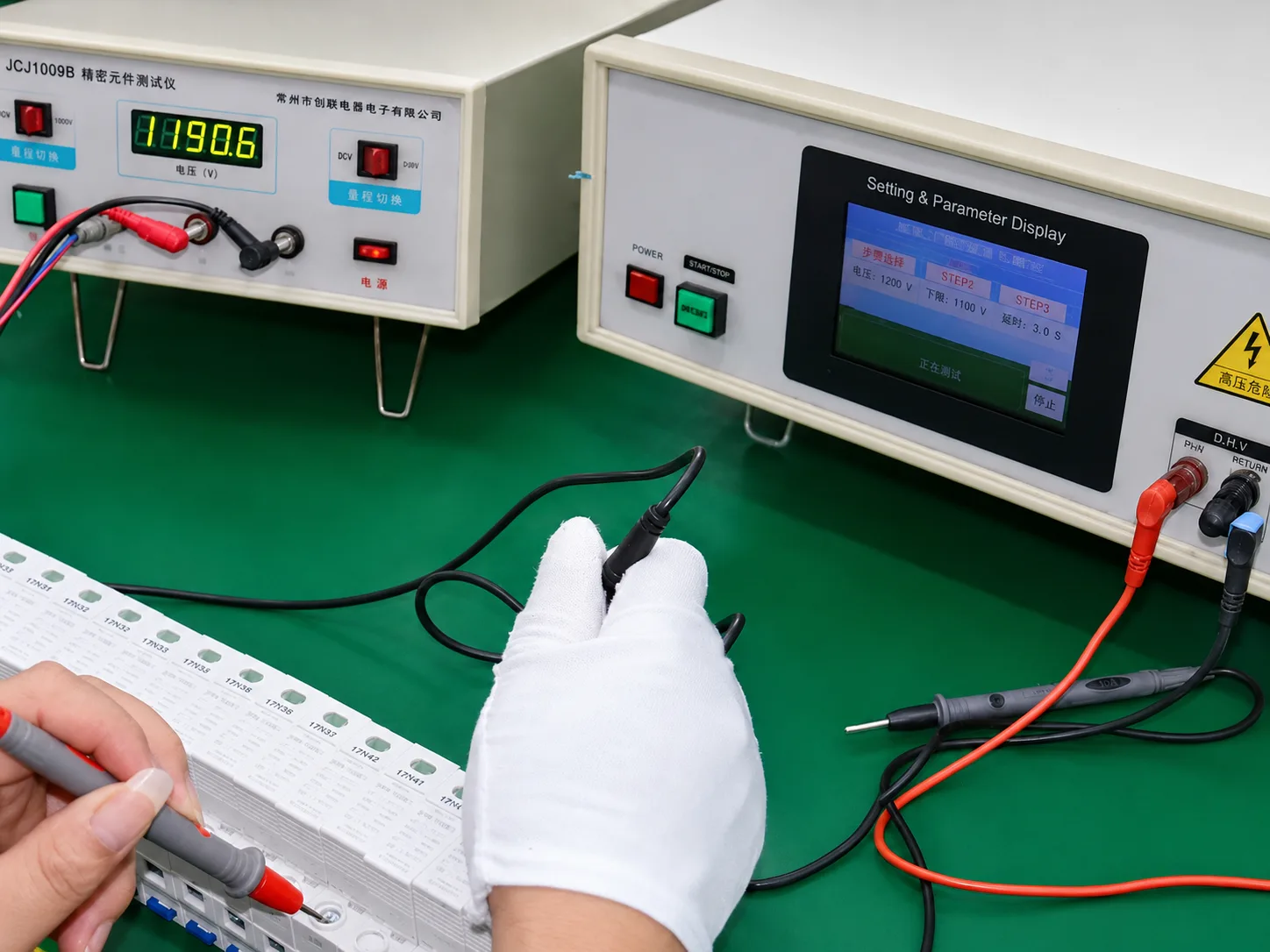
Vérification à la réception et contrôle par lots.
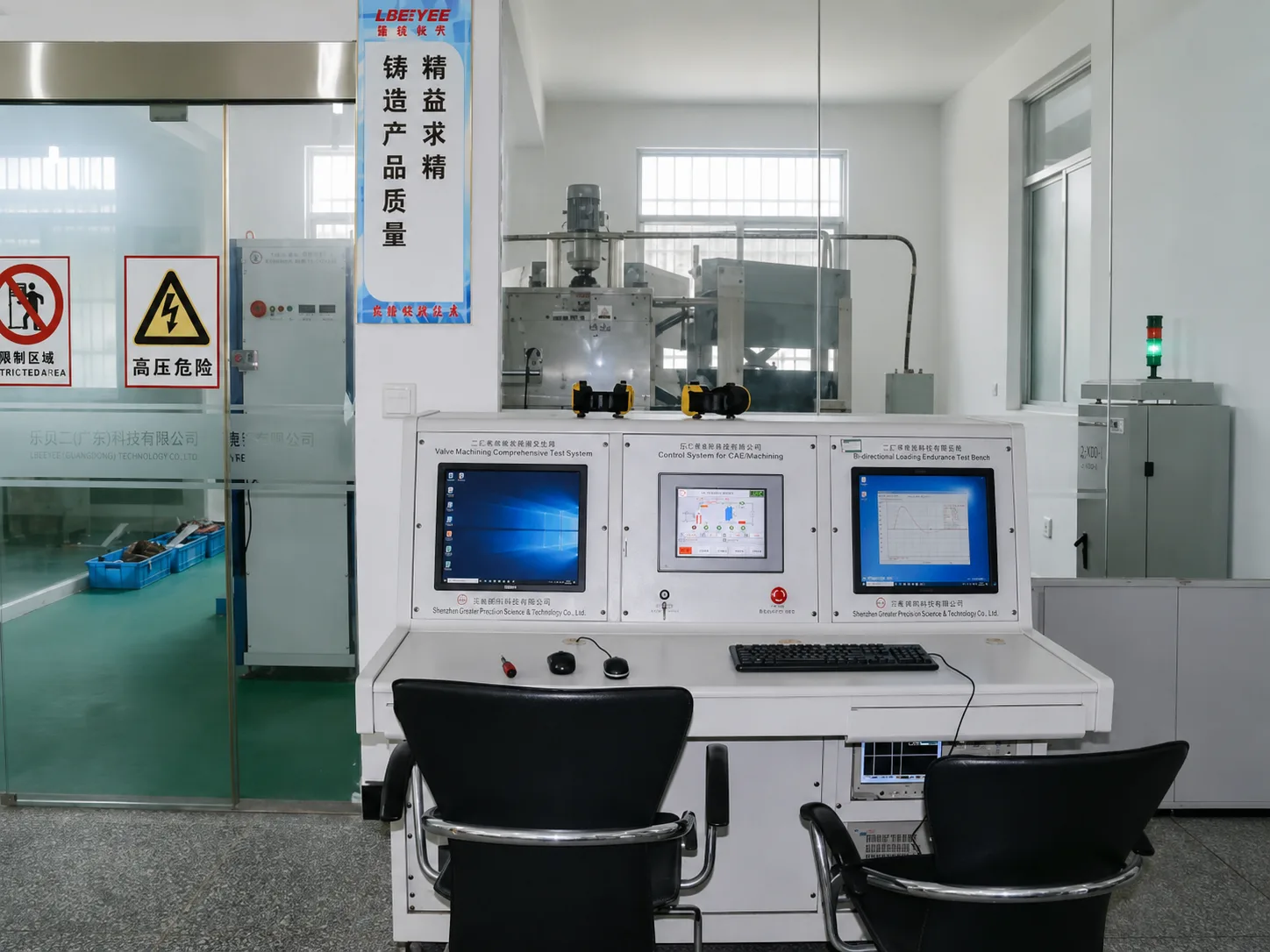
Preuves de décharge et d'impulsion au niveau du modèle.
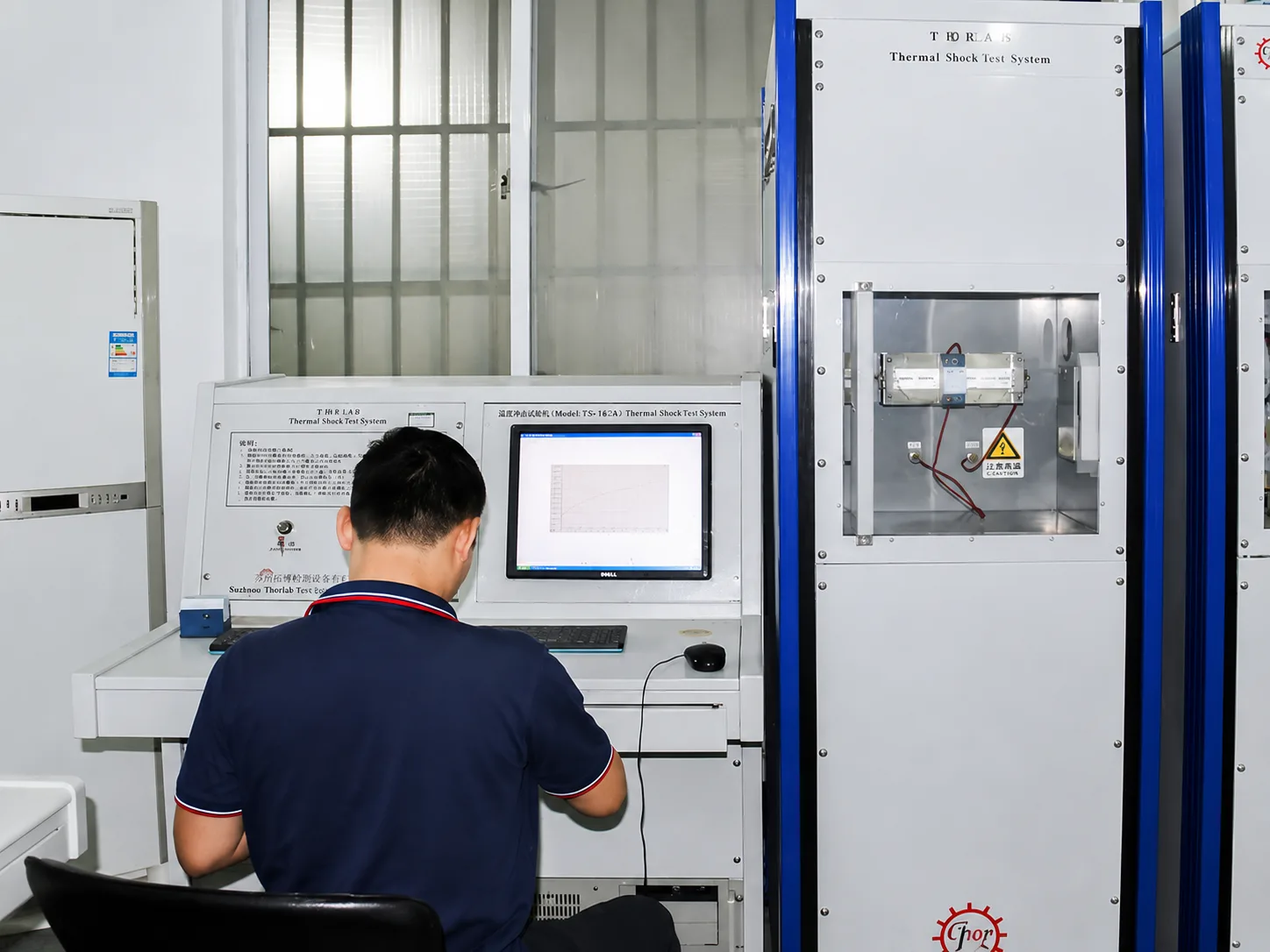
Examen de la stabilité et du sectionneur.
Confirmez les données des chaînes PV, la configuration de l'onduleur / MPPT, les tracés des câbles CC et CA, le système de protection contre la foudre (LPS) externe, la mise à la terre et les interfaces de surveillance.
Confirmez le modèle et les pôles, le contact à distance, le câblage de l'armoire, les étiquettes, l'emballage et les exigences d'inspection par lot.
Les emplacements courants comprennent les boîtiers de couplage PV et les entrées DC des onduleurs côté DC, les sorties des onduleurs et les tableaux de distribution côté AC, ainsi que les interfaces de surveillance câblées exposées où une protection des signaux est requise. L'agencement final dépend du cheminement des câbles, de la tension, de la mise à la terre et des conditions de protection contre la foudre.
Commencez par la tension en circuit ouvert maximale calculée de la chaîne photovoltaïque à la température de conception minimale. Sélectionnez une valeur Ucpv appropriée supérieure à cette valeur, puis confirmez le type de parafoudre, la configuration des pôles, les capacités de décharge, le niveau de protection (Up), la tenue au court-circuit, le câblage et la portée du document.
Le type 2 est couramment utilisé pour les surtensions induites par la foudre et les manœuvres. Le type 1+2 est envisagé lorsque la conception de la protection nécessite une capacité de décharge du courant de foudre, notamment pour certaines installations exposées à un système de protection contre la foudre externe sans séparation adéquate.
C'est le cas pour de nombreux systèmes. Le côté DC protège les chaînes, les boîtiers de jonction et les entrées de l'onduleur, tandis que le côté AC protège la sortie de l'onduleur, les tableaux AC et la distribution raccordée au réseau. Ne protéger qu'un seul côté peut laisser une autre voie d'accès aux surtensions.
C'est possible. Les longs câbles de communication extérieurs ou reliant plusieurs bâtiments peuvent constituer une voie d'accès supplémentaire pour les surtensions. Le parafoudre de signalisation doit correspondre à la tension de l'interface, au courant, au débit de données, au câblage et à la méthode de mise à la terre.
Envoyez les informations dont vous disposez déjà. Une fois la procédure poursuivie, vos coordonnées seront préremplies dans le formulaire de devis sécurisé pour vérification finale et soumission.